


Last week the Irish Farmers Journal visited Patrick Dooley’s farm in Borris-in-Ossory, Co Laois. Patrick is in the process of building a silage slab on the farm as part of his dairy expansion plans.
When we visited, the concrete had been poured and was setting nicely. All that was left to do was fill a sealant into the expansion joints and more concrete was being laid for the yard. Silage slab construction activity tends to increase at this time of year. Farmers should be aware, however, that the construction stage does not necessarily end once the builder leaves the farm and that plenty of time is required to allow the concrete to cure and set properly so that it will be at its maximum strength to carry out its primary function of storing silage.
By doing the basics right, such as having a well-compacted base and spending time on the curing process, a slab should have a lifespan of up to 25 years.
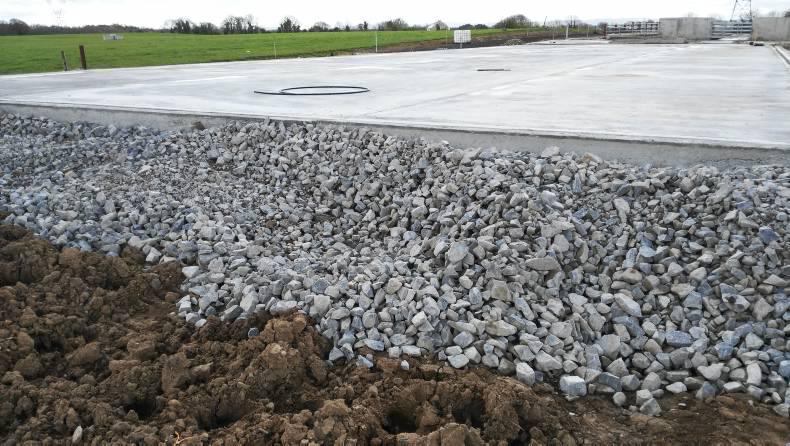
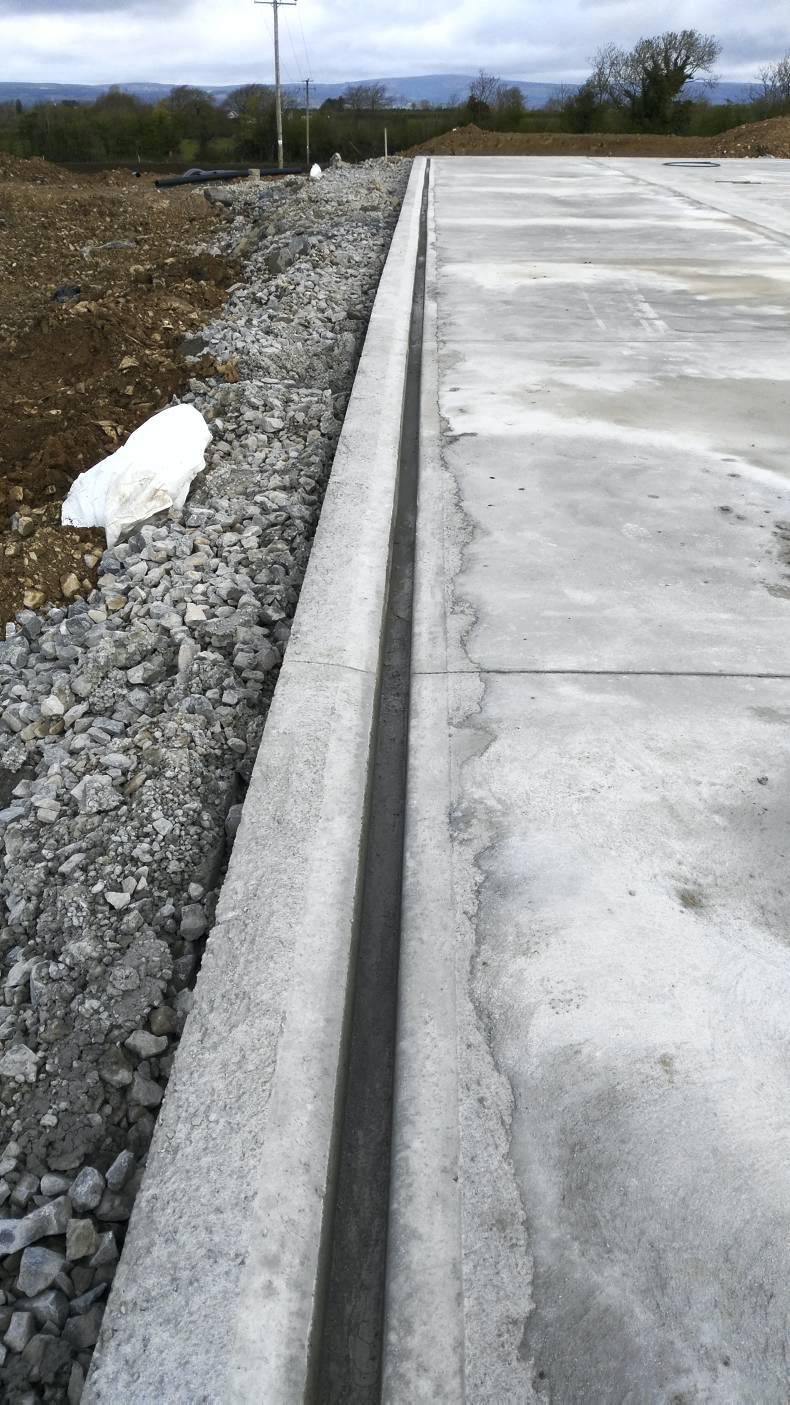
Pictures one and two
The building contractors (Sean and Vincent Doheny) excavated the site by removing the topsoil and digging down until they got to the subsoil, where the ground was firm. Next, they filled the site with 1m of hardcore. This was done in three phases to allow adequate compaction of the stone as it built up. A 13t roller was used to compact the 6in down hardcore.
John Brophy, a building contractor with Sean and Vincent, said that a roller is essential to ensure the hardcore is compacted properly. “You might think a digger has done a good enough job, but when you see the roller working it is clear that the stone is being compacted very well,” he explained.
Failure to compact the hardcore material adequately will lead to subsidence and lack of support for the slab and channels, causing cracking of the concrete under the weight of machinery. This spring, a large area on the farm was excavated to make room for a lined lagoon. A lot of limestone came up during the excavation so Patrick got this stone crushed and this was used as hardcore for the slab. The stone was approximately 2ft to 3ft in size and was crushed to 6in down material. The hardcore was topped off with 70mm of 804 to act as blinding and this was rolled again.
Picture three
A 1,200-gauge builder’s polythene was put down on the site next. John Brophy says the main reason for the polythene is to prevent freshly poured concrete drying out too quickly through the blinding and stone below. Polythene also allows the concrete to slide easily along the fill to allow it to shrink easily and crack at joints (in a straight line), and not somewhere there is no joint, leaning to a zigzag crack.
The screed boards were placed at the perimeter of the slab and the concrete was poured to a depth of 250mm. 45N concrete was supplied by Fogarty Concrete. Channels were also formed with screed boards around the pit. They were 4in x 3in in size.
There is a fall of 1.25in on the outer concrete lip back towards the channel, which will prevent any effluent escaping from the slab. A vibrating poker was used to consolidate the freshly poured concrete so that trapped air and excess water are released and the concrete settles firmly in place. The silage base is 46m long and 17m wide (inside the channel). There is also a concrete apron at the front measuring 17m x 11m. The entire was power-floated to leave a smooth pan finish. John said curing of the concrete was taken very seriously.
“We sprayed a light film of water on it 10 to 12 times per day for two days to make sure it cured and didn’t dry out too quickly,” he explained.
The curing process retains water in the newly placed concrete. This water is necessary for complete hydration (setting and hardening) of the concrete. As a result, the finished concrete has a harder, less porous, dust-free surface with no hairline cracks. On the one hand, it is important not to add too much water to the mix but on the other hand it is even more important to retain the water until the cement reacts with it to form concrete. Where curing is neglected, the concrete in the top 40-50mm won’t be as durable as it should be.
Picture four
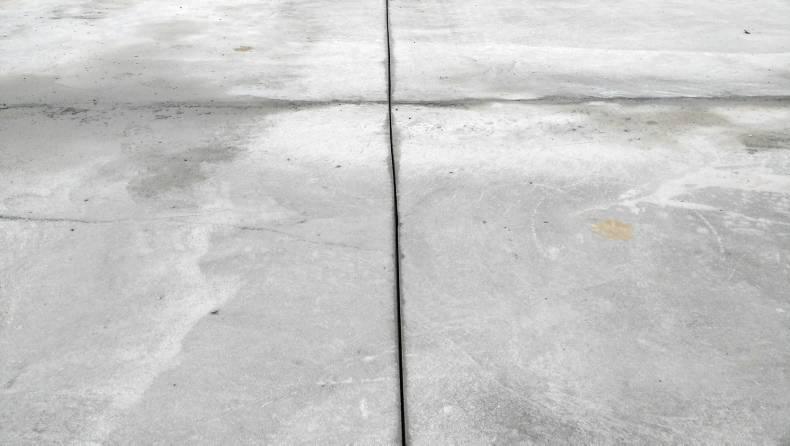
A consaw was used to cut contraction joints on the slab every 16ft. Most people refer to joints in concrete as expansion joints, when in fact they really are contraction joints. The chemical reaction between cement and water in fresh concrete produces heat. As concrete hardens, it cools and starts to contract or shrink. Joints must be formed to control the degree of contraction and confine it to the joints. Expansion joints may be necessary also as concrete does expand when heated by the sun, although expansion joints are only necessary in long stretches of concrete roads and yards, every 70m or so.
Contraction joints are really controlled cracks. If no joints are cut or formed, a crack or cracks will form in time, usually within the first year after construction. If a crack is left to develop by itself, it will zigzag all over the place, making it very difficult to seal, whereas a joint which is formed or cut in a straight line is relatively easy to seal. The depth of this joint should be 1/4 to 1/3 of the thickness of the slab. Shallow tracks are useless. The joint should be cut deeper near the channels (because the concrete is thickened there) and through the channel to the outside of the base.
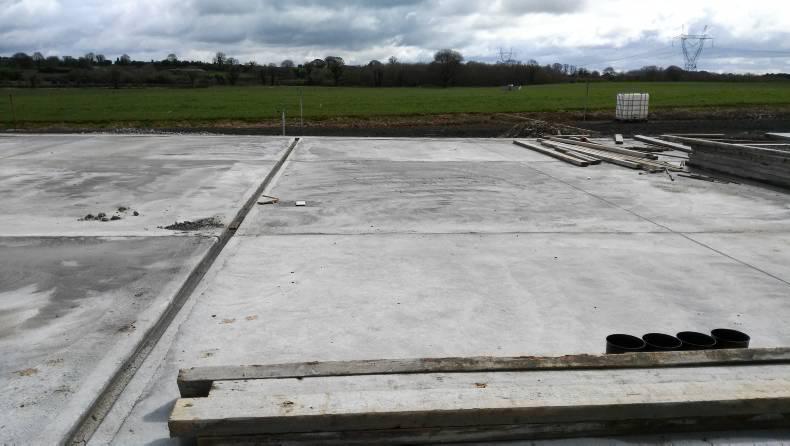
Pictures five and six
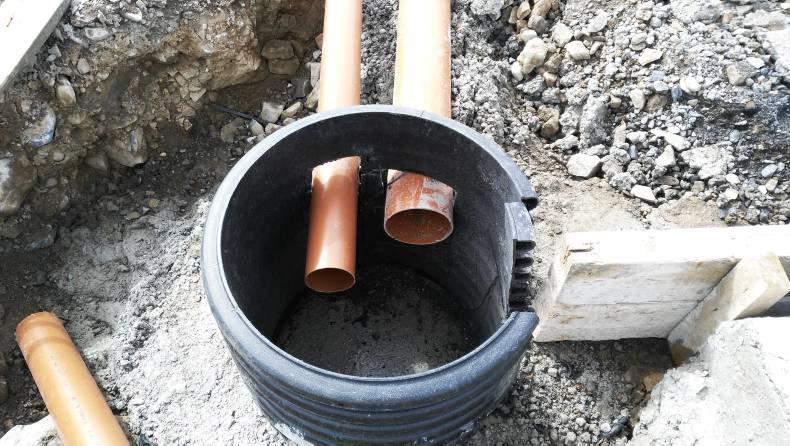
An apron in front of the silage slab is useful to collect any effluent that may come from a freshly tipped trailer of cut grass before it is moved into the pit. The channels for the apron and the silage slab are all directed to the small holding tank (under construction in picture six).
Two plastic sewer pipes lead out from this tank, but only one will be in use at any one time. When the pit is in use, one pipe will take the effluent to a slurry tank nearby. When it is not in use, the effluent pipe will be capped and any rain water that falls on the clean slab will be directed to the fields via the other sewer pipe.
Cost
The labour cost of putting in the foundations and laying the concrete was €6.50/m2 for the 970m2 silage slab. It cost approximately €65/m3 for the 160m3 of concrete used. In total it cost €16,705 excluding VAT to prepare the site, lay and purchase the concrete for the slab. The farmer already had the stone, which saved him considerably. Stone crushing typically costs €4/t. It can cost €7 to €7.50/t to buy in 6in down hardcore. Patrick said he is very happy with how it turned out and will try and give it as much time as possible before filling it with silage. He said it should hold over 100 acres comfortably of good quality silage.




SHARING OPTIONS