


Farmers are putting in silage slabs now ahead of this year’s fodder campaign. Last week, I went to see a nice job being done in Ballivor, Co Meath, on the farm of dairy farmer Paul Feeney. The large pit was being built by Tom Conaty from nearby Trim who specialises in all concrete work.
Paul Feeney farms in partnership with his parents, Richard and Mary. He and his wife, Hazel, have two children, Beth and David.
The existing silage pits are in good condition but rising cow numbers mean they were no longer big enough. The old pits will be cleaned off and, at some stage, may be roofed over for a calf shed or other purpose.
For the new pits, the first design criteria for Paul were capacity and quality slabs that would have a long life under the attack of silage acid. In addition, he wanted the pit divided into separate sections to give flexibility in use. He makes two cuts of grass silage and also maize silage, so he wanted three sections in the pit. He also wants to be able to divert the maximum amount possible of clean water away from costly effluent storage.
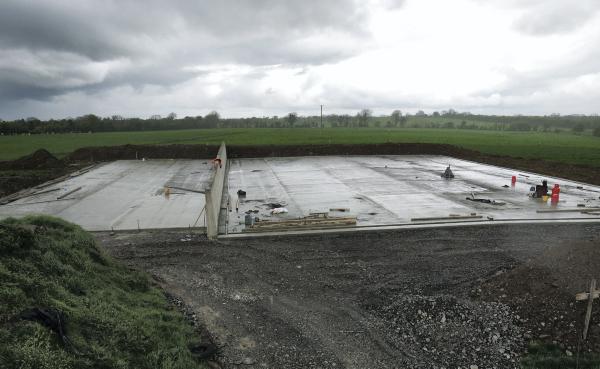
Picture one
The overall pit area is 40m by 40m and is divided into three pits. A permanent wall divides the first one on the left which is expected to be used for maize silage. A wall of pre-cast L-sections will be erected along the full length of the left-hand side. Clay bank walls will be built at the far, top end of the pit and along the right side. A 12ft concrete apron will be built at the front.
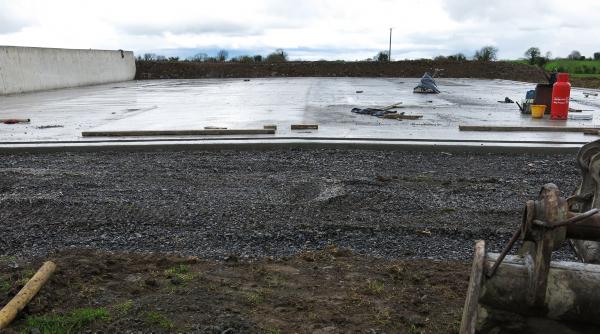
Picture two
For flexibility, the area on the right can be operated as two clamps or a big one. To allow this, there is no permanent dividing wall. Instead, the slab is highest in the centre/middle and falls away to the left and right.
Paul will be able to fill two clamps here – left and right – or if grass yields are good in May, he can make one big clamp.
All three pits slope down towards the front, by 12in, and will drain effluent or – when empty – clean rainwater this way.
Tom Conaty will construct an underground tank at the right of the pit area and all effluent will drain down to here. Each of the three pits will have its own effluent pipe and diversion trap and all will feed effluent into the new tank.
Slopes and channels will ensure that each pit has its own separate drainage. If one pit is empty, Paul will be able to divert the clean water running off it to the watercourse.
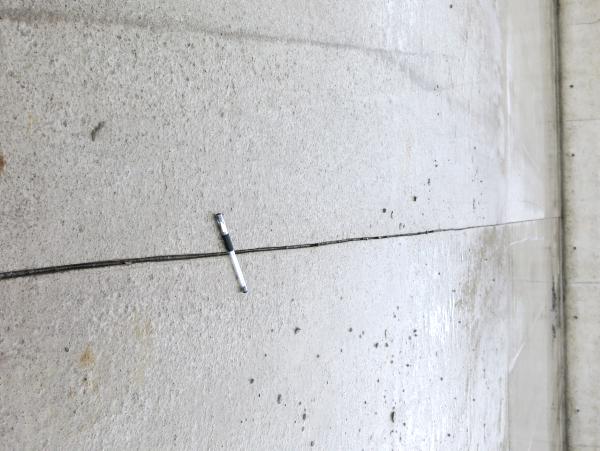
Picture three
The slab is 6in thick, laid on plastic and reinforced with mesh across its full area. Tom manufactures the concrete himself. The mix is made to 40N and contains up to 40% GGBS cement from Ecocem, to improved resistence to silage acid.
Joints were cut 24 hours after pouring. They will be sealed with bitumen.
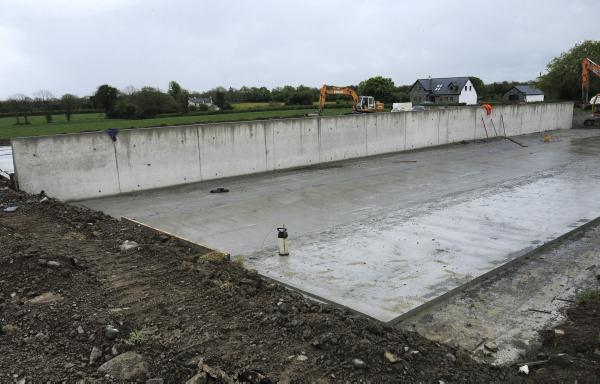
Picture four
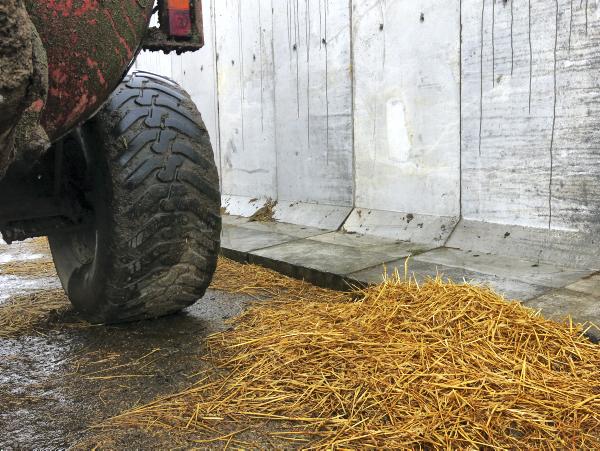
The permanent wall is almost 8ft high. It is 18in at the bottom narrowing to 12in at the top. There are three expansion joints, sealed with plastic water bars, along its length. The wall is steel reinforced. Paul intends to use precast L-section walls to make a wall on one side of the pit. L-sections in service in one of the existing pits will be moved. At the new pit, the L-sections will on a lower slab and their bases will be flush with the main slab. This will make it easier for the loader work to remove all silage in winter. For strength, the two concrete layers seen here overlap by about 10in.
Picture five
This will get over this inconvenience. In the old pit, the L-sections sit on the main concrete slab and the bottom section creates a 4in step, making removal of all silage difficult.
Picture six
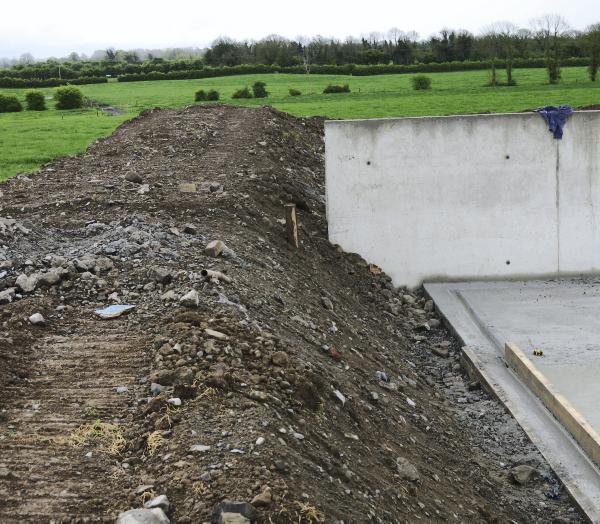
Tom Conaty has built up the clay bank walls with subsoil material, compacting it in layers with the tracked machine.
It is about 14ft at its widest at the bottom and will narrow to about 8ft at its final height of 8ft.
He will slope the top of the bank to fall slightly away from the pit. This will drain any rain water away from the pit.
Picture seven
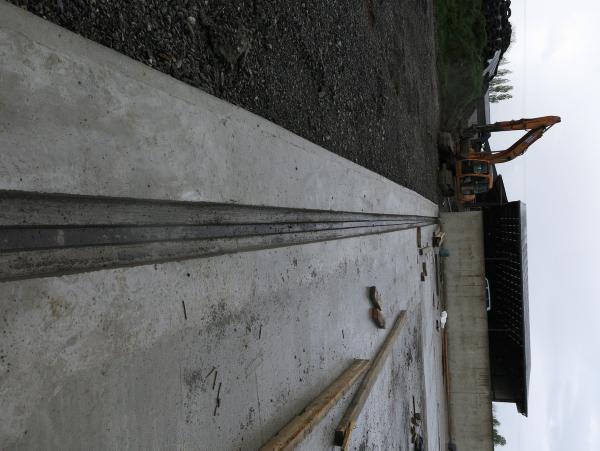
Tom Conaty makes wide drainage channels and places a railway sleeper in them for easy driving of tractors. Underneath the sleeper, a smaller channel carries effluent along.
The slab has to be thickened under a channel to ensure it has strength.
Tom pours a foundation slab under the channel that is 1m wide and 300mm (1ft) deep.


SHARING OPTIONS