


Over 2,500 sheep farmers have applied for grant aid under TAMS I to improve fencing and handling equipment. More will apply when TAMS II opens. Last week I went to see fencing work carried out under the scheme. It was on the farm of Pat and Mary Murray of Knocknagopple, Gorey, Co Wexford. The work was carried out in April. Pat is now waiting for some certificates on posts and when they arrive he will apply for the grant aid. He took time out from preparing for the World Sheep Shearing Championships to show me around.
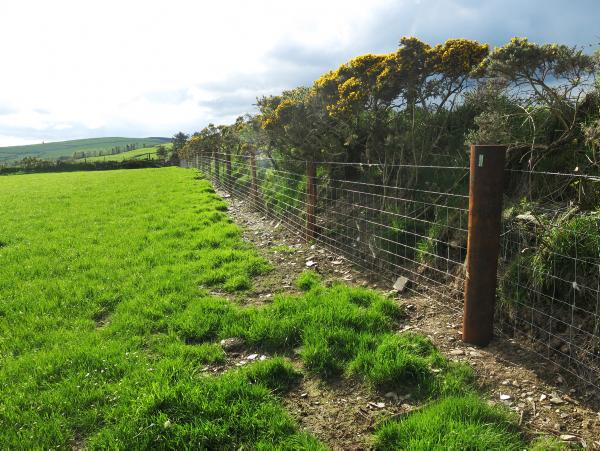
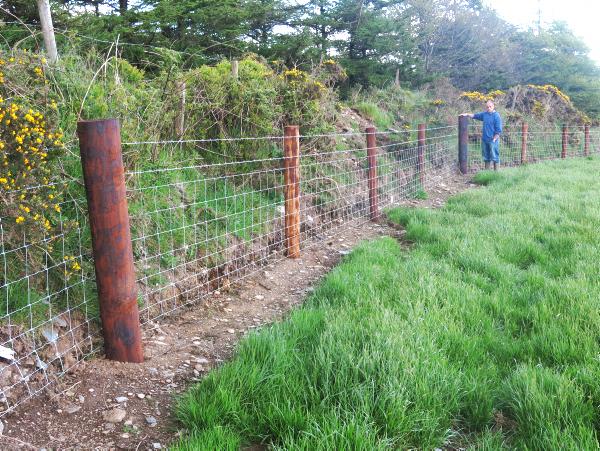
Picture one
The Murrays keep sheep and cattle. The new fence, therefore, consists of sheep wire on the bottom and two strands of barbed wire on top. Pat bought the materials himself and hired in fencing contractor Donal Byrne of Coolbawn, Co Wicklow, to put them up.
As required for TAMS, the fence is built to Department of Agriculture specification S148. It covers the quality of materials and design for all farm fencing. A new version of S148 has been issued by the Department this month. For sheep fencing in TAMS, key issues are use of approved materials, placing of posts at correct distances and correct wire height.
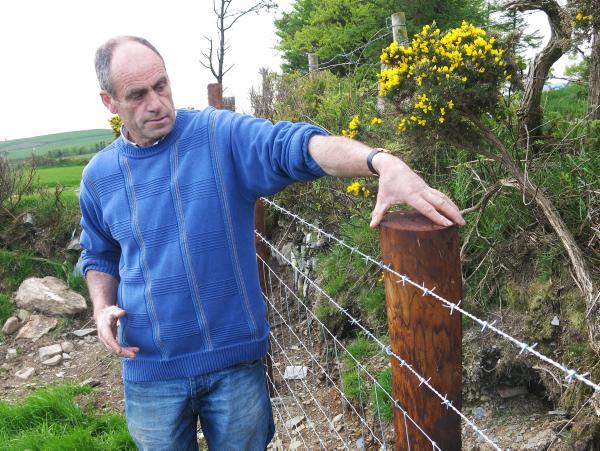
Picture two
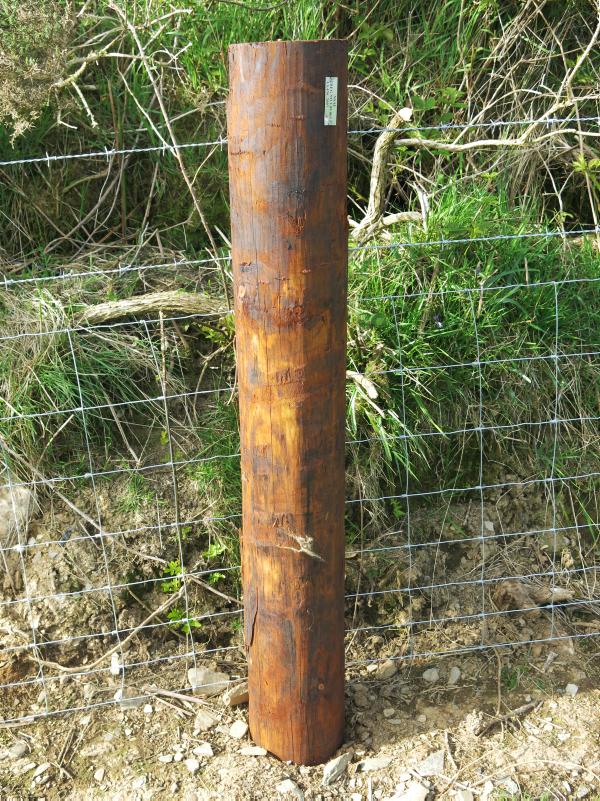
Here, Pat shows an intermediate post. “These should be a minimum of 100mm in diameter and 1.8m long. Check them all in the bundle – I had to bring a few back because they were short.” Stakes should be driven 500mm into the ground and spaced no further apart than 5m. All timber posts must be of certified quality and bought from a supplier who is approved by the Department of Agriculture. The list of accepted fencing post suppliers is contained in Department document S148A.
Picture three
Intermediate posts hold the wire up and strainer posts generate the tension. They must be used at the beginning and end of lengths of fencing, at gaps, at changes of direction greater than 30° and at changes in slope. “They’re 175mm in diameter and 2m long and spaced not more than 100m apart,” Pat said. However, in flat, level ground, strainers can be spaced up to 350m apart.
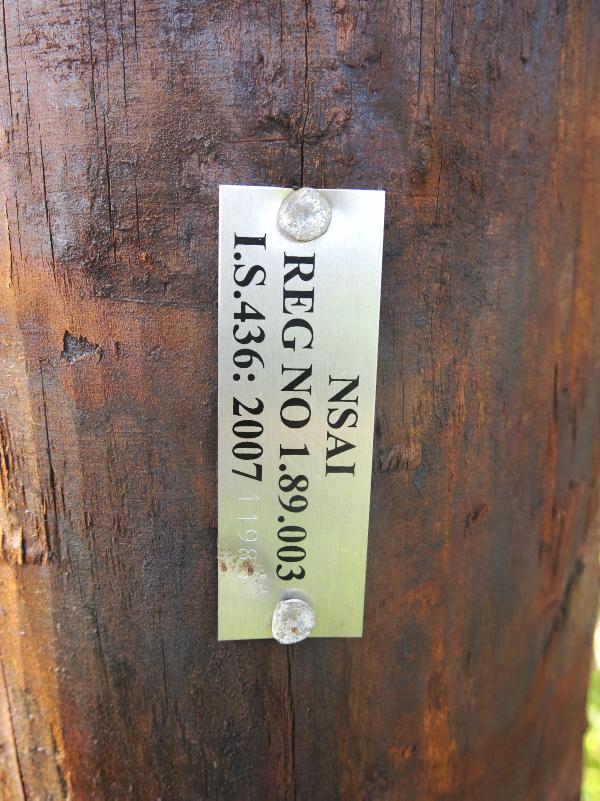
Picture four
Individual strainer posts must carry a badge showing they are of required quality and providing traceability.
Picture five
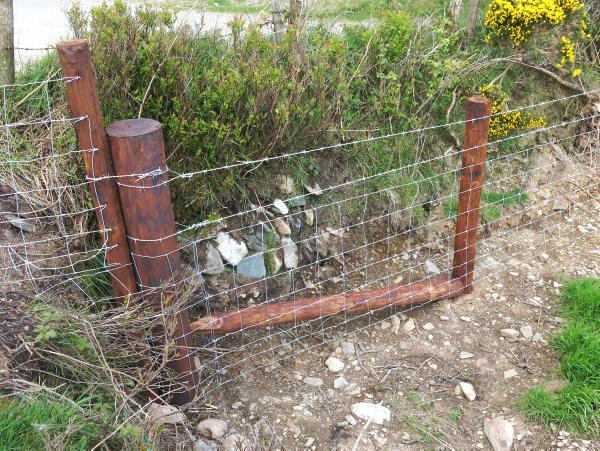
Here, strainers are closer together than normal because there is a bend in the boundary. This adds to cost but makes for a significantly stronger fence.
We can also see that Pat tidied up the soil bank where it had become trampled down by stock, using a minidigger hired out for €28 per hour. This gives him maximum grazing and cutting of hedges will be straightforward.
Picture six
Fencing contractor Donal Byrne placed angled stakes against end strainers to give them additional support.
Picture seven
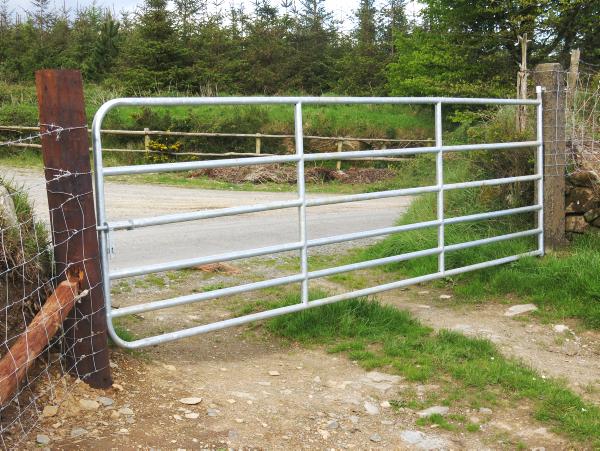
Pat Murray had a number of new gates erected. He hung this one off a strong, existing concrete post. Both the hanging post and the closing post on this side do not carry any strain of fence length.
Picture eight
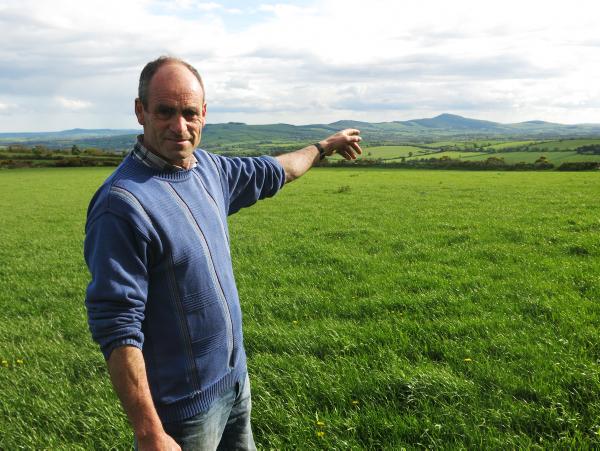
The Murrays put in 1,000m of new sheep fence along public roadway and three gates. “My existing fencing was poor,” Pat told me. “It was broken down and I had no control on stock. I had no peace. Now, when I put them in they stay in.”
The work cost €6,500 including VAT. “I put in a costing of 5.94 per metre – the maximum you are allowed. The work actually cost me about 50c more per metre. It’s a good job.”
Pat advises other farmers to watch the specs carefully so as not to lose out on grant aid. “The sheep wire must be high-tensile 2.5mm. There are other lighter gauges, but they’re not up to the spec. Where used, the barbed wire must also be high-tensile 2.5mm. You must buy your posts from an approved supplier.”
In his role as chairman of Wexford IFA, Pat hears about other farmers’ experiences. “Some farmers have been caught out on small things and lost grant aid. I’d like to see a bit more flexibility there.”
Costs (Inc VAT)
Intermediate stakes €8
Strainers €25
Sheep wire €290/ 250m roll
Barbed wire €55/200m roll
Minidigger €25/hour
Field gates €10/ft length
Total €6.40/m


SHARING OPTIONS