


An overground slurry tanks offers relatively low cost storage, particularly when the capacity involved is large.
However, when it’s on a level with the livestock shed, as is usually the case, a reception tank and pump is required to get the slurry up into the big tank. This adds capital and running costs and operating the pump is another job to be done in the busy housing period.
However, dairy farmers Paul and Tom Condra cleverly used the sloping nature of their farm to have gravity move the slurry from the cubicle house to their overground tank.
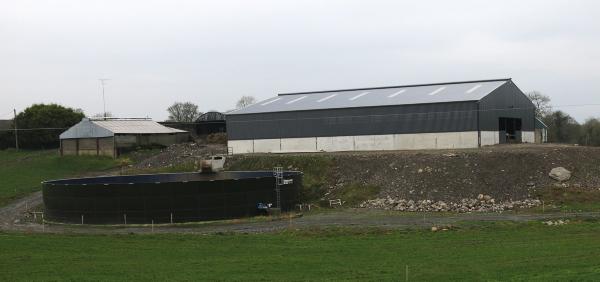
Picture one
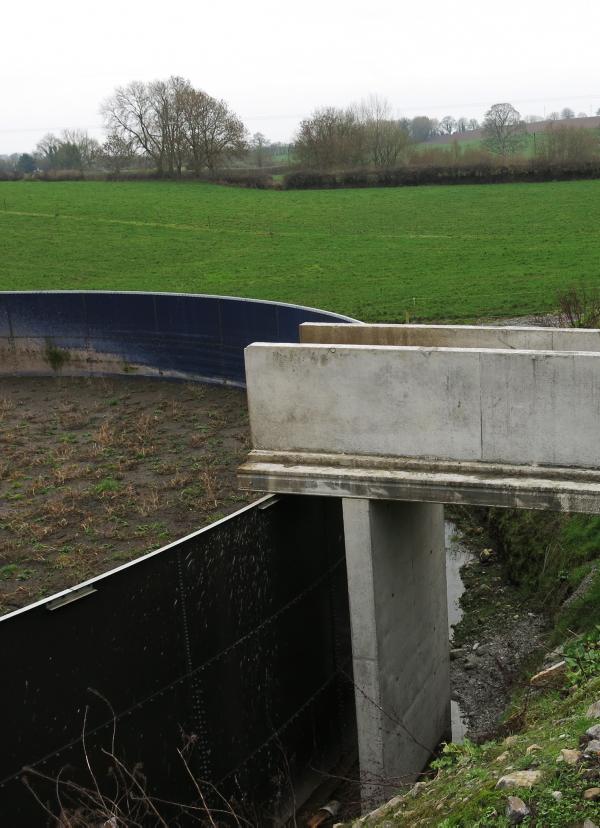
The Condras have done so by building their new cubicle house above the level of their overground store. The slurry moves by itself into the store via a flow channel. The floor of the new shed is 6ft higher than the top of the overground store and 25ft above its base.
The original farmyard was at this height – we can see one of the original farm buildings on the left of the picture. The field fell away sharply from the farmyard.
A number of years ago, the Condras raised the new site using stone from deposits on the farm and built a milking parlour there.
The permastore overground slurry store was put up three years ago.
When it was time to build the cubicle house, the Condras sought help from architect Declan Clabby from Trim to make sure levels were correct. The shed was erected by Mooney Bros of nearby Slane and concrete work was carried out by Michael Callan of Ardee.
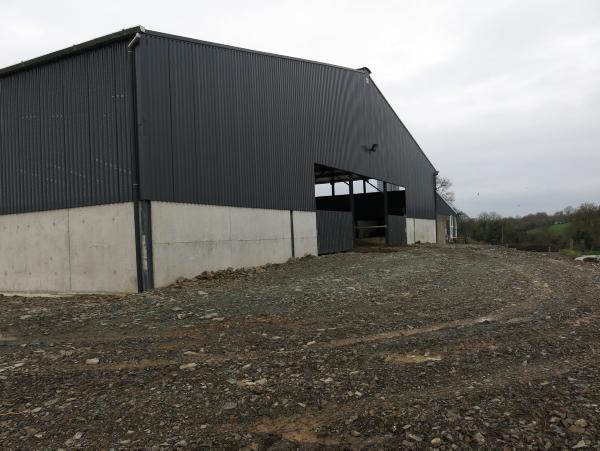
Picture two
The cubicle house is long and wide. It has seven bays. Five of them are 20ft bays – matching the bays of the milking parlour – while the remaining two are 15.5ft. The roof spans 110ft.
We can see from the gable end here that the roof is high: 6m (20ft) at the eaves and 9m (30ft) at the ridge.
One reason for the height was to have the roof of this shed higher than the parlour roof, thereby leaving a gap for intake of fresh air.
‘‘We wanted to ensure that there were no hot spots in this shed,’’ said Tom Condra. ‘‘We can have 200 cattle in here.’’
This end of the site had to be raised most as ground was falling away.
The Condras told me that the farm stone was moved over in two stages, the first using dump trailers and the second using larger, Moxy-type transporters. I estimate that about 1,000 loads of stone were used to raise the site.
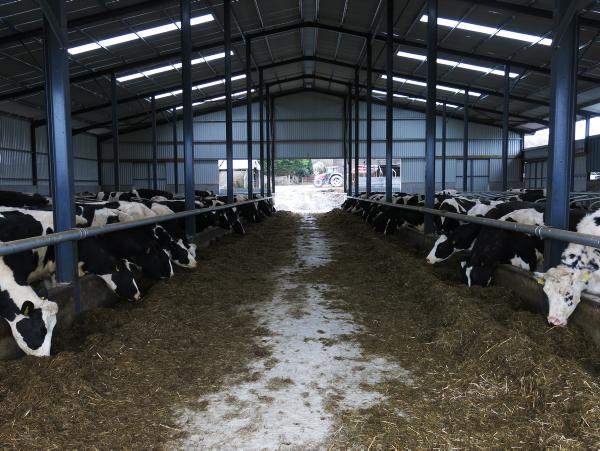
Picture three
Here, we’re looking into the shed from the same end, up towards the original farm yard.
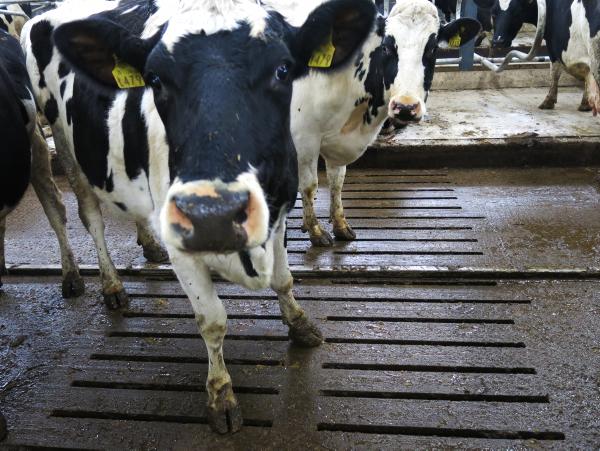
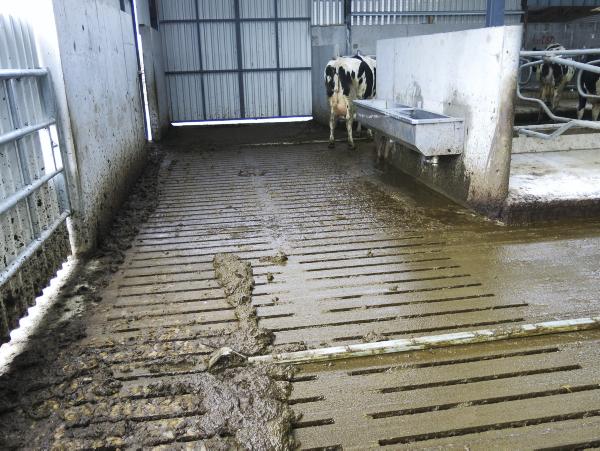
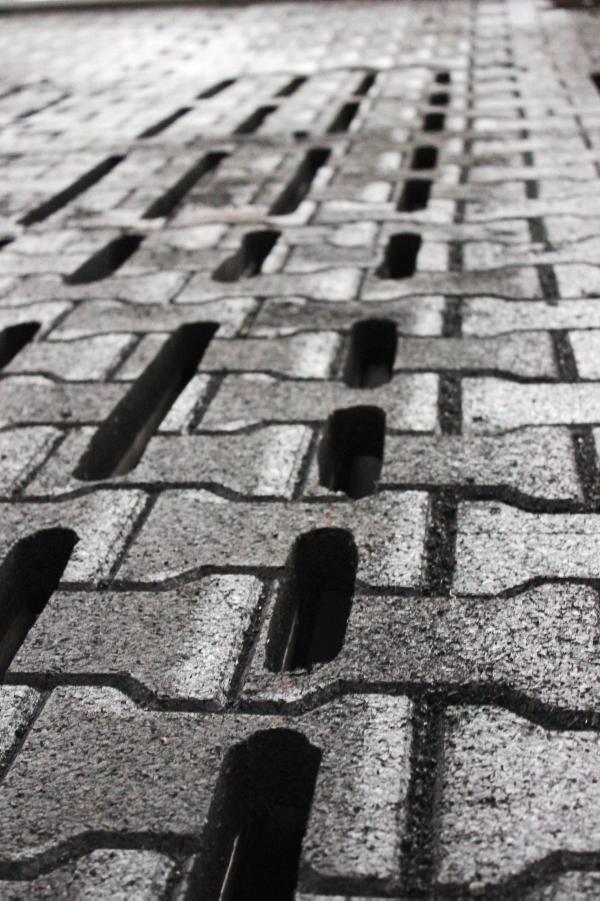
The centre passage is 5.5m (18ft) wide. On each side, there are two rows of cubicles. In all, the new shed has 181 cubicles. There are, of course, no slats. The cow passages on each side are scraped down towards the far end of the shed with the slurry then flowing across to the overground tank.
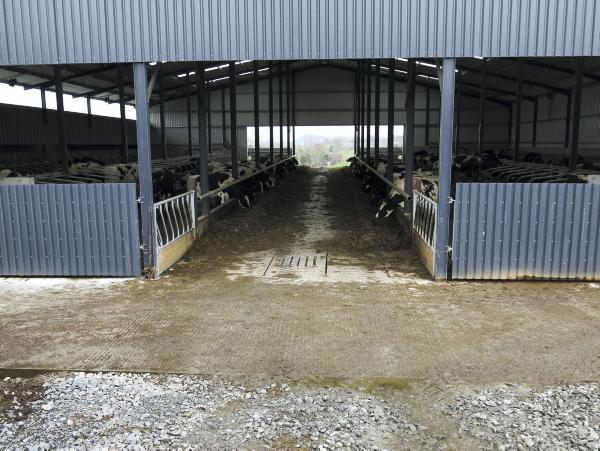
Picture four
Now we’re at the other end of the shed, beside the original yard and the silage pits.
The milking parlour is to the left of the new cubicle shed.
We can see the ventilation gap under the eave of the new roof and above the roof of the milking parlour.
In some cases where there is a flow channel, it simply runs across the lower gable end of the shed and towards the slurry store.
However, after discussions, the Condras decided that scraping slurry along seven bays to a flow channel at the front would be too great a distance.
So, they broke the distance in half, putting a first-stage flow channel halfway along the shed, running crossways from one side to the other. This intercepts slurry when scraped half way along the shed.
The scrapers, meanwhile, continue their journey on to this near end, cleaning the remaining passage length and dropping remaining slurry into a channel running across this end.
A channel running under the feed passage carries slurry from the middle of the shed to the main channel at this end.
Picture five
This is the cross-channel in the middle of the shed. It runs from the side of the shed under the cubicles, under the cow passages to a carrier channel that runs under the centre feed passage.
Picture six
This is the channel at the end of the shed. The door is the access route to the milking parlour.
Picture seven
The channel exits the shed and it continues as far as the overground store. The channel end is supported by the reinforced shuttered wall.
Picture eight
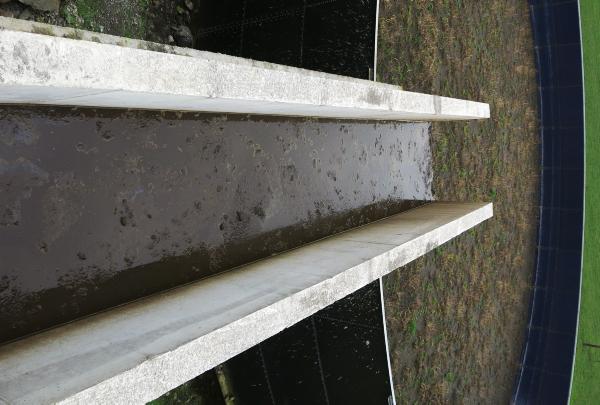
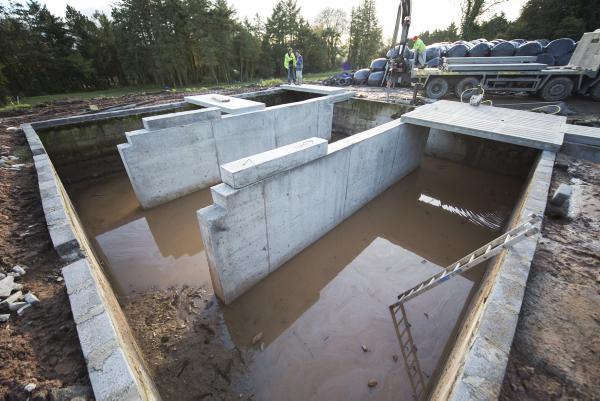
Weir walls are built in the floor of the channel at regular intervals to hold back a 15-in bed of water, on top of which the slurry flows. The slurry store has a 3m-litre capacity (approximately 650,000 gallons).
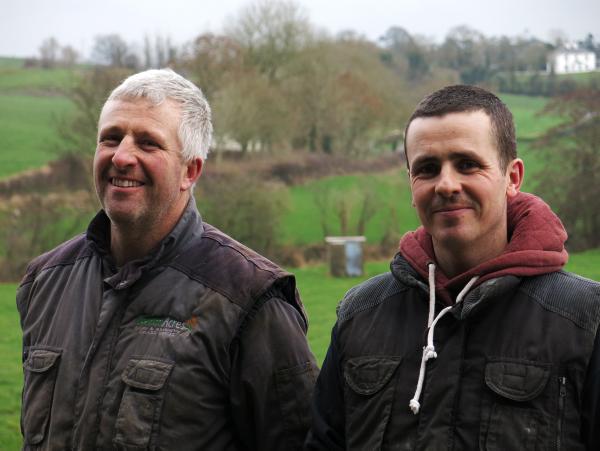
The new cubicle house was finished in late December. So far, slurry is flowing properly out of the flow channel into the store, Tom Condra (right) told me. The overground store gives big storage at a good cost, he said. ‘‘We never wanted underground tanks – we didn’t even price them.
‘‘I like that the cows are not standing on slats,’’ said Paul (left). ‘‘It’s easier on their feet.’’
This shed will cost over €200,000 – not all bills are yet in. The over ground store cost €50,000 when built three years ago.
Farm DIY: I intend to cover some farm DIY jobs in future issues of the Irish Farmers Journal. I welcome any suggestions of jobs that can be tackled – safely – by a farmer as well as tips from readers who carry out such jobs themselves. Examples include hanging a gate and putting up a strainer post for stock fencing. Email: pmooney@farmersjournal.ie




SHARING OPTIONS