



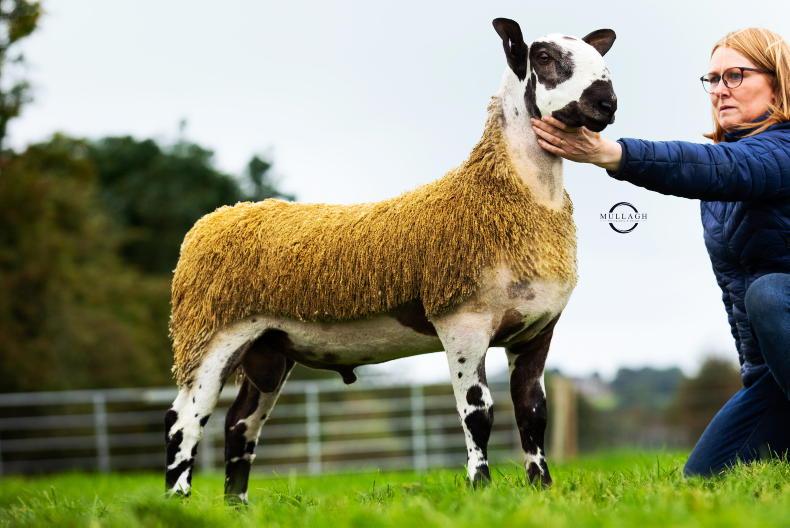
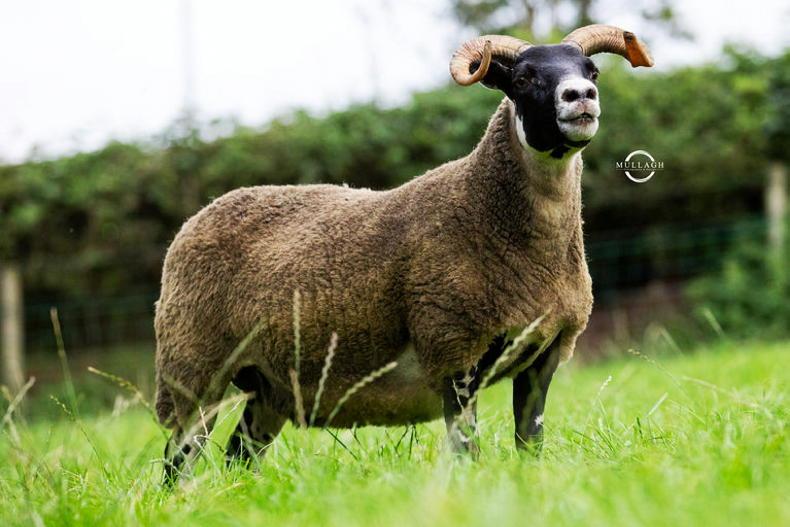
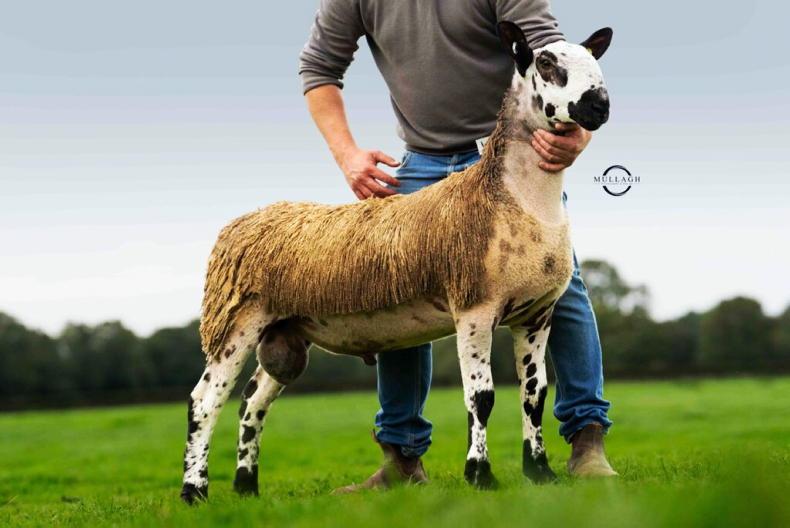
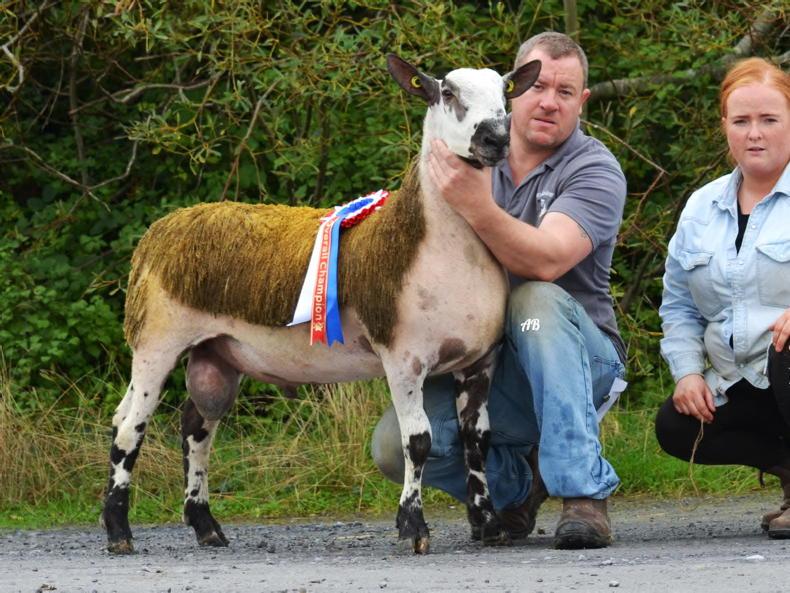
28,000gns for Bluefaced Leicester ram lamb
New price records were set at the annual Bluefaced Leicester sheep breeders’ association sale in Ballymena Livestock Mart on Saturday 20 September.
The sale topper, a ram lamb, Temain 4342/V001, from Graham and Julie Loughery, Limavady, sold for 28,000gns. The top-priced lamb is sired by Yore House Maverick 790/M001 and out of a homebred ewe, Temain 4342/S062.
The Temain flock also had the second highest price of 18,000gns, paid for Temain 4342/V017. Their pen of eight ram lambs averaged £7,537.50.
In the shearling ram section, Limavady breeder Martin Kelly took the highest price, with 10,000gns paid for Freehall 4612/T021.
Offers for nature scheme applicants
DAERA has approved 736 applications to the new Farm with Nature (FwN) scheme, Agriculture Minister Andrew Muir has confirmed.
In a statement, Minister Muir said the approved applications equate to £4.66m and a further 87 applications are “still undergoing necessary validation checks”.
Successful applicants to FwN need to complete scheme measures and submit a payment claim by the end of March, with payments then issued in the summer of 2026. There are five measures under the first phase of FwN, namely planting new hedgerows, fencing off watercourses, tree planting, retention of winter stubble and winter cover crops.
Fewer farms sign up in final SNHS zone
The proportion of farms registering to take part in the final zone of the £37m Soil Nutrient Health Scheme (SNHS) was lower than in the first three zones, figures released by AFBI show.
The closing date to register in Zone 4 (Co Antrim) was 8 September, with 115,400 fields across 4,450 farm businesses signing up to the scheme. That accounts for 85.2% of eligible farm businesses.
However, in each of the first three zones, the number of businesses registering was over 90%. In addition, those who didn’t initially join the scheme, had the opportunity to come on board this year. In total, 92.5% of all farm businesses in NI have now registered to participate.
Once fields are soil-sampled, farmers can expect to receive results within four to six weeks. Training provided by CAFRE on understanding and interpreting the results, must also be completed.


SHARING OPTIONS