


Andrew Gardiner – Kilrea, Co Derry
Gross margin
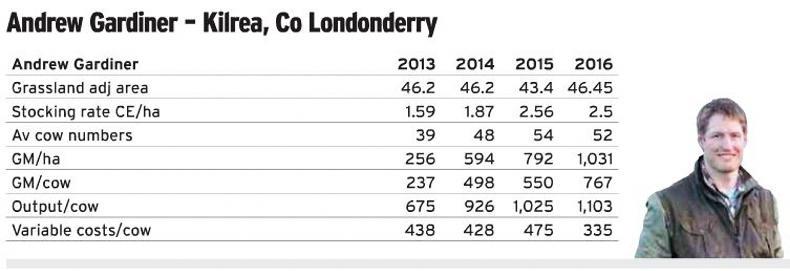
Gross margin per hectare has increased by £775 since 2013, while gross margin per cow increased by £540 over the same period.
Variable costs have dropped by £100/cow due to improved herd genetics increasing daily liveweight gain, reducing the finishing period.
Future
The aim is to achieve a similar or higher stocking rate of 2.5CE/ha from a suckler cow enterprise. As cow numbers are increased, the dairy calf-to-beef enterprise will be phased out to simplify labour requirements.
Investments in soil fertility, along with continued improvement in grassland management, should facilitate improved livestock performance from grass. To speed up the increase in cow numbers, some replacement in calf heifers have been purchased this spring.
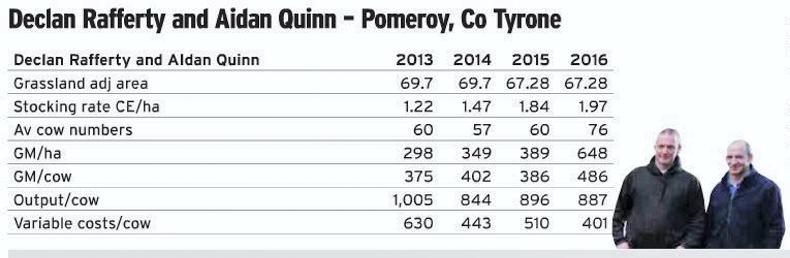
Declan Rafferty and Aidan Quinn – Pomeroy, Co Tyrone
Gross margin
Gross margin at £648/ha has increased by £350 since joining. Gross margin has been slower to increase as the farm started from a low stocking rate and high variable costs. Investing in replacement heifers has increased stocking rate, but heifers have only begun to make a contribution to output and gross margin.
Future
A lot of the groundwork to increasing farm profit has now been completed. There are clear systems in place for spring and autumn calving. As the extra replacement heifers settle into the herd and produce cattle for sale, output and gross margin will naturally increase also.
The challenge is to ensure the farm realises its potential. Keeping on top of animal health from birth, managing grass quality to maximise liveweight gain and producing high-quality silage to reduce concentrate feeding for the finishing period will increase gross margin.
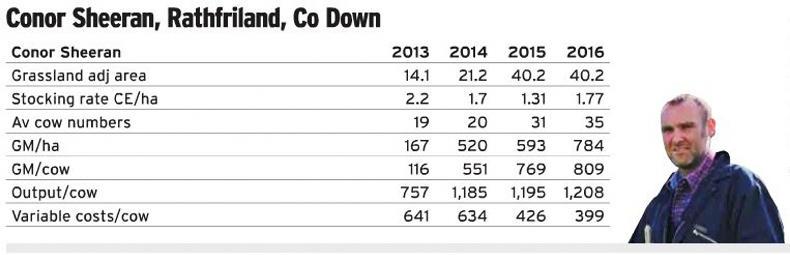
Conor Sheeran, Rathfriland, Co Down
Gross margin
Gross margin stands at £784/ha, an increase of £617 since 2013. Gross margin per cow is £809/cow, up £693. The herd has been building in numbers and as cattle quality and performance improves, cattle are realising higher sale values. Variable costs are also reducing year on year, which is boosting gross margin.
Surplus grass was sold as silage from the grassland area used by suckler cows this year and has been included in the overall margin per hectare.
Future
Excellent performance on a per-cow basis now needs to be realised on a per-hectare basis through increased stocking rate. Calves born in 2015 have performed well with most of the progeny from AI exceeding expectations with many finishing off grass.
With labour requirements increasing on the farm due to the opening of a poultry unit, synchronisation will be used this year on the earliest calving cows and a stock bull used as a sweeper. Cow numbers will now be increased using homebred replacements with excess grass continued to be sold off as silage in the short term.
Oliver McKenna, Eskra, Co Tyrone
Gross margin
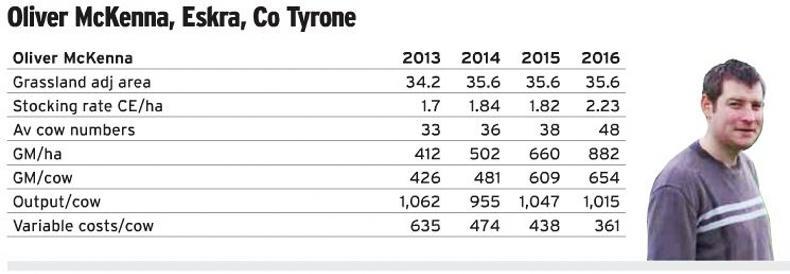
Gross margin stood at £882/ha in 2016, up £470 from 2013 levels. Gross margin per cow is now £654, despite output per cow remaining relatively static.
Variable costs have been reduced by £274/cow, mainly through tighter calving periods in spring and autumn.
The use of AI has improved cattle quality and performance, and as carcase weights improve, so too does gross margin.
Future
Building farm stocking rate has been a real challenge. Continuing with general land and sward improvements, along with good grassland management will facilitate further increases in stocking rate for the farm.
By continuing to use top sires through AI, cattle performance will continue to improve also which will further increase slaughter weight and reduce slaughter age.
There is also potential to sell off heifers as potential breeding replacements at a younger age and higher value to finishing them.
This year will see more cattle finished as bulls which will increase output also. These factors will help to push gross margin higher.
James Taylor, Portrush, Co Antrim
Gross margin
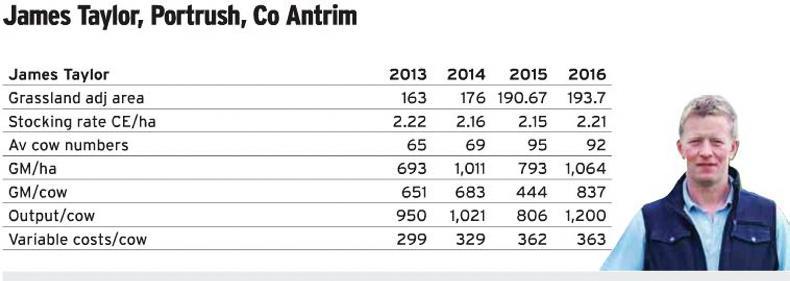
Gross margin hit £1,064/ha in 2016, with GM/cow at £837. Output per cow is the key driver behind the increase in gross margin. Cattle are finished as young bulls and steers. Finishing 2015 spring-born steers before the end of 2016 helped to increase output last year as these cattle were sold on a rising market.
Additional in-calf herd replacements bought in 2015 had progeny finished in 2016, further boosting overall farm output.
Future
Future plans to help further improve animal performance include more use of AI. Replacement heifers were synchronised in 2016 with a batch of cows also being considered for 2017. The use of proven AI bulls should speed up the rate of genetic progress with improved future growth rates, carcase weights and feed efficiency. Continuing to improve cattle nutrition at key stages of bull and steer finishing should help ensure all cattle are finished earlier and with less inputs.
All reports from the Northern Ireland Suckler Beef Programme




SHARING OPTIONS