



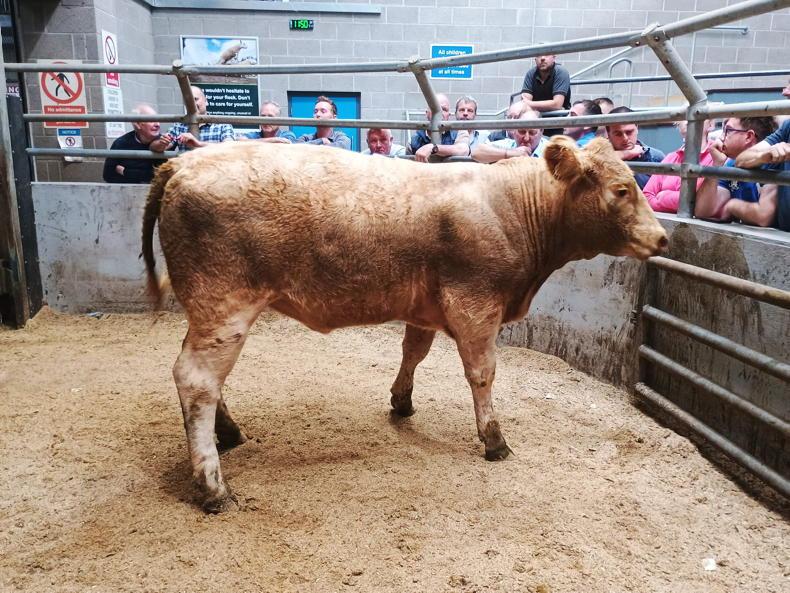
Base quotes for clean cattle have picked up in some cases, leaving the best for U-3 grade steers at 596p/kg and for heifers at 600p/kg.
Those quotes generally lag 10p/kg behind actual deals on offer to regular suppliers, with factories having to pay more in the last couple of weeks due to continued relatively tight numbers.
Last week’s total kill of 8,413 was down 210 head on the previous week and the lowest in six weeks.
In the same week last year, factories killed 9,371 cattle and, in 2024, the equivalent kill was over 10,500.
It is expected that more cattle will soon start to come forward, but a late spring seems to have pushed back supplies.
The average price paid last week for a U3 grade steer was up almost 3p to 604.7p, with R3s up 1.7p at 601.1p/kg.
U3 grade heifers increased by 0.7p to average 607.2p, with U3 young bulls up 3p at 597.9p/kg.
Across all steers and heifers, the average price paid rose by 1.2p, taking it to 595.7p/kg.
Britain
The market is also generally positive in Britain, with prices paid last week edging up across most steer and heifer grades.
Prices paid in Scotland continue to be around 15p to 20p ahead of England, with U and R grade steers around the 630p/kg mark, although Scottish R4 heifers have pushed on to 640p/kg.
The trade in the Republic of Ireland is also positive, due in part to tight numbers.
It remains to be seen how the EU ban on Brazilian beef plays out, with some expectation in the trade that it will create a gap in the European market for Irish exports.
That could also benefit UK prices, although the fear is that Brazilian exporters will divert supplies to Britain.
Meanwhile, reports from southern marts suggest NI buyers remain active for heavy cattle.
Last week, 391 cattle were imported for direct slaughter in NI, up from 201 in the previous week and the highest weekly import since the end of July. No cattle went in the opposite direction.
Cows
The quote for fat cows has slipped at one plant, but the best remains at 510p for an R grade and 500p for an O+ animal.
Last week, the price paid for R3 and R4 cows held around the 528p/kg mark.
NI sheep: higher prices for lamb
Factory quotes for fat lambs have increased to 680p and to 21.5kg deadweight at one plant, putting a lamb to £146.20 at the weight limit.
In the marts, trade was mostly improved.
In Gortin, lambs at 29kg made 641p/kg or £186 and 638p/kg or £185. Middleweights at 24kg made 633p or £152, with 23kg at 635p or £146. Store lambs sold from £122 to £150.
In Kilrea, the best lambs made 646p/kg for 28kg at £181 and for 23kg at £148.50.
Markethill had a steady trade. Lambs sold to 625p/kg for 24kg at £150, with 610p for 24.6kg also at £150. Quality mid-weights sold to 650p/kg for 21kg at £136.50.
Store lambs sold to 828p/kg for 12.8kg at £106, followed by 813p for 16kg at £130. Stronger stores sold to 713p/kg for 17.4kg at £124.
In Saintfield, lambs reached £160 for 32kg, with £155 for 28kg and £152 for 29kg.
In Rathfriland, £188 was paid for 28kg lambs. Stores reached £87 for 12.5kg or 696p/kg.
Ballymena saw a firm trade. Lambs at 27kg made £170 or 630p/kg, with 25.5kg at £151 or 592p and 21kg sold to £132 or 629p/kg.
Fat ewes
In Gortin, the top fat ewes made £240 and in Kilrea, ewes sold to £222.
In Markethill, the best ewes made from £140 to £190.
In Saintfield, the best made from £150 to £200.



SHARING OPTIONS