


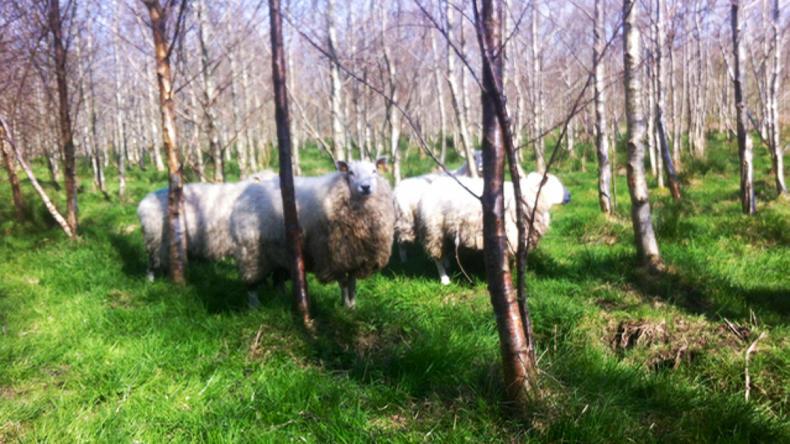
Being away from farming for 14 years means we have no legacies to deal with. We’re not tied into a physical legacy where our sheds and yards mean we’re stuck with a certain enterprise. Neither are we tied into a mental legacy, where we have to do things a particular way just because they were always done like that.
One downside of our newness though is that we have no single farm payments. Another is on the infrastructure side of things. While you have the beauty of a blank slate, it is just that – a blank slate.
Being livestock farmers already, the natural extension is to consider cattle
So, the yard and fencing have required a hefty enough investment (for part-timers, at least). However, this should start to pay off this year. Tie in the fact that we’re getting our heads around the sheep and all of a sudden we’re ready to look at other potential enterprises.
Being livestock farmers already, the natural extension is to consider cattle. Or cows and calves to be more precise, as these would better fit the semi-blank slate we now have.
But what breed would suit us? Natives such as Hereford, Angus, and Shorthorn? Or big continentals like Simmentals and Limousins? And as with the sheep, what would be the right crossbreed? Would a first-cross heifer out of a Friesian and Angus give us the right mix? Or would a second-cross where you’ve three quarters Angus and one quarter milky Friesian be better?
More questions than answers, as usual, so I looked around to see what other lads around us at home are doing.
Renting high-SCC cows
One neighbour is renting Friesian cows with high SCC, on a bed-and-breakfast basis. He puts three or four calves under them and the cows go in and out morning and evening. It’s a nice way to get decent weanlings, but off-farm jobs mean we wouldn’t have the time for this morning and evening lark.
A relation of mine swears by Simmentals. He wouldn’t let any other type of cow inside the gate. They crossed with different bulls, but the Simmental cow is the basis for everything. They’re big strong animals, but he’s been at it years, so the odd difficult calving doesn’t bother him. As newbies, this might be an issue for us.
Back then to the native breeds. As one man advised, they’d be a good start for “young fellas like us”. They’re easy calving for the most part, and if you get the cross right, they should be milky enough.
Once we have this new beef enterprise sorted, then the only world left to conquer will be dairying
If we eventually decide to get into cattle, we’ll probably end up taking the same approach we took with the sheep: (1) buy a few, (2) figure out what output suits the time and infrastructure we have, (3) make plenty mistakes but learn from each of them, (4) gradually improve the breed and build a bit of value into the stock.
Once we have this new beef enterprise sorted, then the only world left to conquer will be dairying. We milked cows for 50 years before giving it up in 2002. Things haven’t changed that much since then, have they?
Kieran Sullivan and his brother farm part-time in Co Waterford. You can follow him on Twitter: @kieran_sullivan
Like this? Read more from Kieran Sullivan here.





SHARING OPTIONS