



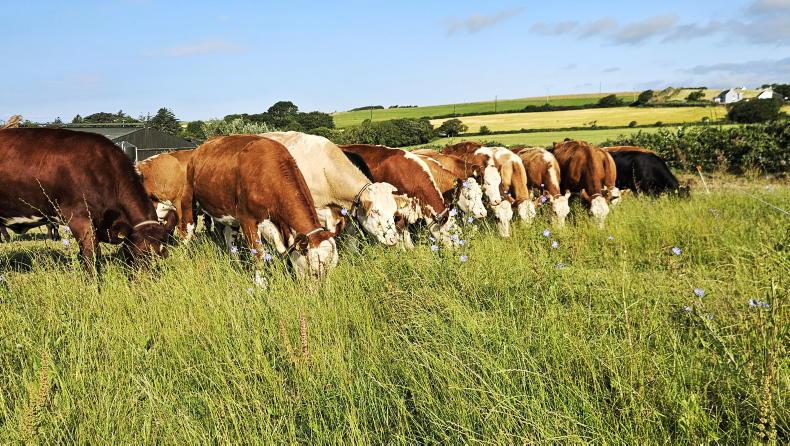
After so long looking for it, it’s great to have a spell of dry weather. It throws up different challenges but as long as there are no blips with water, things will be alright.
A few fields of standing hay were left to have a bulk of feed available in fields to feed the cows at home as that is usually the first place to dry out.
Strip wires were used to feed it and, so far, one bale of hay that burst when I was stacking it has been the only extra fed to them.
As grass growth slows, the situation will be assessed but cows have been very content lying out in the sun and from past experience, it’s easier to fall back on long grass and the strip wire than a round feeder and a bale of silage.
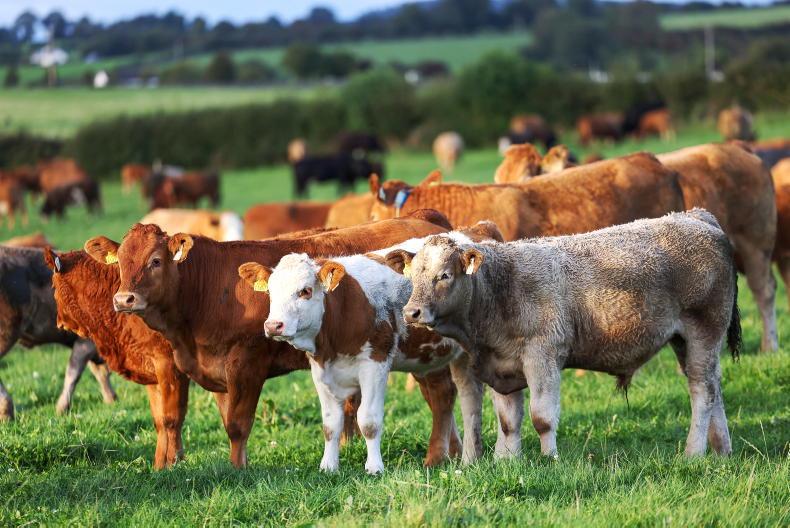
Calves are really getting stuck into grass and are going ahead of the cows and getting the pick of what’s there. It’s showing too as they are in excellent condition. If it cools any bit I’ll bring them in and worm any calf with a dirty tail.
There’s an unwritten rule here that we try at least one new thing on the farm every year or at least tweak things a little. Among the new things this year are the return of a few old ones.
Tillage
For the first time in over 20 years there’s a crop of arable silage available for feeding this winter. The oat and peas were planted in late April and the pea pods are full and the oats are at the milky stage. It will be knocked and baled up by the time you’re reading this.
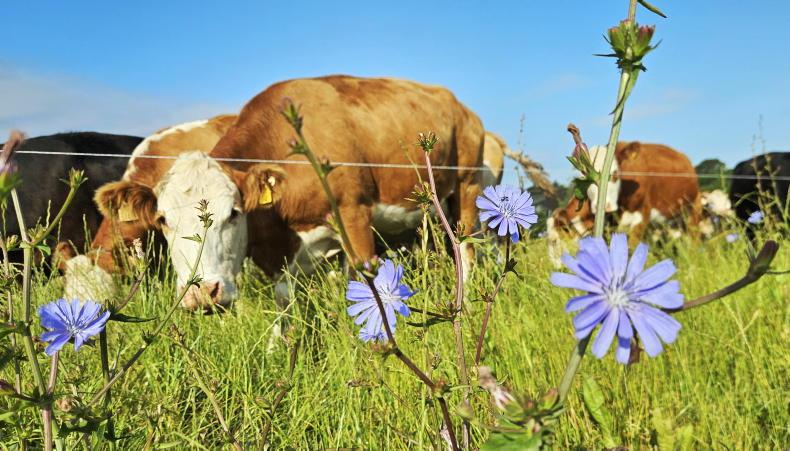
There’ll be a bit less foraging on my behalf with the peas making a nice farm walk snack of late. From a growing perspective, I’ll definitely consider it again. There’s plenty of bulk in it and the peas along with the clover in the grass mix that was undersown with it meant that aside from slurry it didn’t need any extra inputs.
Geopolitical tensions in some of the main oil and gas producing regions means cheap artificial nitrogen may not be a runner for the foreseeable future. That means as a drystock farmer, I will have to look into alternative ways of producing forage where possible.
Whether arable silage stays in the mix will depend on the bale count, feed quality when it comes to feeding and how we get on with rodents.
Last time it was grown, it was before there was a shed and concrete slab to store them on and their location near a ditch meant they attracted a lot of rats.
Brassicas make a return too after a similar gap between now and the last time they were here.
A small field near the shed has been put into redstart to give another option for later in the autumn or maybe even over the winter.
Weanlings
The last few years, some of the weanlings haven’t gotten the priority they deserve as finishing animals took up housing space. It’s an outlet if I want to out winter some of the smaller heifer weanlings or even leave the last few calves on the cows for a bit longer.
The last two years, they were left out longer than I would like and they put a dent into spring grass supplies.
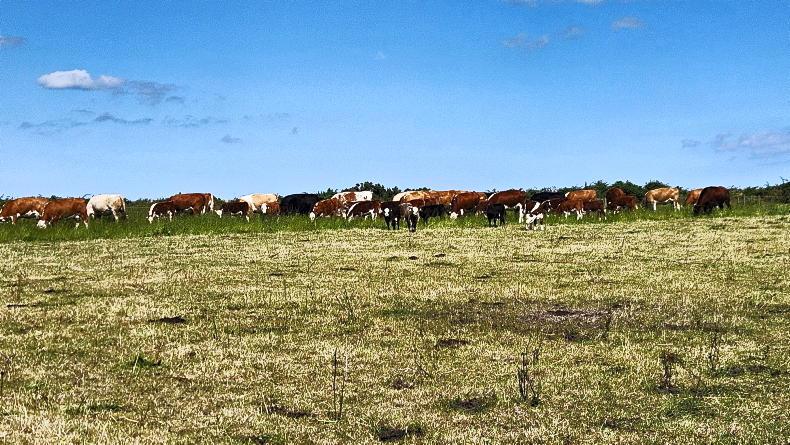
We don’t need that grass for early February anymore but with more compact calving, getting cows and their calves out of the shed in the first half of March is the best way to reduce any potential health issues.



SHARING OPTIONS