


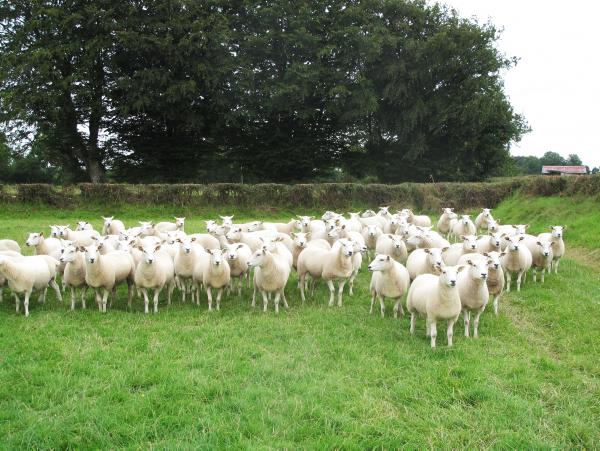
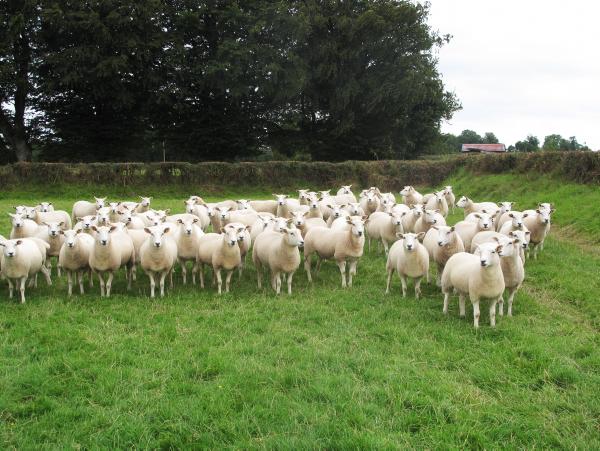
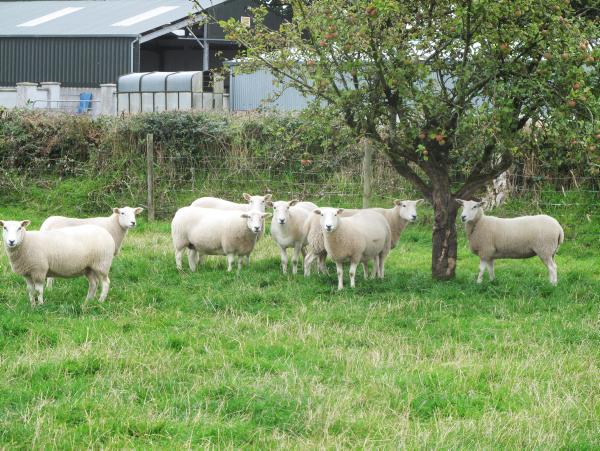
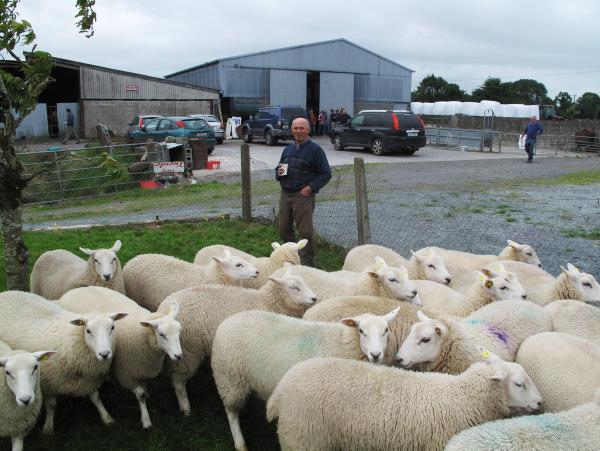
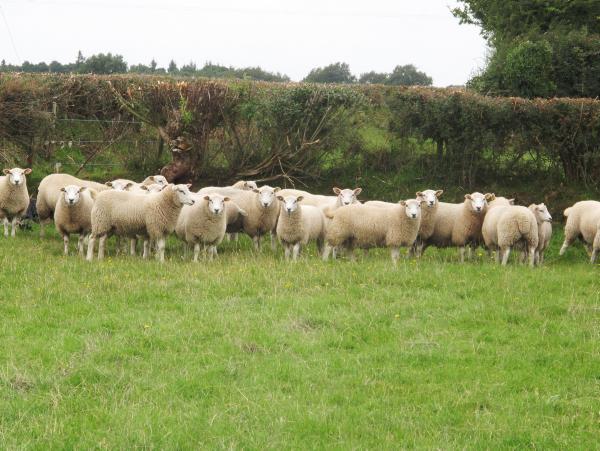
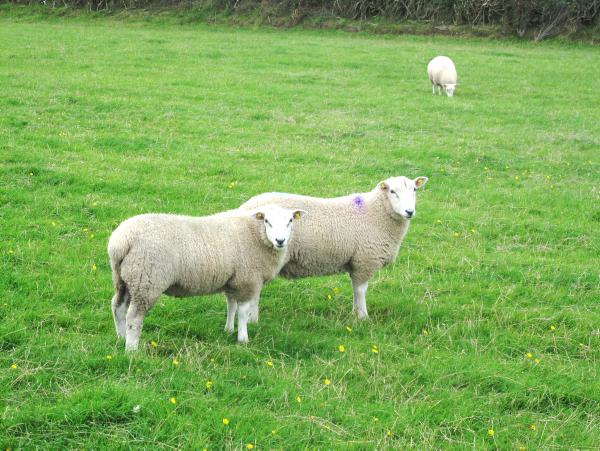
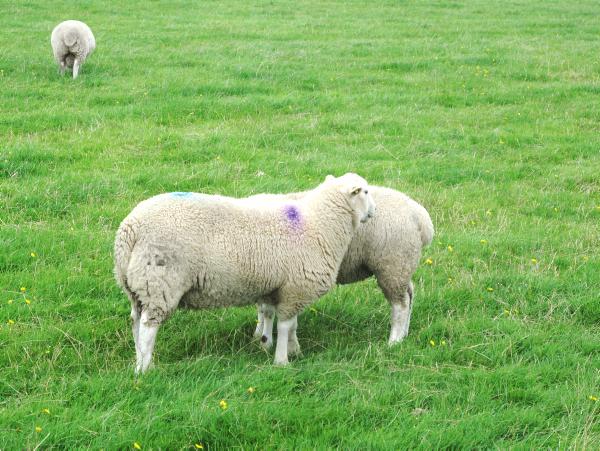
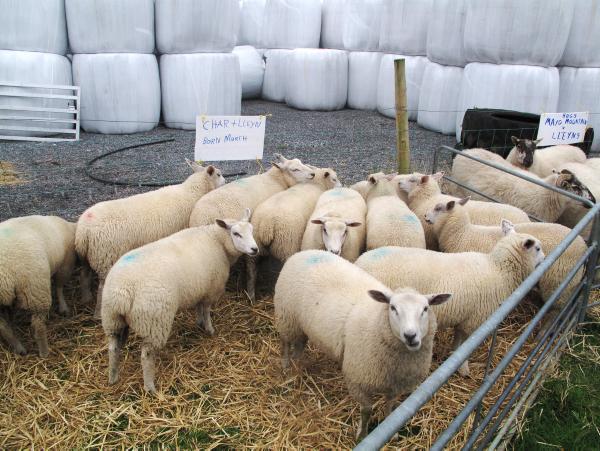
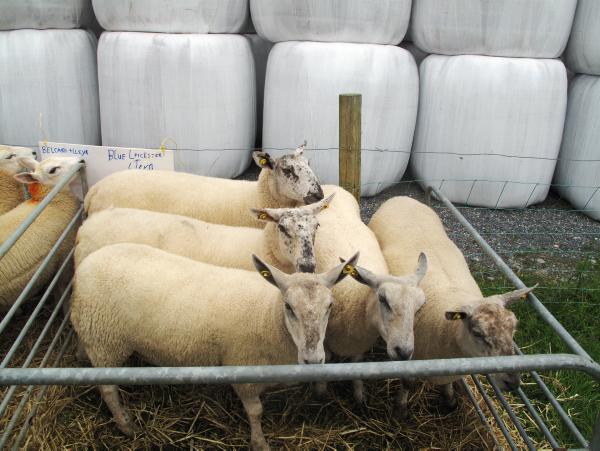
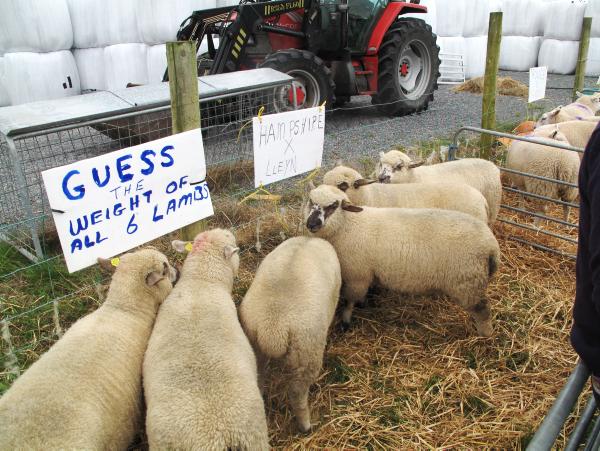
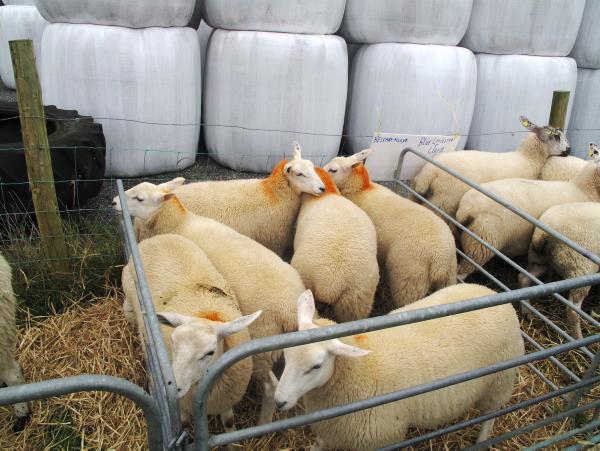
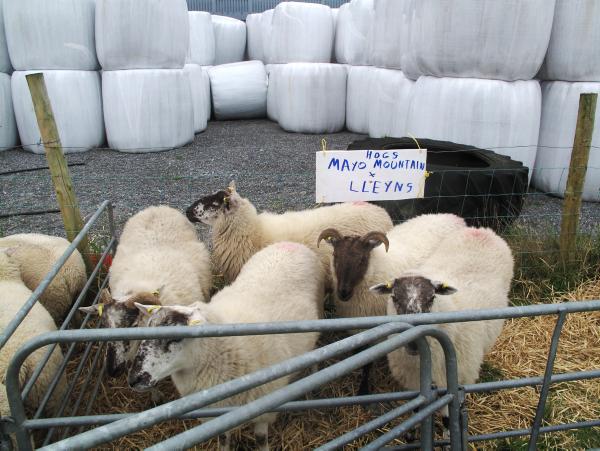
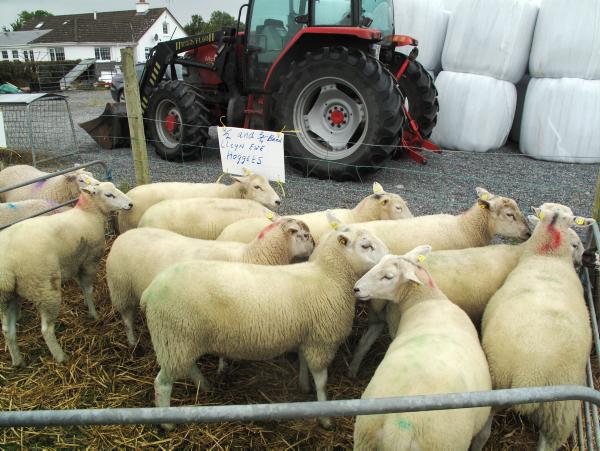
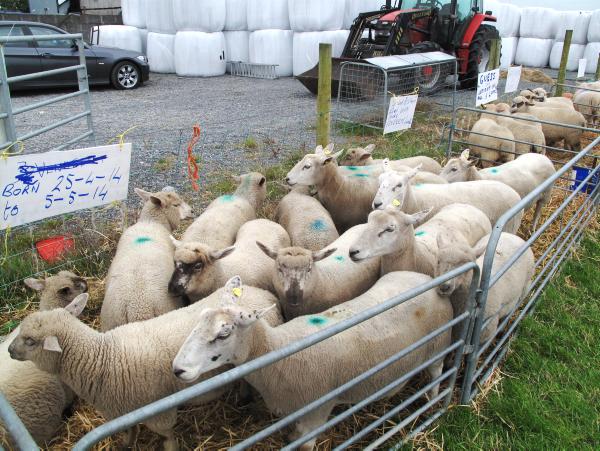
Galway farmer Brendan Donnellan made a significant change to his farming system in 2006 when he purchased 40 pedigree Lleyn hoggets. The hoggets were imported by Robin Darker, Wicklow, from Derek Steen’s Ballylinney flock in Scotland and acted as the foundation for Brendan to build his own pedigree flock, which totalled 129 ewes lambing this spring.
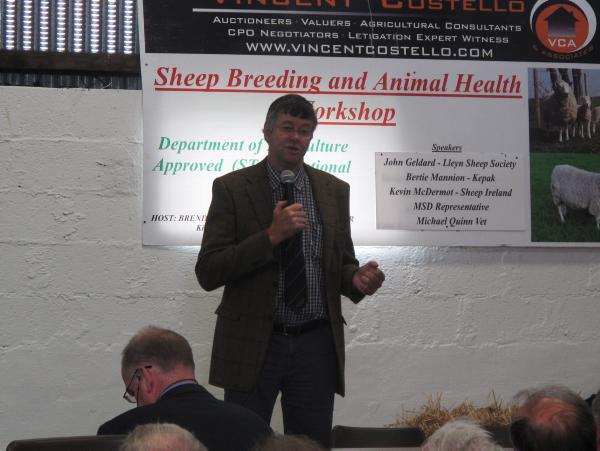
At a recent open day held on the farm by the Lleyn Sheep Society and agricultural consultant Vincent Costello, Brendan said that the focus of switching to Lleyn sheep was to try to reduce workload while maintaining a high level of output. The flock is registered as pedigree with the Lleyn society but run in a commercial manner, with an emphasis on producing lambs off a grass-based system.
Optimising output
Output in the flock is impressive. For 2012/13 and 2013/14, the scanning rate in the flock has averaged around 200%. The favourable grass supplies before, during and post breeding last autumn, combined with ewes in optimum body condition led to high conception rates to the first cycle and early in the second cycle, with 90% of ewes lambing between 15 February and 8 March.
Brendan predicts a similar scenario this autumn, with a high percentage of ewes mated since rams were released about 10 days ago. He says the favourable grass growth has helped ewe condition and breeding activity again this year – a fact he says also contributed to reduced issues at lambing this spring, with ewes in favourable body condition.
To try to replicate the performance this spring, Brendan has allowed a surplus of grass to build, which he hopes will extend the grazing season and maintain ewes in target body condition.
The majority of ewes are lambed outdoors. Last year, 30 triplet-bearing ewes and four ewes carrying quads were housed shortly after scanning and remained indoors until lambing. While this worked well in allowing preferential treatment, Brendan says he feels ewes may have benefited from remaining outdoors for longer and is considering leaving triplet-bearing ewes outdoors for longer next spring, provided there is sufficient grass available to meet higher late pregnancy nutrition requirements. Twin and single-bearing ewes are supplemented with silage and meals in late pregnancy and transferred to fresh paddocks post-lambing.
Suitable facilities
The benefit of having a higher litter size can be quickly outdone if suitable facilities are not in place to deal with higher numbers of lambs born.
Brendan said that twin lambs are generally hardy enough to be outdoors, but explains that greater care is required to minimise lamb losses from triplet-bearing ewes. Ewes suckling three lambs are monitored closely after lambing for the first two to three weeks. Ewes that are having difficulty rearing their three lambs have one lamb removed and reared artificially.
This spring, there were 31 pet lambs reared. Two old ewes with large pendulous udders contracted mastitis and added to the pet lamb group. Management of pet lambs is an area where Brendan feels there is significant scope to cut workload, with the high numbers handled leading to a decision to purchase an automatic feeder for rearing next season’s pet lambs.
Lambs receive artificial milk for seven to eight weeks and are weaned on to grass and concentrate. This year, there were 245 lambs reared from 129 ewes to the ram, or 1.9 lambs per ewe put to the ram.
Replacement policy
Up until this year’s breeding, the flock was made up of a high percentage of foundation ewes imported in 2007 and those born in the following two years.
Following a couple of issues with old ewes at lambing, Brendan took the decision to cull hard following weaning. This was facilitated by fewer ewe lambs sold in 2013, and 52 replacement ewe hoggets joining the flock.
The replacement rate previous to this was generally 20 hoggets each year, with the remaining hoggets sold in breeding sales or off the farm. A small number of ewe hoggets sold this year averaged €260, with a selection of ewe lambs selling for €200/head in the society sale.
Seventy-five ewe lambs have been retained this year and will be held over dry until next year’s breeding sales. These ewe lambs are used during the main season to graze out areas after ewes and lambs and help maintain grass quality. Only a handful of ram lambs are retained and sold as breeding rams. There is a stronger market demand at present for ewe lambs over ram lambs.
Ram lambs are selected before any lambs are drafted, with a larger group initially selected and undergoing a number of selection checks thereafter. All male lambs are kept entire, with ram lambs separated from ewe lambs at weaning and run separate thereafter.
Rams are retained and sold as hoggets. Brendan favours selecting the best-performing rams on grass alone, commenting that overfeeding can often disguise a lot of faults in breeding rams (no concentrates are fed to ram lambs).
Surplus ram lambs are marketed through Kepak Athleague or for the live export market. At present, there are about 40 ram lambs left to sell, with about half of these ready to trade this week and the remainder (mostly pet lambs) by the end of the month.
Current health regime
Ewes received a liver fluke dose about six weeks ago and will receive their next treatment in early November. They will also be treated with an avermectin-based product for sheep scab/lice post-breeding.
Lameness is not an issue for the flock. A policy of prevention rather than cure is practised in all elements of disease control.
History lesson
Brendan says that the origin of the Lleyn breed of sheep can be traced back to Roscommon. The history of the breed shows two landowners. Lloyd Edwards of Nanhoron, Wales, who had close family connections to Ireland and Lord Mostyn of Cefn Amlwch imported ‘Roscommon Ewes’ to the Lleyn peninsula, Wales, from where the breed gets its name, in the early 19th century. The landowners sold these rams to their tenants to cross on Welsh ewes to contribute to the new breed.
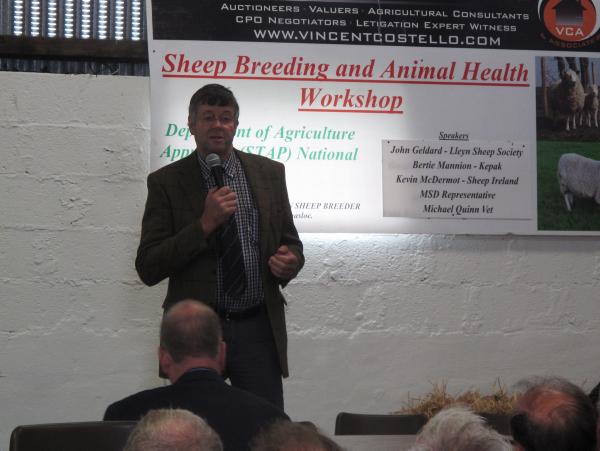
John Geldard, chairman of the National Sheep Association, past chairman of the Lleyn Sheep Society and a long-standing Lleyn breeder (Low Foulshaw Farm, Kendal, Cumbria) spoke at the event on the importance of the breed adopting and progressing down the correct breeding policy.
Explaining his reasoning behind selecting the breed, he said it has come a long way since he first started farming Lleyns in 1990.
“I purchased 268 acres 26 years ago with no capital and no buildings or housing. Everything had to focus on profit – there is pride in farming, but there is no pleasure in the pride if there isn’t any profit. I liked what I saw with the Lleyns and in 1990 purchased 92 Lleyn ewes which had 191 live lambs the following year.
“The breed is different now – it was hard at that time to find sheep to compete with Mule for size and scope. I bought the best possible rams to breed size and build the flock to 1,000 ewes.”
John said the size and scale of Lleyn sheep had to improve as the mature size of ewes meant a lot of lambs were finishing at 30kg to 33kg liveweight with difficulty in bringing lambs to heavier weights.
“20 years ago, the Lleyn was nowhere near big enough to be profitable. A sheep needs to be big enough to have two lambs and rear them to 40kg. Thankfully, this is now the case.”
While the mature weight of the breed has improved, John cautions against progressing down a route of adding too much size to the breed.
“The optimum size of Lleyns is the one that is the most profitable. Once you go too big, you start to go against this. There are two things that influence profit – the price we get for produce and how much it costs to produce it.
“If we select lambs for growth rate continually, we are selecting for larger-sized sheep. Lleyn is a maternal sheep, so there are going to be limitations to the speed at which lambs grow. A lot of commercial crops (flocks) of Lleyns are now bigger in size but can lose mothering ability and prolificacy as a result.
“It is important to recognise that if we get too big, costs of production may rise and cancel out any advantage (compared with bigger sheep).”
John advises those looking to breed terminally bred lambs, as an alternative to achieving increased growth rates in commercial flocks, to use the Lleyn as a maternal sheep, maximising their strengths in terms of mothering ability and lamb output and cross with a terminal sire that will add hybrid vigour and increased lamb growth rates.


SHARING OPTIONS