The spring of 2018 will be remembered for all the wrong reasons in agricultural circles.
A shortage of fodder towards the back end of the spring, low morale, persistent rain and heavy ground meant farmers were hit hard.
It is no surprise that, as a consequence, the land market has been affected.
Similar to many parts of the country, vendors have held land back until the weather begins to pick up.
Listen to Irish Farmers Journal property specialist Anthony Jordan in our podcast below:
Some land that would have been on the market in spring of any other year, has been held until the summer this year.
While many features vary in the land market nationwide, this seems to be fairly commonplace across Ireland.
As the mart manager of Cashel Livestock and Property Sales, Alison De Vere Hunt is in a prime position to see the impact of the harsh spring. And she tells it like it is.
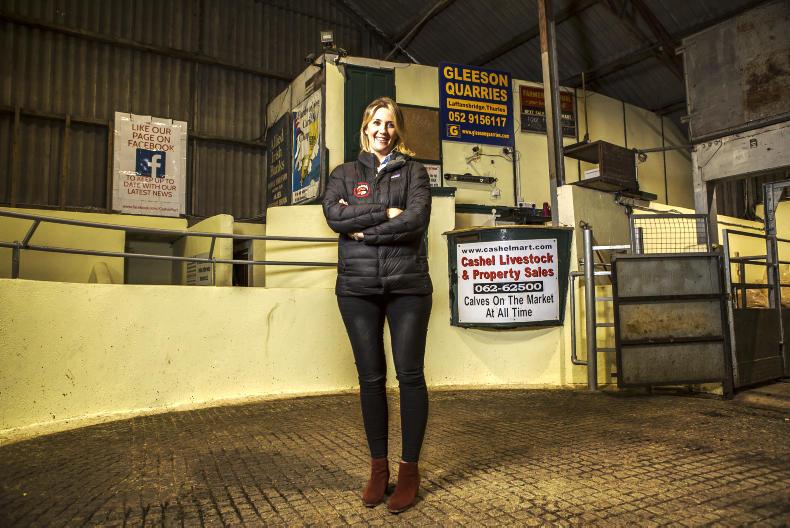
Tipperary auctioneer and mart manager Alison De Vere Hunt. \ Philip Doyle.
Outspoken, articulate and ambitious, the 35-year-old, along with her brother Robert, now run Cashel mart, the business owned by her family for the last 50 years.
As well as being the manager at Cashel, Alison De Vere Hunt has been a qualified auctioneer since early 2013.
She deals predominantly with land in Tipperary, a county which has been riding the crest of a wave of late.
The land market
The Tipperary land market has performed strongly over the last nine months. The back end of 2017 saw some extraordinary results in the county, aided by strong competition between enterprises, quality parcels coming to the market and an appetite from farmers to buy.
While the weather has affected land coming to the market this spring, land has performed well.
“Definitely what is coming up is selling, there is no doubt about it. Any auctions or when closing dates were put on private treaties, people have come and they have bought them.
"And the demand for these are high. In that sense, I don’t think the weather has hampered sales that have come up already all that much.
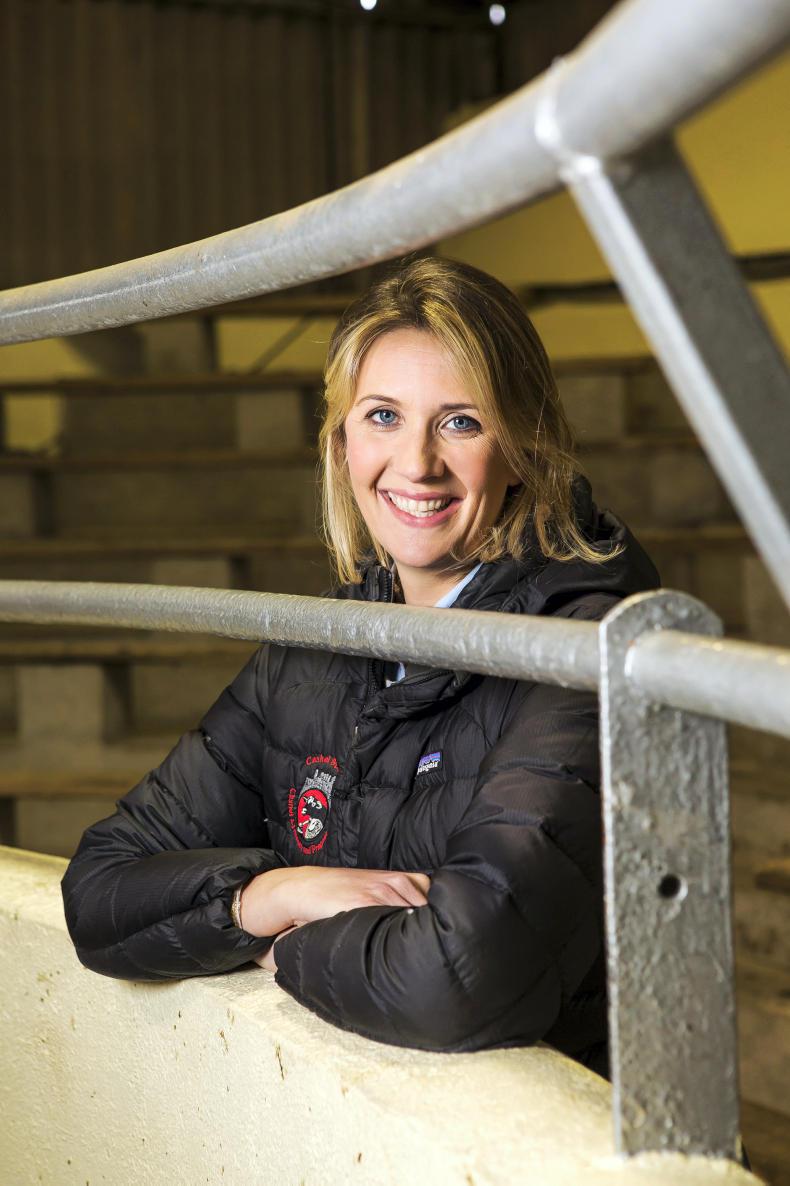
"At the moment, we are kind of going back to the boom, in relation to prices again,” she said.
“The land market is a little later this year. The likes of the dairy farmers are not thinking about buying land at the moment because they are in a difficult position with fodder or trying to keep stock fed.
"For that reason, properties that would be on the market may be pushed out to June when people will want it.
I would say it is more the sellers who have not come forward because they want to hold back because farmers aren’t looking for land as much at the moment.
While the market may be stretched out slightly, there is little doubt that it has performed exceptionally well over the guts of the last year. Alison has described it as “bouyant”. But why has the market been so strong?
“There has been major change since September 2017, all of a sudden the land market in Tipperary picked up.
People are becoming more confident. There seems to be money there that people didn’t spend and banks seem to be willing to lend.
Land is a great commodity. For the seller, they can see prices are strong so they say: ‘Let’s sell in case this bubble bursts.’ People’s memories are short and we seem to be back to this bubble again,” she explains.
“There is land coming on the market and it is snapped up quickly. Everybody wants land. I don’t blame them.
"It will always be there, it is a good investment and is needed. And the price of leasing land is so high now in some cases, you would be as well off buying it. And this is not just Tipperary. This is all over the country.”
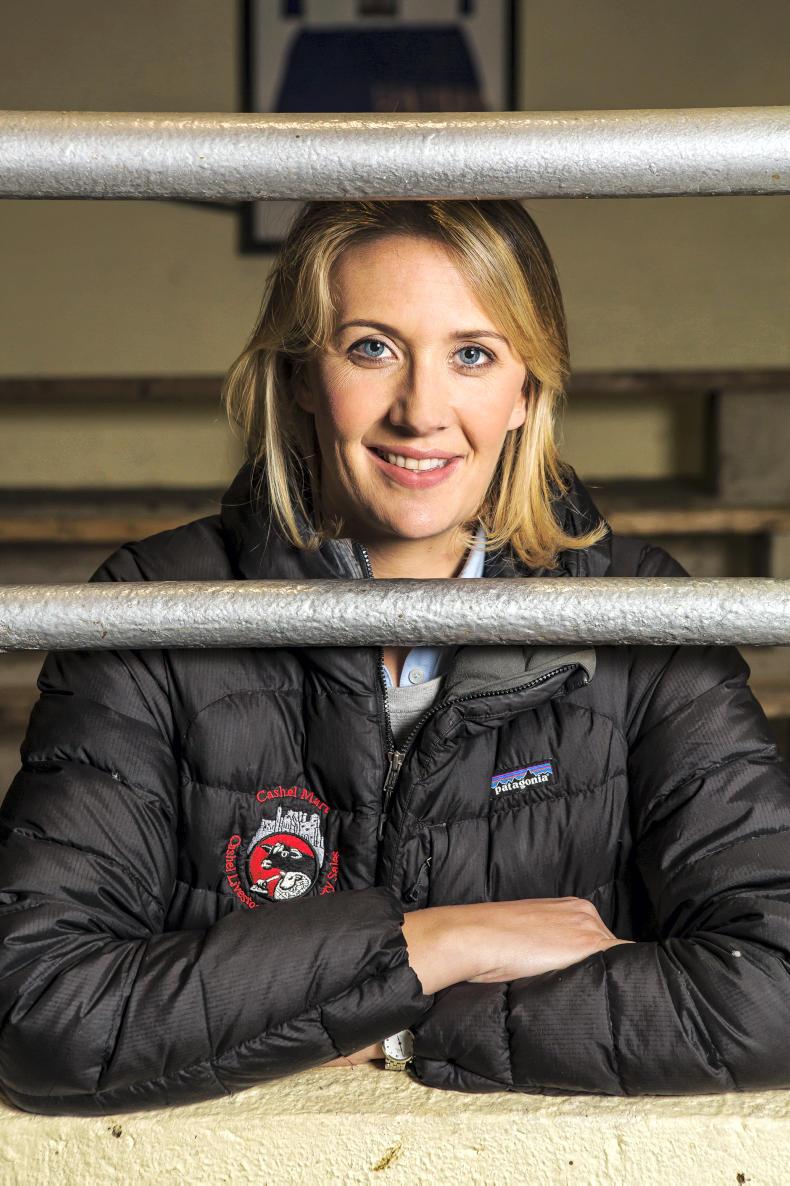
As a mart manager, the impact of the aforementioned harsh spring has resonated quite profoundly on her.
She sees the implications that the fodder shortage in late spring has had on farmers. Coupled with higher stocking rates and in other cases less help, she has witnessed farmers who have struggled this spring.
“I would say a lot of farmers are so shattered. They don’t have the help, yet they may have 100 more cows than they had five years ago.
"They work night and day and you feel so sorry for them. There are some who are just not in a good place mentally at the moment. And that is the problem. Suicide in farming is very prevalent.
"We need to mind our farmers and certain things need to be put in place to help them mind themselves.
From a mental health point of view, organisations need to stop advising farmers to increase their stocking rates because when things do go bad, which they did this spring, we had nothing to fall back on.
"2013 was another example of this. We didn’t learn from that. If we don’t learn from this, we are going to have another fodder shortage in less than 12 months. It is not nice seeing your customers coming into you and them looking frazzled.”
Alison lost her father Philip to suicide in December 2012. From there, she and her brother Robert took over the running of the mart. As a result, she sympathises with those who feel the stress of the workload that agriculture can impose.
“His death was really tough but, to be honest, I threw my grief into the mart and worked like a dog. I was working about 70 hours a week in those days. It was just go, go, go.
"The mart was great because it got you through. People were great. The support and goodwill, if you could bottle it, was just amazing.
"People really wanted us to get on and do well. It was testimony to my father and it was such a help. But it was tough. And it still can be tough, you have to get on with it. You have no choice but to dig the heels in and plough on.”
That she has certainly done.
Tipperary at the heart
The name De Vere Hunt is an Anglo Saxon persuasion. When one speaks with her and listens to her sentiment toward the area and the farmers from it, you get the sense that Tipperary is very much at the heart.
Now 35, she returned to working in the mart in 2010. Before that, she spent time in London studying her undergrad in psychology, before completing a master’s from DIT Aungier in Business and Entrepreneurship.
At her father’s request, she went to study for her auctioneer licence in DIT on Bolton Street and completed her studies a couple of months after his death.
The issues today and the future
Times are changing in the marts. Rising insurance costs mean stricter restrictions on in-mart movements are imminent.
De Vere Hunt acknowledges the contribution and importance of farmers to the mart and the impact the new regulation within marts will have on them, but safety has to take priority.
“Every mart is going to be implementing changes. The time has come now where we have no choice. It is not necessarily a bad thing.
"I think everybody does have to obey the rules. And that is for every walk of life, not just marts.
“Mart managers and owners understand that livestock are dangerous.

"The customers need to be aware too. People need to take precautions and we are the people who need to police that and implement it.
"Farmers need to adhere to the notices in marts and listen to the mart managers and staff in regards to where they can be on a mart premises.
"For us, we have been spending money on an ongoing basis. We have heightened our pens, grooved everywhere to prevent slippage, re-concreted our yard, widened our access and put in barriers.
"So it is something we continuously work on. We have also increased our staffing number this year to help with this. It is a case of getting with the times and doing it right. We have to do it and get it done,” she explains.
The future
There are no doubt challenges to the mart trade, concerns which are well justified according to Alison.
Unfortunately, the future of rural Ireland and the marts within them is something that she does question and worry for.
The ability to get paid, the threat of rising costs and competition from websites means marts face challenges, some of which may be a step too far for some marts.
There are only 80 odd marts in the country. And there are nine marts in Tipperary. If we come back in 10 years’ time, I wonder how many of those marts will still be there.
Alison has had to grow up fast after taking the reins of a busy enterprise in a busy industry at the age of 30. And so far so good but, as she says herself, the work is never really done, especially as a farmer.
Anyone affected by the issues raised in this article can free phone the Samaritans on 116 123.
Read more
Fancy a job as an auctioneer?
Farmer Writes: take solace that everyone is having a difficult spring
The spring of 2018 will be remembered for all the wrong reasons in agricultural circles.
A shortage of fodder towards the back end of the spring, low morale, persistent rain and heavy ground meant farmers were hit hard.
It is no surprise that, as a consequence, the land market has been affected.
Similar to many parts of the country, vendors have held land back until the weather begins to pick up.
Listen to Irish Farmers Journal property specialist Anthony Jordan in our podcast below:
Some land that would have been on the market in spring of any other year, has been held until the summer this year.
While many features vary in the land market nationwide, this seems to be fairly commonplace across Ireland.
As the mart manager of Cashel Livestock and Property Sales, Alison De Vere Hunt is in a prime position to see the impact of the harsh spring. And she tells it like it is.
Tipperary auctioneer and mart manager Alison De Vere Hunt. \ Philip Doyle.
Outspoken, articulate and ambitious, the 35-year-old, along with her brother Robert, now run Cashel mart, the business owned by her family for the last 50 years.
As well as being the manager at Cashel, Alison De Vere Hunt has been a qualified auctioneer since early 2013.
She deals predominantly with land in Tipperary, a county which has been riding the crest of a wave of late.
The land market
The Tipperary land market has performed strongly over the last nine months. The back end of 2017 saw some extraordinary results in the county, aided by strong competition between enterprises, quality parcels coming to the market and an appetite from farmers to buy.
While the weather has affected land coming to the market this spring, land has performed well.
“Definitely what is coming up is selling, there is no doubt about it. Any auctions or when closing dates were put on private treaties, people have come and they have bought them.
"And the demand for these are high. In that sense, I don’t think the weather has hampered sales that have come up already all that much.
"At the moment, we are kind of going back to the boom, in relation to prices again,” she said.
“The land market is a little later this year. The likes of the dairy farmers are not thinking about buying land at the moment because they are in a difficult position with fodder or trying to keep stock fed.
"For that reason, properties that would be on the market may be pushed out to June when people will want it.
I would say it is more the sellers who have not come forward because they want to hold back because farmers aren’t looking for land as much at the moment.
While the market may be stretched out slightly, there is little doubt that it has performed exceptionally well over the guts of the last year. Alison has described it as “bouyant”. But why has the market been so strong?
“There has been major change since September 2017, all of a sudden the land market in Tipperary picked up.
People are becoming more confident. There seems to be money there that people didn’t spend and banks seem to be willing to lend.
Land is a great commodity. For the seller, they can see prices are strong so they say: ‘Let’s sell in case this bubble bursts.’ People’s memories are short and we seem to be back to this bubble again,” she explains.
“There is land coming on the market and it is snapped up quickly. Everybody wants land. I don’t blame them.
"It will always be there, it is a good investment and is needed. And the price of leasing land is so high now in some cases, you would be as well off buying it. And this is not just Tipperary. This is all over the country.”
As a mart manager, the impact of the aforementioned harsh spring has resonated quite profoundly on her.
She sees the implications that the fodder shortage in late spring has had on farmers. Coupled with higher stocking rates and in other cases less help, she has witnessed farmers who have struggled this spring.
“I would say a lot of farmers are so shattered. They don’t have the help, yet they may have 100 more cows than they had five years ago.
"They work night and day and you feel so sorry for them. There are some who are just not in a good place mentally at the moment. And that is the problem. Suicide in farming is very prevalent.
"We need to mind our farmers and certain things need to be put in place to help them mind themselves.
From a mental health point of view, organisations need to stop advising farmers to increase their stocking rates because when things do go bad, which they did this spring, we had nothing to fall back on.
"2013 was another example of this. We didn’t learn from that. If we don’t learn from this, we are going to have another fodder shortage in less than 12 months. It is not nice seeing your customers coming into you and them looking frazzled.”
Alison lost her father Philip to suicide in December 2012. From there, she and her brother Robert took over the running of the mart. As a result, she sympathises with those who feel the stress of the workload that agriculture can impose.
“His death was really tough but, to be honest, I threw my grief into the mart and worked like a dog. I was working about 70 hours a week in those days. It was just go, go, go.
"The mart was great because it got you through. People were great. The support and goodwill, if you could bottle it, was just amazing.
"People really wanted us to get on and do well. It was testimony to my father and it was such a help. But it was tough. And it still can be tough, you have to get on with it. You have no choice but to dig the heels in and plough on.”
That she has certainly done.
Tipperary at the heart
The name De Vere Hunt is an Anglo Saxon persuasion. When one speaks with her and listens to her sentiment toward the area and the farmers from it, you get the sense that Tipperary is very much at the heart.
Now 35, she returned to working in the mart in 2010. Before that, she spent time in London studying her undergrad in psychology, before completing a master’s from DIT Aungier in Business and Entrepreneurship.
At her father’s request, she went to study for her auctioneer licence in DIT on Bolton Street and completed her studies a couple of months after his death.
The issues today and the future
Times are changing in the marts. Rising insurance costs mean stricter restrictions on in-mart movements are imminent.
De Vere Hunt acknowledges the contribution and importance of farmers to the mart and the impact the new regulation within marts will have on them, but safety has to take priority.
“Every mart is going to be implementing changes. The time has come now where we have no choice. It is not necessarily a bad thing.
"I think everybody does have to obey the rules. And that is for every walk of life, not just marts.
“Mart managers and owners understand that livestock are dangerous.
"The customers need to be aware too. People need to take precautions and we are the people who need to police that and implement it.
"Farmers need to adhere to the notices in marts and listen to the mart managers and staff in regards to where they can be on a mart premises.
"For us, we have been spending money on an ongoing basis. We have heightened our pens, grooved everywhere to prevent slippage, re-concreted our yard, widened our access and put in barriers.
"So it is something we continuously work on. We have also increased our staffing number this year to help with this. It is a case of getting with the times and doing it right. We have to do it and get it done,” she explains.
The future
There are no doubt challenges to the mart trade, concerns which are well justified according to Alison.
Unfortunately, the future of rural Ireland and the marts within them is something that she does question and worry for.
The ability to get paid, the threat of rising costs and competition from websites means marts face challenges, some of which may be a step too far for some marts.
There are only 80 odd marts in the country. And there are nine marts in Tipperary. If we come back in 10 years’ time, I wonder how many of those marts will still be there.
Alison has had to grow up fast after taking the reins of a busy enterprise in a busy industry at the age of 30. And so far so good but, as she says herself, the work is never really done, especially as a farmer.
Anyone affected by the issues raised in this article can free phone the Samaritans on 116 123.
Read more
Fancy a job as an auctioneer?
Farmer Writes: take solace that everyone is having a difficult spring






SHARING OPTIONS