



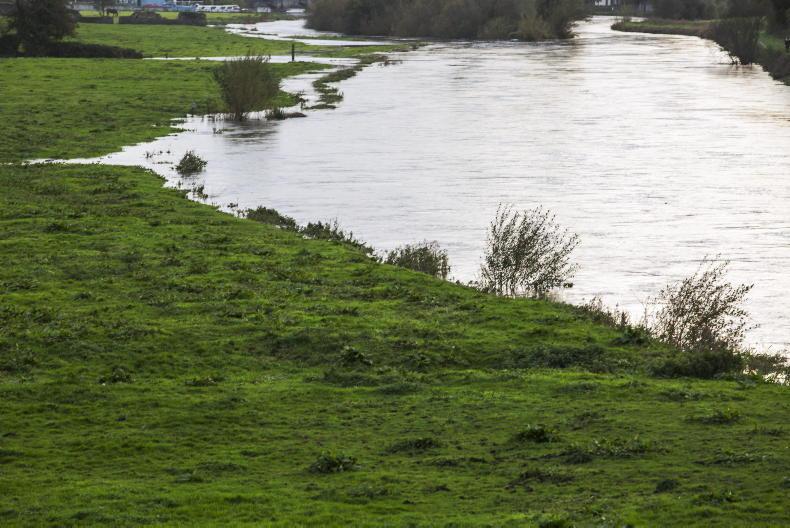
Rural planning applications could face far stricter regulations around the water framework directive.
A recent opinion by the advocate general of the European Court of Justice (ECJ) states that planning authorities must take into account virtually all water bodies that may be affected by a proposed development.
“To date, only the larger water bodies, for example lakes in excess of 0.5 km² (50 hectares), must be classified,” said barrister and agri-business consultant Ciarán Dolan.
“However, in the opinion of the advocate general, while water bodies below this level do not have to be as classified, a planning authority must establish what is referred to as the an ‘ad hoc status’ of a water body that may be affected by a proposed project and ensure that the proposed project will not cause a deterioration in the current status of that water body,” he explained.
Existing rules
The opinion of the advocate general was delivered last week in the case of Sweetman v An Bord Pleanála and Ireland. The case had been referred to the ECJ by the High Court.
While the full ECJ may not take on the opinion of the advocate general, the court is invariably influenced by their findings.
Dolan pointed out that if existing regulations need to be amended at a national level, this process will be handled by the High Court, with changes being brought into effect by amending the current Irish statutory instruments covering water quality.
“If changes along the lines of the advocate general’s opinion are finally adopted, they will add another layer to the planning permission process,” Dolan said.
There will also be additional costs involved in establishing the status of any water body concerned, he added.






SHARING OPTIONS