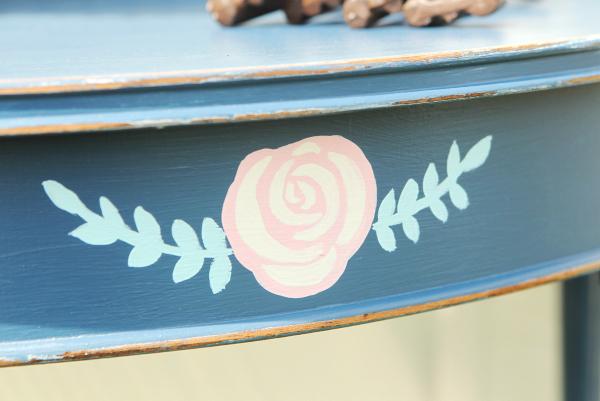
Creating the stencil detail using the template. Credit: Carol Dunne.
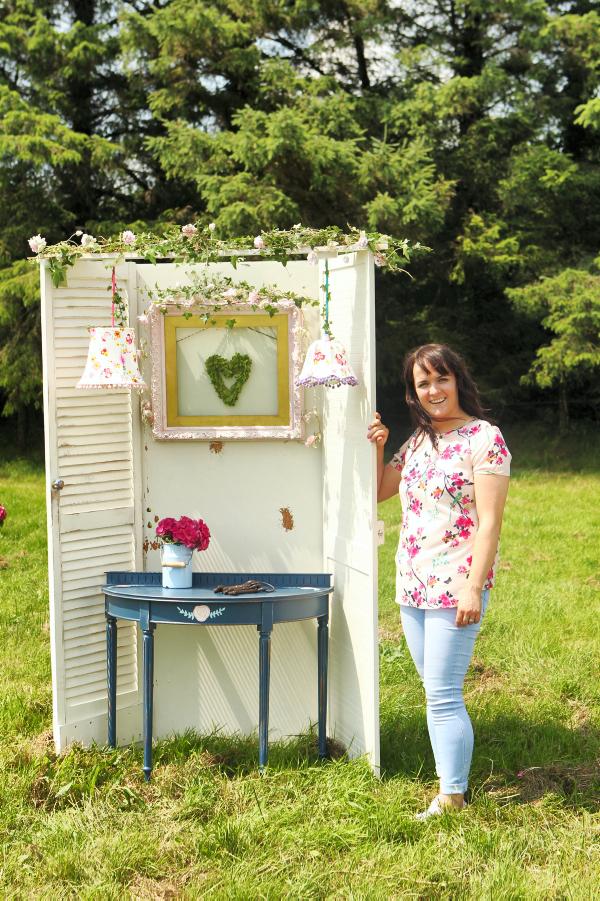
Joanne Condon of Kyle Lane with her upcycled hall table. Credit: Carol Dunne.
When your table is fully dry, achieve the “distressed look” by sanding corners and sharp edges to give the table a bit of character. Credit: Carol Dunne.
Stencil detail on upcycled hall table, using template. Credit: Carol Dunne.
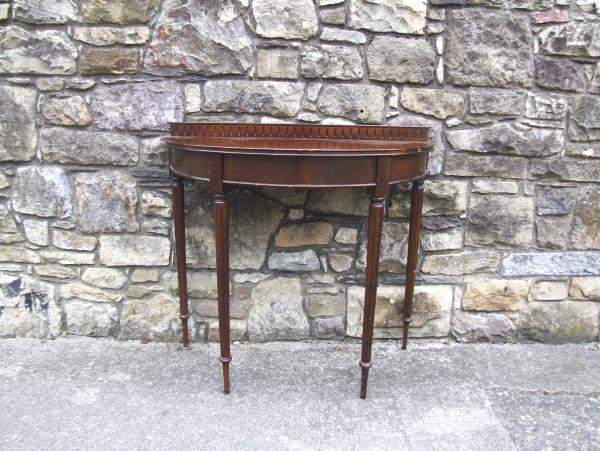
This project uses popular upcycling techniques, such as stencilling and distressing, to give an old hall table a new look.
ADVERTISEMENT
Materials needed
• Medium or fine-grain sandpaper.
• A cloth.
• Water-based primer (I used Farrow & Ball interior wood primer and undercoat).
• Water-based paint (I used Farrow & Ball estate eggshell, stiffkey blue 281, arsenic 214, Nancy’s blushes 278, blue ground 210 and clunch 2009).
• Paintbrush.
• Bristly brush for stencilling.
• Blade.
• Marker.
• Masking tape.
Method
In a circular motion, sand the table with medium/fine-grain sandpaper.
Wipe off any dust from sanding with a dry cloth.
Prime the table using a water-based primer and undercoat.
Paint in a colour of your choice with two to three coats of paint, allowing them to dry between each coat.
Print the full-sized stencil template. Print out the templates and trace out each section onto a piece of heavy card or acetate.
With a sharp blade, cut out each colour on a separate acetate.
Apply Template 1 with masking tape to the area of your table you want to place the flowers on (this is to make sure the stencil won’t move while you are painting).
Start with the largest colour first (Template 1) and work your way to the smallest.
With the bristly brush, dab the paint into the stencil until it’s covered in an even coat and leave it to dry fully.
Remove the stencil and tape down Template 2 to the table and repeat steps seven and nine with colour.
Repeat steps seven and nine with the third stencil.
With a small brush, correct any mistakes and sharpen up the stencil design.
When your table is fully dry, achieve the distressed look by sanding corners and sharp edges to give the table a bit of character. Be careful not to get too “sandpaper happy”. Less is more.
Register for free to read this story and our free stories.
This content is available to digital subscribers and loyalty code users only. Sign in to your account, use the code or subscribe to get unlimited access.
The reader loyalty code gives you full access to the site from when you enter it until the following Wednesday at 9pm. Find your unique code on the back page of Irish Country Living every week.
CODE ACCEPTED
You have full access to the site until next Wednesday at 9pm.
CODE NOT VALID
Please try again or contact support.
Upcycling a hall table in “granny-chic” style
LEVEL: Intermediate
This project uses popular upcycling techniques, such as stencilling and distressing, to give an old hall table a new look.
Materials needed
• Medium or fine-grain sandpaper.
• A cloth.
• Water-based primer (I used Farrow & Ball interior wood primer and undercoat).
• Water-based paint (I used Farrow & Ball estate eggshell, stiffkey blue 281, arsenic 214, Nancy’s blushes 278, blue ground 210 and clunch 2009).
• Paintbrush.
• Bristly brush for stencilling.
• Blade.
• Marker.
• Masking tape.
Method
In a circular motion, sand the table with medium/fine-grain sandpaper.
Wipe off any dust from sanding with a dry cloth.
Prime the table using a water-based primer and undercoat.
Paint in a colour of your choice with two to three coats of paint, allowing them to dry between each coat.
Print the full-sized stencil template. Print out the templates and trace out each section onto a piece of heavy card or acetate.
With a sharp blade, cut out each colour on a separate acetate.
Apply Template 1 with masking tape to the area of your table you want to place the flowers on (this is to make sure the stencil won’t move while you are painting).
Start with the largest colour first (Template 1) and work your way to the smallest.
With the bristly brush, dab the paint into the stencil until it’s covered in an even coat and leave it to dry fully.
Remove the stencil and tape down Template 2 to the table and repeat steps seven and nine with colour.
Repeat steps seven and nine with the third stencil.
With a small brush, correct any mistakes and sharpen up the stencil design.
When your table is fully dry, achieve the distressed look by sanding corners and sharp edges to give the table a bit of character. Be careful not to get too “sandpaper happy”. Less is more.
If you would like to speak to a member of our team, please call us on 01-4199525.
Link sent to your email address
We have sent an email to your address. Please click on the link in this email to reset your password. If you can't find it in your inbox, please check your spam folder. If you can't find the email, please call us on 01-4199525.
ENTER YOUR LOYALTY CODE:
The reader loyalty code gives you full access to the site from when you enter it until the following Wednesday at 9pm. Find your unique code on the back page of Irish Country Living every week.






SHARING OPTIONS