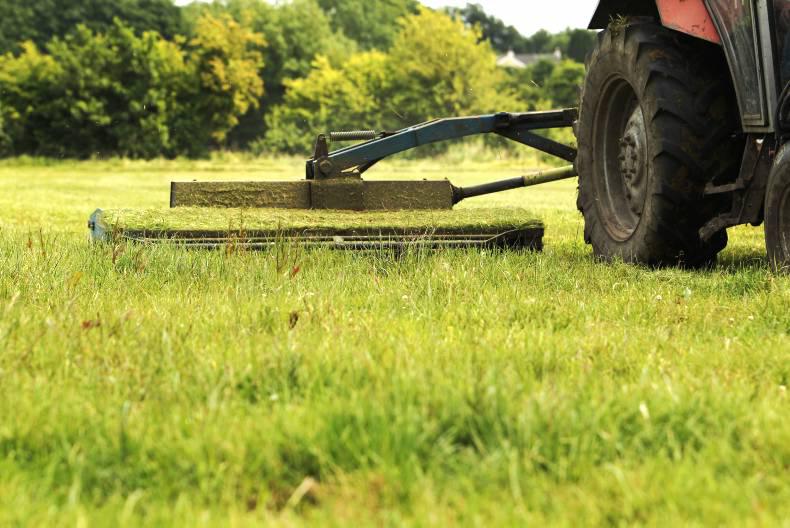
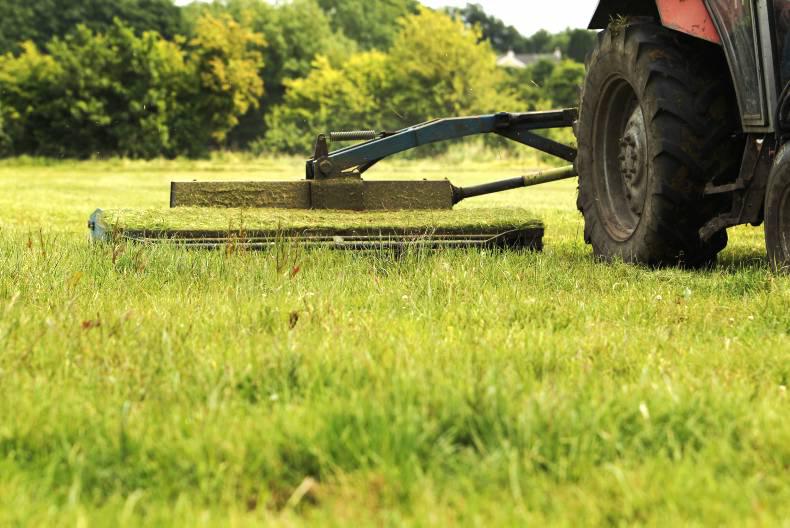
First-cut silage has now been harvested on all programme farms.
Most farms had managed to graze off silage ground this year prior to harvesting. The earliest farm had silage cut at the end of May, having grazed it in early March. This practice of grazing the silage ground facilitates earlier turnout of stock.
It also increases grass quality as the dead material is removed from the base of the sward.
Silage cutting this year was generally a week later than usual across the programme farms.
Grass yield and quality seemed relatively good, although weather was a little unsettled at harvest on some of the farms. A number of programme farmers undertook ensilability tests pre-cutting. This test gives a quick indication of how suitable the grass is for cutting and whether or not sufficient time has passed for any applied fertiliser nitrogen to be used up. This will be done again for second cuts.
Maintaining grass quality is a challenge on some of the programme farms as the good weather is causing grass to seed very quickly. This is more of a problem on the driest farms. Topping down to 4cm and managing grass quality is essential to keep liveweight gains at grass maximised.
Cattle are being dosed on the programme farms to control parasites at grass. Animal health should not be forgotten during the grazing period if liveweight gain at grass is to be maximised.
Summer dosing schedules are specified in the herd health plans, which have been completed on all of the programme farms.
Some farmers are using faecal sampling to be sure fluke and worm burdens are minimised.
Faecal sampling involves taking a small sample of dung from a group of animals. This is then sent to the relevant laboratory and can be tested for the presence of gut/lungworm and liver/rumen fluke.
Managing grazing areas to achieve good grass quality has been very difficult this year.
After a good spell of weather in April when stock were performing well and grazing down paddocks tight, weather became unsettled and grassland management became more difficult.
Stock had to be moved on faster and at higher post-grazing heights to limit poaching. I managed to keep 2014 spring-born bullocks and autumn-born bulls at grass but some cows had to be rehoused on three different occasions, for a day or two at a time.
I also had to rehouse some replacement heifers for a few days. With the recent spell of good weather, grazing is getting back on track but it has been necessary to top the grass down to 4cm after each grazing to help improve quality in the next rotation.
Autumn-calving cows are being used to graze any poorer quality swards on the farm. This is helping to control body condition of these cows, as well as leaving the better quality swards for the priority stock on the farm.
I finished the first cut of silage on 9 June. This is a week later than last year. Yield was actually better than expected. I am hopeful that silage quality will still be reasonably good as grass didn’t seem to be as forward as last year due to the colder weather and poorer grass growth this spring.
For second cut, I have applied 2,500 gallons of slurry per acre followed by three bags of 20:10:10. My silage ground is deficient in phosphorous and potash with many fields analysing indices 0 and 1. The second cut should be ready for cutting around the end of July.
After the second cut, I plan to reseed seven acres of this silage ground, along with five acres of grazing ground. Conventional ploughing and cultivation will be used with mainly late heading grass varieties selected. Some drains and repairs to existing drainage will also be required.
I reseeded a field in April and it required a post-emergence spray last week. I used Triad, as the main problem was chickweed, and this herbicide is clover safe. I have also identified some fields to be sprayed for docks in the next couple of months when it will be easier to get them at a suitable growth stage.
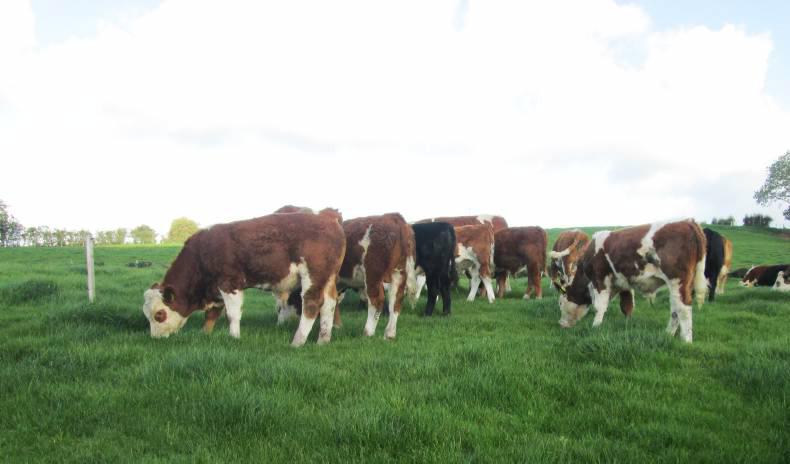
The 2014 spring-born bullocks and autumn-born bulls were weighed on 18 June. The bullocks averaged 502kg with the bulls averaging 373kg. Steers have gained 0.9kg per head per day and bulls 1.32kg per head per day since their last weighing in mid-May. From turnout to mid-May, the steers and bulls had gained 1.15kg and 1.6kg per head per day, respectively. The latest weighings suggest that growth rates have slowed, but I am reasonably happy with overall gains as they are still on track to achieve the target weights of 450kg for the bulls and 550kg for the steers by the end of August.
These cattle were dosed on 25 May, but faecal samples taken last week showed very high levels of gut worms, which may be contributing to the reduced performance. This was disappointing as I had used a Moxidectin-based product, which claims to provide eight to 10 weeks’ protection. The 2015 spring-born calves also received a worm dose last week.
The autumn herd, which is due to calve down from early August, received a fluke and worm drench this week, as well as being treated with a fly repellent pour-on to prevent cases of summer mastitis.
This should cover them for eight weeks at which point they will start calving. I decided to give them a fluke and worm drench as lungworm was identified as a problem in my autumn cows two years ago. The fluke drench was included in my animal health plan, devised last winter.
My vet recommended two fluke treatments per year for the autumn calvers. These cows are now in ideal condition for calving, with most just approaching a body condition score of 3.0. They are receiving pre-calving minerals in the form of lick buckets.
The breeding season in the spring herd will soon be finished. It got off to a good start with heats easily identifiable, but heat detection became more difficult as the weather became more unsettled. I managed to serve most of the cows to DIY AI and they seem to have held.
I put in the stock bull three weeks ago but have not seen much activity. He will be removed on 1 July. Kamar patches were used as an aid to heat detection. All breeding animals were vaccinated for bovine viral diarrhoea (BVD) and leptospirosis.
Topping taking place to maintain grass quality.Pre-grazing swards of 8cm (2,800kg DM) being targeted.Forward creep grazing taking place to ensure quality grass goes to spring-born calves.
First-cut silage has now been harvested on all programme farms.
Most farms had managed to graze off silage ground this year prior to harvesting. The earliest farm had silage cut at the end of May, having grazed it in early March. This practice of grazing the silage ground facilitates earlier turnout of stock.
It also increases grass quality as the dead material is removed from the base of the sward.
Silage cutting this year was generally a week later than usual across the programme farms.
Grass yield and quality seemed relatively good, although weather was a little unsettled at harvest on some of the farms. A number of programme farmers undertook ensilability tests pre-cutting. This test gives a quick indication of how suitable the grass is for cutting and whether or not sufficient time has passed for any applied fertiliser nitrogen to be used up. This will be done again for second cuts.
Maintaining grass quality is a challenge on some of the programme farms as the good weather is causing grass to seed very quickly. This is more of a problem on the driest farms. Topping down to 4cm and managing grass quality is essential to keep liveweight gains at grass maximised.
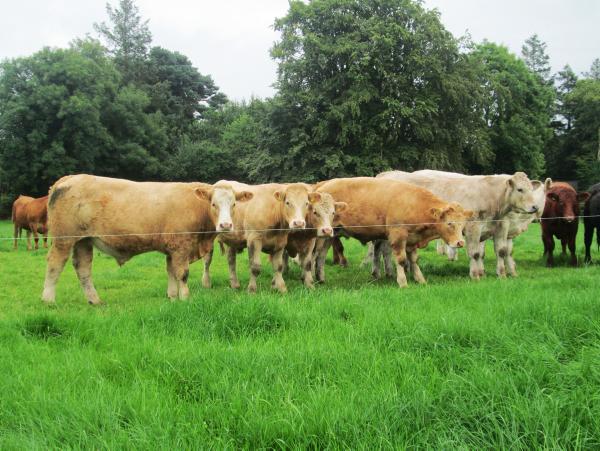
Cattle are being dosed on the programme farms to control parasites at grass. Animal health should not be forgotten during the grazing period if liveweight gain at grass is to be maximised.
Summer dosing schedules are specified in the herd health plans, which have been completed on all of the programme farms.
Some farmers are using faecal sampling to be sure fluke and worm burdens are minimised.
Faecal sampling involves taking a small sample of dung from a group of animals. This is then sent to the relevant laboratory and can be tested for the presence of gut/lungworm and liver/rumen fluke.
Managing grazing areas to achieve good grass quality has been very difficult this year.
After a good spell of weather in April when stock were performing well and grazing down paddocks tight, weather became unsettled and grassland management became more difficult.
Stock had to be moved on faster and at higher post-grazing heights to limit poaching. I managed to keep 2014 spring-born bullocks and autumn-born bulls at grass but some cows had to be rehoused on three different occasions, for a day or two at a time.
I also had to rehouse some replacement heifers for a few days. With the recent spell of good weather, grazing is getting back on track but it has been necessary to top the grass down to 4cm after each grazing to help improve quality in the next rotation.
Autumn-calving cows are being used to graze any poorer quality swards on the farm. This is helping to control body condition of these cows, as well as leaving the better quality swards for the priority stock on the farm.
I finished the first cut of silage on 9 June. This is a week later than last year. Yield was actually better than expected. I am hopeful that silage quality will still be reasonably good as grass didn’t seem to be as forward as last year due to the colder weather and poorer grass growth this spring.
For second cut, I have applied 2,500 gallons of slurry per acre followed by three bags of 20:10:10. My silage ground is deficient in phosphorous and potash with many fields analysing indices 0 and 1. The second cut should be ready for cutting around the end of July.
After the second cut, I plan to reseed seven acres of this silage ground, along with five acres of grazing ground. Conventional ploughing and cultivation will be used with mainly late heading grass varieties selected. Some drains and repairs to existing drainage will also be required.
I reseeded a field in April and it required a post-emergence spray last week. I used Triad, as the main problem was chickweed, and this herbicide is clover safe. I have also identified some fields to be sprayed for docks in the next couple of months when it will be easier to get them at a suitable growth stage.
The 2014 spring-born bullocks and autumn-born bulls were weighed on 18 June. The bullocks averaged 502kg with the bulls averaging 373kg. Steers have gained 0.9kg per head per day and bulls 1.32kg per head per day since their last weighing in mid-May. From turnout to mid-May, the steers and bulls had gained 1.15kg and 1.6kg per head per day, respectively. The latest weighings suggest that growth rates have slowed, but I am reasonably happy with overall gains as they are still on track to achieve the target weights of 450kg for the bulls and 550kg for the steers by the end of August.
These cattle were dosed on 25 May, but faecal samples taken last week showed very high levels of gut worms, which may be contributing to the reduced performance. This was disappointing as I had used a Moxidectin-based product, which claims to provide eight to 10 weeks’ protection. The 2015 spring-born calves also received a worm dose last week.
The autumn herd, which is due to calve down from early August, received a fluke and worm drench this week, as well as being treated with a fly repellent pour-on to prevent cases of summer mastitis.
This should cover them for eight weeks at which point they will start calving. I decided to give them a fluke and worm drench as lungworm was identified as a problem in my autumn cows two years ago. The fluke drench was included in my animal health plan, devised last winter.
My vet recommended two fluke treatments per year for the autumn calvers. These cows are now in ideal condition for calving, with most just approaching a body condition score of 3.0. They are receiving pre-calving minerals in the form of lick buckets.
The breeding season in the spring herd will soon be finished. It got off to a good start with heats easily identifiable, but heat detection became more difficult as the weather became more unsettled. I managed to serve most of the cows to DIY AI and they seem to have held.
I put in the stock bull three weeks ago but have not seen much activity. He will be removed on 1 July. Kamar patches were used as an aid to heat detection. All breeding animals were vaccinated for bovine viral diarrhoea (BVD) and leptospirosis.
Topping taking place to maintain grass quality.Pre-grazing swards of 8cm (2,800kg DM) being targeted.Forward creep grazing taking place to ensure quality grass goes to spring-born calves. 





SHARING OPTIONS