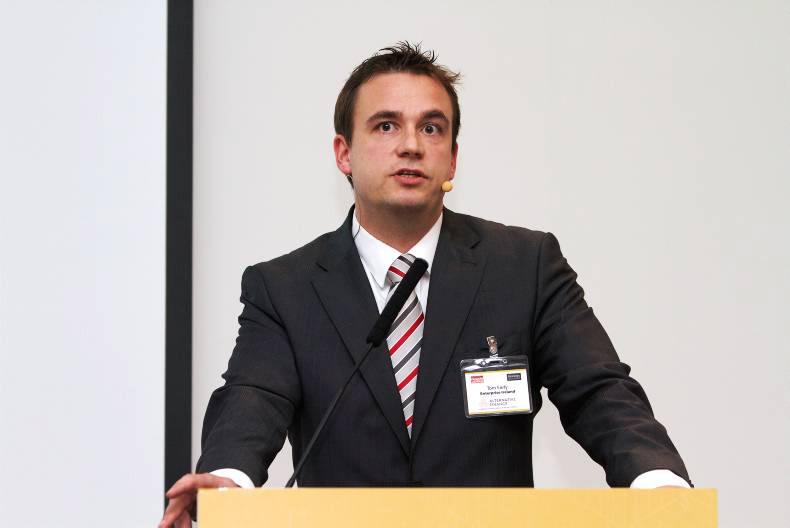
“Availability of funds is not an issue with banks. It is their perceived risk that is the problem,” Enterprise Ireland (EI) senior investment adviser Tom Early told the Alternative Finance Options conference. Tom works as a strategic and financial adviser to EI client companies, helping them to identify and secure the most appropriate form of finance necessary to achieve scale.
“The problem is there is no need for banks to be innovative,” he said. “We are in a situation where there are fewer players who are being asked to refinance the loans where the other banks want to exit. For smaller businesses banks adopt a light-touch, high-volume approach that can result in viable propositions being rejected.”
Banks want low risk and any lack of information can put a proposal into the high-risk category where it does not get approved for a loan. He set out the huge range of alternatives that are available, particularly to fund working capital.
At the early stages there are stocking loans to facilitate the purchase of stock for planned sales to supplier finance which facilitates the early payment of creditors or to extend credit terms. He also set out invoice discounting for either the entire debtor book or single invoices.
Tom said that in order to get funding, companies need to have a clear picture of how much they need, what they are going to do with it and how they are going to be able to repay it.
He said: “Too often companies come to me with a figure in their head but no real justification for how they arrived at it. Committing pen to paper helps a business owner to focus on the key actions they need to do and stops the flights of fancy. It puts a level of realism as it forces them to consider all aspects of their idea.”
While the plan is necessary to secure funding the reality is that it is for the business. If companies are serious about sustainable growth then they need a plan that’s for them, not the bank. However, it enables them to better communicate their ideas to financiers and other stakeholders which makes it easier for them to get the funding they require to grow.
Strategic fund has €6bn to invest in Ireland
With over €6bn to invest into Ireland, people were interested to hear Cathal Fitzgerald, head of food and agriculture investments at the Ireland Strategic Investment Fund (ISIF), give the latest news. ISIF was set up in mid 2014 and has a mandate to invest on a commercial basis in the Irish economy in order to support economic activity and employment.
The fund has the flexibility to make investments across the capital structure of companies and projects, both debt and equity. It also is looking at many different sectors, including agriculture, forestry, energy and SMEs. It was obvious from Cathal’s talk that they want to leverage that money to co-invest with industry partners as well as international investors.
The mandate is to get a return of 4.1% over the complete fund, which would equate to the repayments needed from the fund to the NTMA. This would allow the fund to invest indefinitely into the future as money came back in from previous lending.
“While deal size was not defined, lack of resources means that smaller deals may be difficult to execute due to limitation on team bandwidth,” said Cathal. “Smaller opportunities are referred to ISIF fund investment managers while the top end of range is as high as €700m of 10% of ISIF fund.”
Having worked in the Irish Dairy Board from 1997 to 2012, including a spell as finance director, Cathal knows the issues that agriculture and particularly dairy farming is facing. He told me ISIF is working on a number of projects that could tackle the issues of volatility in milk prices for both co-ops and farmers but “we have not cracked it yet”, said Cathal. The group is looking at ways to provide finance to improve position in value chain through scaling and development on value-added capability in food processing as well. “We are also looking at ways to improve the returns of Irish forests where there is very strong growing profile and increase planting,” he said. On energy generation they are looking to provide finance solutions for renewable as well as energy efficiency and grid enhancements. “There is definitely a strong pipeline being worked on,” said Cathal, which left many at the conference asking when the funds will start flowing out.
Credit unions want to lend more, conference told
“Credit unions, that is one source of finance I didn’t think of,” one farmer leaving the conference said. He had just heard Kevin Johnston, CEO of the Credit Union Development Association (CUDA), which is owned by credit unions. It acts as a catalyst for the growth, development and expansion of progressive credit unions.
When asked did credit unions really want to be banks, Kevin said no “but we do want to lend more. Credit unions are just 28% lent compared to the optimum level of 70%, so we have money to lend,” said Kevin. “We are developing new products, especially around the short term loans but have also looked at land sales as well,” he told me. “We want to continue to grow lending and are using our Solution Center to collaborate allowing up to building scale and scope to the individual credit unions.
Banks still have a
key role to play
Banks will continue to have an important role in funding growth and expansion in the Irish agri industry. Mark Cunningham, director of business banking at Bank of Ireland, and Ken Burke, head of business banking at AIB, both said agriculture has been one of their most vibrant sectors and they will continue to back it. “One of our biggest issues is getting companies who want loans. We have 190,000 small business and farmers and only 87,000 have borrowings. The high lending we are doing at present is still not enough to maintain our loan book due to funds coming back in,” said Mark Cunningham. Ken Burke said the average loan for their small businesses is €30,000 and he saw many of the alternatives as beneficial in spreading the risk between senior bank debt and equity.
Group backs independent finance providers
The Independent Finance Providers Ireland (IFPI) is a group that was established to promote and represent providers of finance to Irish businesses that are not already part of the domestic banking industry. IFPI members all have a presence in Ireland and are currently operating in the market.
The sectors and firms that IFPI represent are wide ranging, allowing Irish businesses to reference a single destination to research their financing needs. Its website is www.ifpireland.ie
The types of finance that IFPI members offer include:
Leasing and finance.Trade finance.Invoice finance.Lending.
“Availability of funds is not an issue with banks. It is their perceived risk that is the problem,” Enterprise Ireland (EI) senior investment adviser Tom Early told the Alternative Finance Options conference. Tom works as a strategic and financial adviser to EI client companies, helping them to identify and secure the most appropriate form of finance necessary to achieve scale.
“The problem is there is no need for banks to be innovative,” he said. “We are in a situation where there are fewer players who are being asked to refinance the loans where the other banks want to exit. For smaller businesses banks adopt a light-touch, high-volume approach that can result in viable propositions being rejected.”
Banks want low risk and any lack of information can put a proposal into the high-risk category where it does not get approved for a loan. He set out the huge range of alternatives that are available, particularly to fund working capital.
At the early stages there are stocking loans to facilitate the purchase of stock for planned sales to supplier finance which facilitates the early payment of creditors or to extend credit terms. He also set out invoice discounting for either the entire debtor book or single invoices.
Tom said that in order to get funding, companies need to have a clear picture of how much they need, what they are going to do with it and how they are going to be able to repay it.
He said: “Too often companies come to me with a figure in their head but no real justification for how they arrived at it. Committing pen to paper helps a business owner to focus on the key actions they need to do and stops the flights of fancy. It puts a level of realism as it forces them to consider all aspects of their idea.”
While the plan is necessary to secure funding the reality is that it is for the business. If companies are serious about sustainable growth then they need a plan that’s for them, not the bank. However, it enables them to better communicate their ideas to financiers and other stakeholders which makes it easier for them to get the funding they require to grow.
Strategic fund has €6bn to invest in Ireland
With over €6bn to invest into Ireland, people were interested to hear Cathal Fitzgerald, head of food and agriculture investments at the Ireland Strategic Investment Fund (ISIF), give the latest news. ISIF was set up in mid 2014 and has a mandate to invest on a commercial basis in the Irish economy in order to support economic activity and employment.
The fund has the flexibility to make investments across the capital structure of companies and projects, both debt and equity. It also is looking at many different sectors, including agriculture, forestry, energy and SMEs. It was obvious from Cathal’s talk that they want to leverage that money to co-invest with industry partners as well as international investors.
The mandate is to get a return of 4.1% over the complete fund, which would equate to the repayments needed from the fund to the NTMA. This would allow the fund to invest indefinitely into the future as money came back in from previous lending.
“While deal size was not defined, lack of resources means that smaller deals may be difficult to execute due to limitation on team bandwidth,” said Cathal. “Smaller opportunities are referred to ISIF fund investment managers while the top end of range is as high as €700m of 10% of ISIF fund.”
Having worked in the Irish Dairy Board from 1997 to 2012, including a spell as finance director, Cathal knows the issues that agriculture and particularly dairy farming is facing. He told me ISIF is working on a number of projects that could tackle the issues of volatility in milk prices for both co-ops and farmers but “we have not cracked it yet”, said Cathal. The group is looking at ways to provide finance to improve position in value chain through scaling and development on value-added capability in food processing as well. “We are also looking at ways to improve the returns of Irish forests where there is very strong growing profile and increase planting,” he said. On energy generation they are looking to provide finance solutions for renewable as well as energy efficiency and grid enhancements. “There is definitely a strong pipeline being worked on,” said Cathal, which left many at the conference asking when the funds will start flowing out.
Credit unions want to lend more, conference told
“Credit unions, that is one source of finance I didn’t think of,” one farmer leaving the conference said. He had just heard Kevin Johnston, CEO of the Credit Union Development Association (CUDA), which is owned by credit unions. It acts as a catalyst for the growth, development and expansion of progressive credit unions.
When asked did credit unions really want to be banks, Kevin said no “but we do want to lend more. Credit unions are just 28% lent compared to the optimum level of 70%, so we have money to lend,” said Kevin. “We are developing new products, especially around the short term loans but have also looked at land sales as well,” he told me. “We want to continue to grow lending and are using our Solution Center to collaborate allowing up to building scale and scope to the individual credit unions.
Banks still have a
key role to play
Banks will continue to have an important role in funding growth and expansion in the Irish agri industry. Mark Cunningham, director of business banking at Bank of Ireland, and Ken Burke, head of business banking at AIB, both said agriculture has been one of their most vibrant sectors and they will continue to back it. “One of our biggest issues is getting companies who want loans. We have 190,000 small business and farmers and only 87,000 have borrowings. The high lending we are doing at present is still not enough to maintain our loan book due to funds coming back in,” said Mark Cunningham. Ken Burke said the average loan for their small businesses is €30,000 and he saw many of the alternatives as beneficial in spreading the risk between senior bank debt and equity.
Group backs independent finance providers
The Independent Finance Providers Ireland (IFPI) is a group that was established to promote and represent providers of finance to Irish businesses that are not already part of the domestic banking industry. IFPI members all have a presence in Ireland and are currently operating in the market.
The sectors and firms that IFPI represent are wide ranging, allowing Irish businesses to reference a single destination to research their financing needs. Its website is www.ifpireland.ie
The types of finance that IFPI members offer include:
Leasing and finance.Trade finance.Invoice finance.Lending. 






SHARING OPTIONS