



When Paddy Murray returned from England in the 1970s to begin a career in sawmilling in his native Ballygar, Co Galway, few could have foreseen how Irish forestry and MTG would develop over the coming decades.
The average annual volume of timber harvested in Irish forests during the 1970s was approximately 360,000m3. This represents one-third of the annual capacity of MTG today in Ballygar and Ballon, Co Carlow.
 Since Paddy Murray took over the Ballygar mill in 1979, the group has grown to become one of the largest and most progressive sawmills in Ireland and Britain.
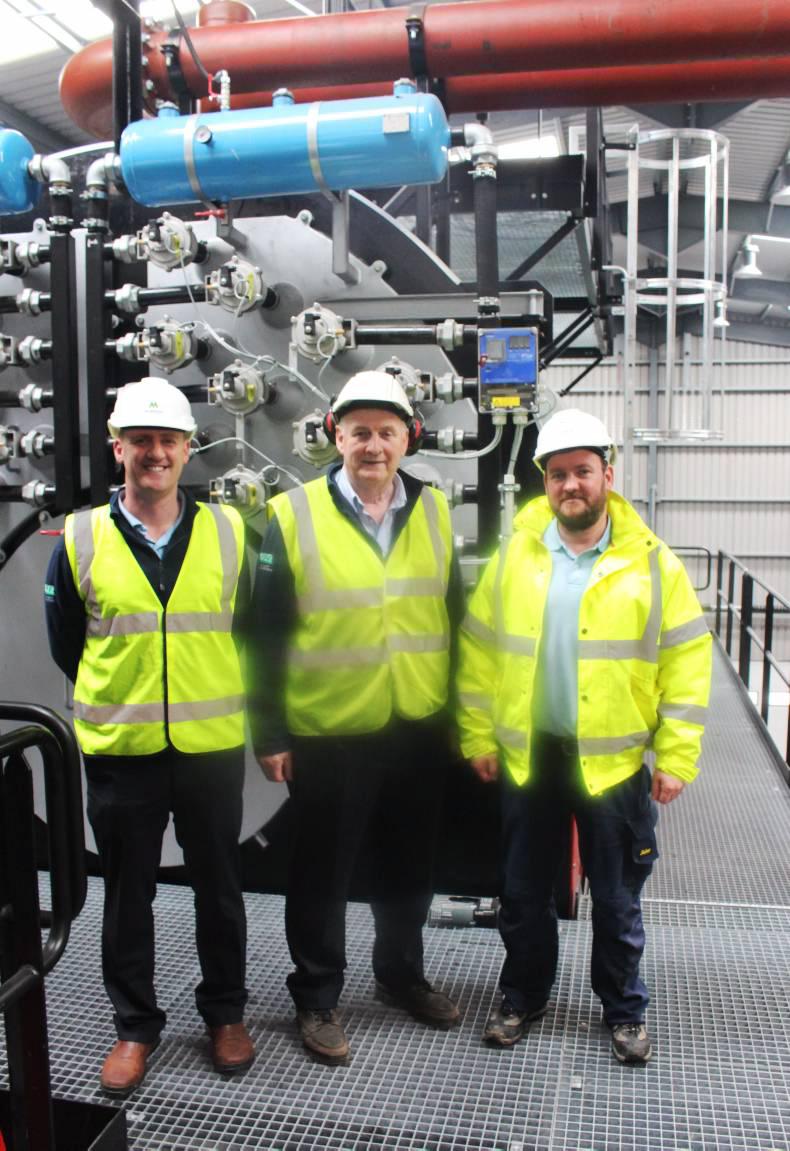
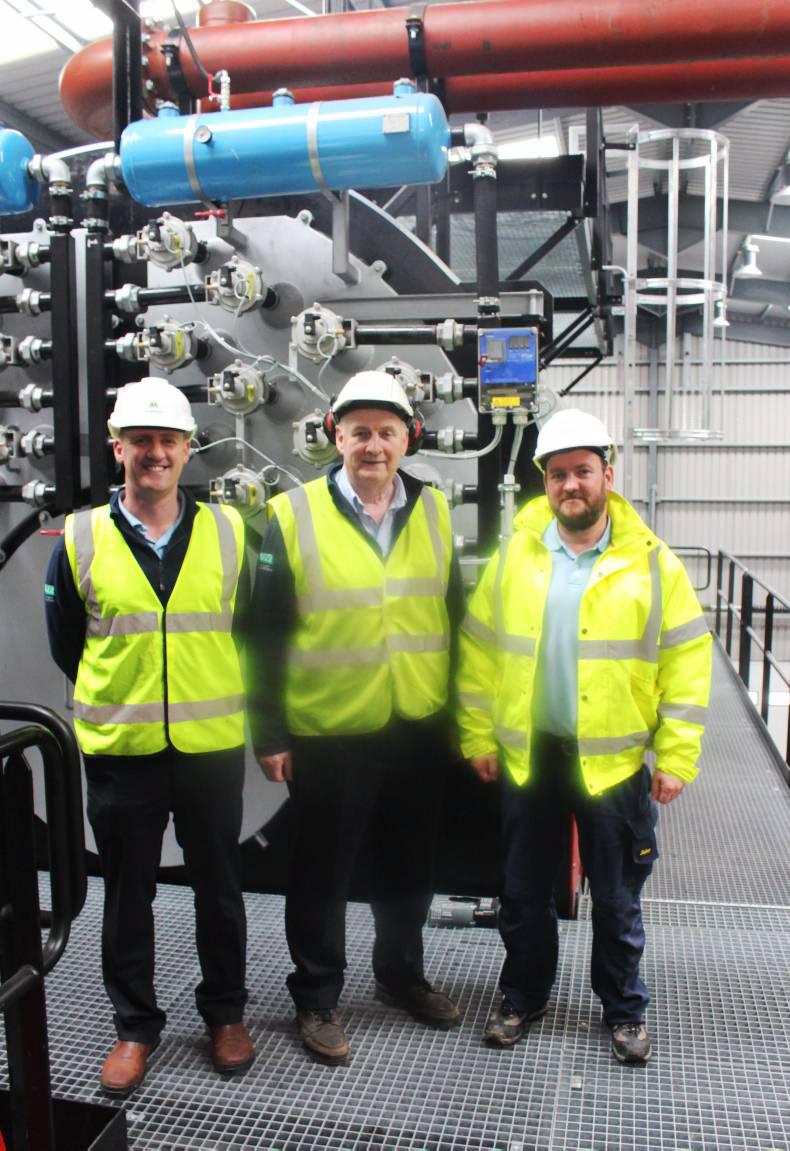
Over the years, Paddy was joined by his sons Joe, John and Patrick (Paddy, John and Patrick are pictured right), as the indigenous family-run business expanded to process 550,000m3 of logs annually. “Our current output is processed on a single shift, but we have the capacity to increase this to over one million cubic metres annually,” said Patrick Murray.
As in the early years of the company, the Murrays have responded positively to the economic recession; the most recent expansion of the group took place against the backdrop of the economic crash in 2008. This virtually wiped out Ireland’s construction industry and greatest customer for Murray’s sawn timber.
With little sign of domestic economic recovery, the Murrays had only one option, which was to export their products and, today, close to 65% of all production is exported, mainly to the UK.
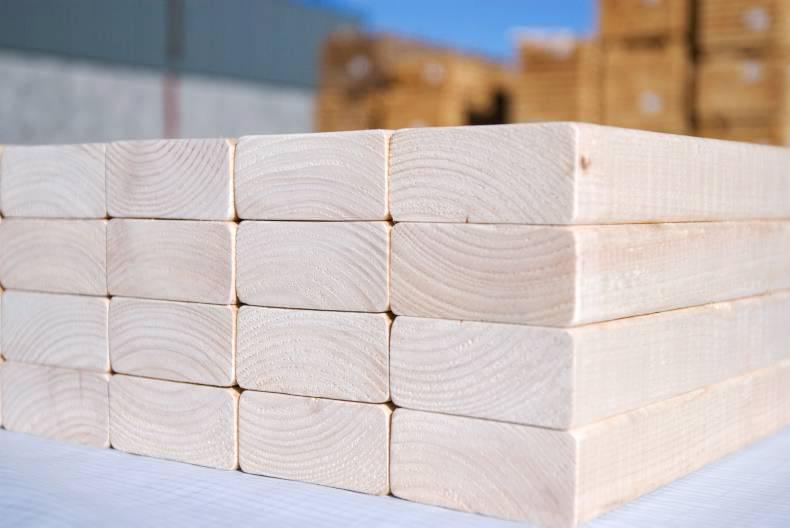
They have increased export market share by providing quality products at competitive prices as they are faced with fierce competition from traditional powerhouses in the sawmilling industry, especially Sweden. Central to their export drive has been the launch of their sustainable natural resource (SNR) brand of eased-edged construction timber (photo, below), which competes successfully against the best in the world.

They invested in SNR in 2008 which caught the eye of traders in the UK who were conscious of mixing quality with proven sustainability. Murray products also carry FSC chain of custody certification, an independent, internationally recognised brand which guarantees that logs supplied to their mills are sourced from sustainably managed forests.
While certification is now a major advantage, price and quality are still the main drivers. Timber is precision-sawn and planed to ensure maximum uniformity of size and ease of handling for the end user. Sawn timber is X-ray graded according to the European EN14081 machine grading standard, while SNR construction timber bears the CE mark to denote its conformity to the European directive.
All timber is kiln-dried to the specified moisture content (MC). This is essential as MC in wood influences properties such as stability, endurance and dimensional tolerance. Gone are the days when timber was air or kiln-dried to an approximate moisture content.
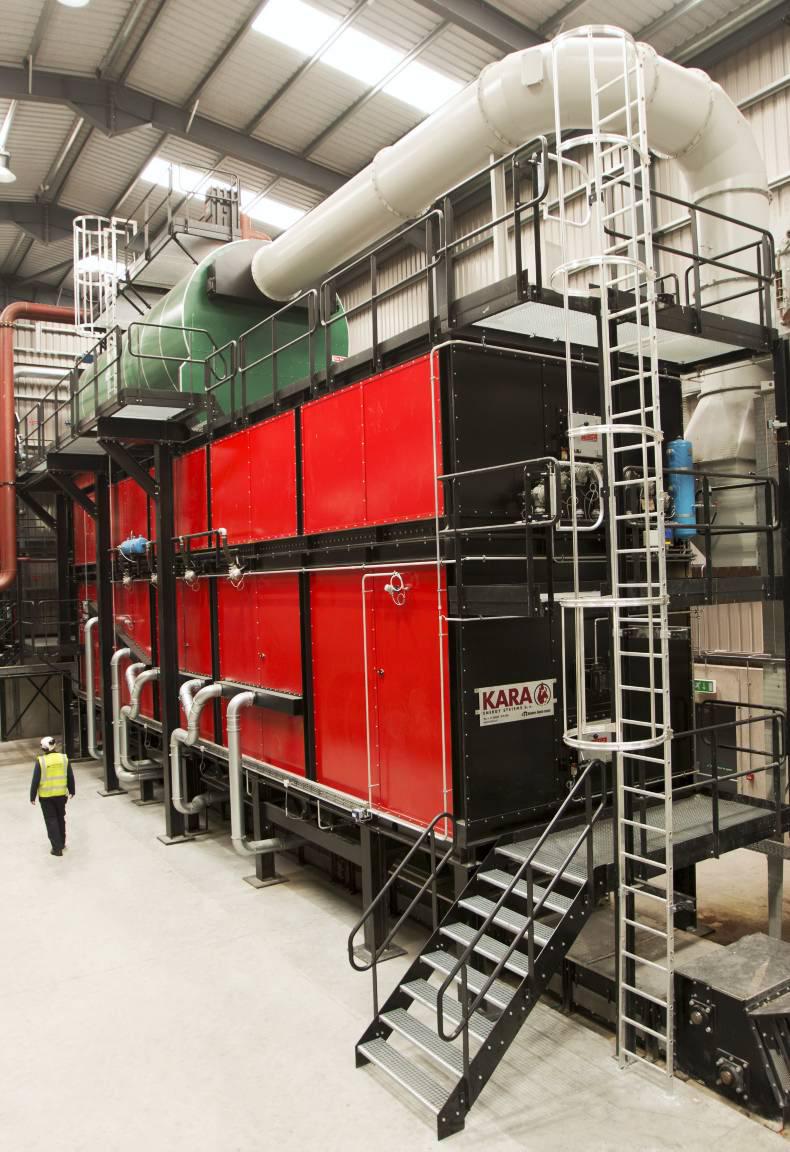 Murrays have recently invested €4m in a kiln-drying facility in Ballygar. This is a fully automated rapid high temperature facility, which is light years away from previous kilns in terms of performance and results.
In addition, timber has to be treated with preservatives to maximise the life of the products, especially in external and ground contact applications. The product range includes construction timber for traditional building and timber frame structures, fencing posts and rails, decking and pallets.
While the bulk of logs are sourced from Coillte forests, production from the State company is no longer sufficient to meet the company’s demands. Murrays purchase logs from Northern Ireland, Scotland and private forests in Ireland to supplement supply. “We have built up a strong relationship with private growers, especially farmers,” said Paddy Murray. “We will continue to build on this supply and we place strong emphasis on having a long-term supply source from these growers.”
Murrays have a strong presence at shows, forestry demonstrations and field days and their investment in a mobile exhibition has paid dividends over the years.
Timber growers in Ireland can take heart from the Murray success story. With timber production forecast to increase to 4.3 million m3 by 2020 on the island, Murrays have the capacity to process 25% of this volume alone.
In addition, the recent COFORD report Mobilising Ireland’s Forest Resource estimates that the overall demand for timber – north and south – will be 6.41 million m3 by 2020, so the future is healthy for forest owners with timber for sale.
Processing volumes of this scale will be challenging for MTG and other sawmills, but you begin to see the scale of the Ballon and Ballygar operations long before you even reach the mills.
Every day, approximately 140 lorries laden with either timber from the forest or products for the Irish and export markets enter and exit both mills.
These comprise 75 truckloads of logs delivered, while 65 leave with sawn products as well as residue (chips, bark and sawdust) to panel board mills and wood energy outlets.
While one is struck by the enormous investment in technology to run sawmills of this magnitude, the operation depends on people. Getting the timber from forests to eventual domestic and export markets relies on the input of 320 people, divided almost equally between staff directly employed and contractors working in harvesting, haulage, service and support areas.
Quality and price
A word of caution by Paddy and John Murray relates to quality and price. The MTG investment in new and replacement technology over the years maximises the quality of products that leave the mill. “However, this has to be matched by quality in the forest and realistic expectation on price,” they maintain.
The investment in technology has paid huge dividends but, as they point out, technology can’t change timber characteristics such as straightness and knot density which is a reminder to forest owners to grow quality.
This will be reflected in price received from sawmills who in turn will benefit as increased volumes reach the high added-value construction markets.
‘‘Ballygar Forest... is one of the oldest Irish State forests and one where for a variety of reasons, second rotation plantations are fairly general’’ – HM Fitzpatrick, The Forests of Ireland, 1965.
“If you build it, [they] will come” – based on the film Field of Dreams – isn’t always the best advice when establishing an enterprise but when it comes to forestry it turns out to be true. It’s no coincidence that sawmills grew up around the early forests established in Ireland.
For example, the forests established in the Slieve Bloom Mountains were followed by sawmills in the midlands. A similar trend took place in Wicklow and Paddy Murray would have been well aware of the forestry tradition around Ballygar. The family’s first involvement in sawmilling in Ballygar dates to the 1920s when his grandfather operated a mobile sawmill in the area.
After the State experimented with the purchase of old woodland estates in Wicklow and north Wexford from 1904, it turned its attention to the provinces and, in 1910, purchased the woodlands around Aughrane Castle to establish Ballygar Forest. The first State forest in Connacht now has tree crops facing their fourth rotation.
While Ballygar’s sister mill in Ballon, Co Carlow, isn’t surrounded by as deeply rooted forest culture, it is strategically placed to utilise forests in the county as well as neighbouring Laois, Wicklow and Wexford.


SHARING OPTIONS