Precision farming is an emerging field of agricultural research with huge commercial potential and application. It is concerned with implementing smart technologies to (i) monitor and record physiological parameters of herbage and animals, and (ii) to carry out physically demanding tasks to reduce labour costs. Numerous smart technologies or sensors have been developed and are commercially available to monitor and record a variety of physiological parameters for individual cows.
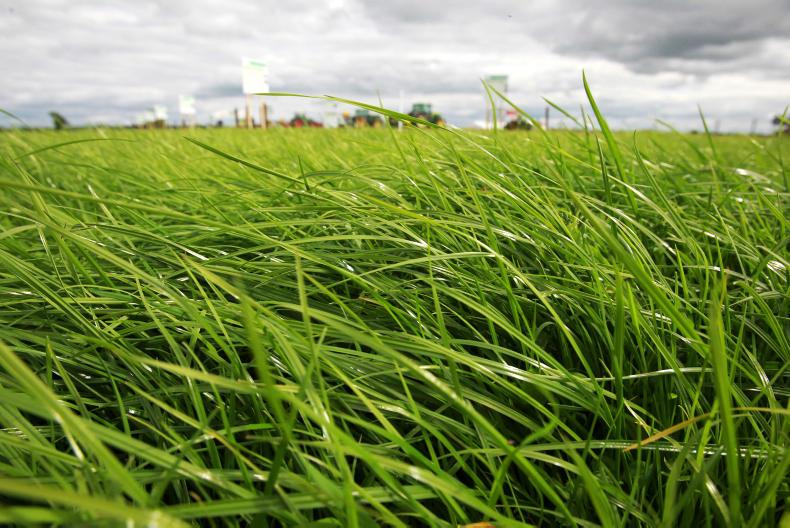
Current research at Moorepark is focusing on precision technology associated with grass growth and utilisation. This work incorporates :
Development of a tool to capture data automatically from a rising plate meter with global positioning system (GPS) technology and mapping capabilities, ie a reliable, precise, consistent and easy to use tool to estimate herbage mass.A decision support tool to interpret the information generated and present in a readable format. Links to an inbuilt or web-accessible database (PastureBaseIreland).The role of virtual fencing technologies to create boundaries that can maintain cows in a space defined by a farm operator, dependent on grass availability.Capturing the data
Grasshopper is a tool that automatically captures grass height using a plate meter. It is combined with GPS technology and software. Integration of grass measurement data (in real-time) with a paddock mapping facility on a smartphone will mean the removal of the subjectivity and individual interpretation of pasture availability and allocation. The Grasshopper will measure and assess pasture availability, the navigational/mapping facility on the smartphone screen allows precise pasture allocation (rather than previously used ‘best judgement’). This will result in increased grassland measurement at farm level and increased accuracy of grassland management decisions, thus resulting in increased grass utilisation.
PastureBaseIreland
Grass measurement data recorded and stored in the Grasshopper can be uploaded to a whole farm grazing management decision support system – PastureBase Ireland (PBI). It can store all grassland measurements from farms in a common structure. This system allows the quantification of grass growth and DM production (total and seasonal) across different grassland management systems, regions and soil types using a common measurement protocol and methodology. Grass measurements are recorded on a regular basis and reports (grass wedge, distribution of growth and paddock summary reports) are automatically generated for management purposes. It allows individual farms to be benchmarked against others. The background data such as paddock soil fertility, grass cultivar, aspect, altitude, reseeding history, soil type, drainage characteristics and fertiliser applications are also recorded. Information from different commercial grassland management software packages is allowed into PBI once they meet quality standards.
Virtual fence
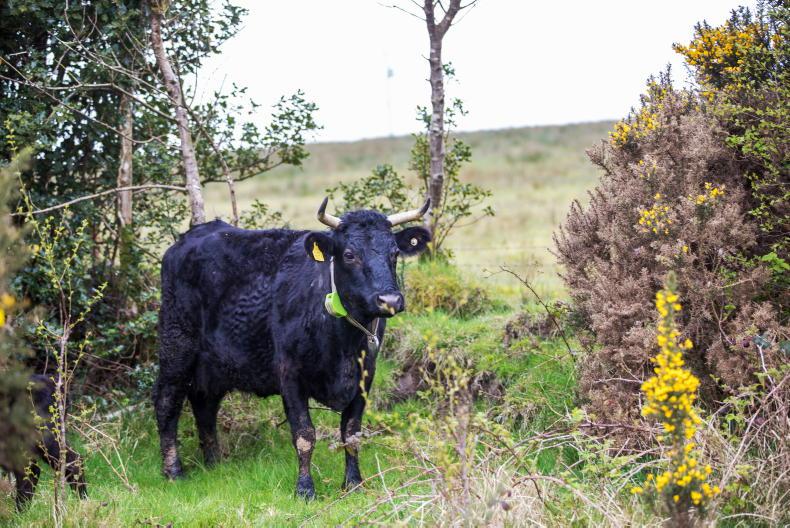
With virtual fencing technology, there is no fence, rather the cow wears a neck collar which is equipped with GPS capability and is programmed with the coordinates of the (invisible) fence line. The collar is also equipped with technology to generate a sound stimulus and an electric stimulus (similar to common electric fence). As the cow approaches the invisible or virtual fence line location, her changing position is known to the GPS technology. When she gets to a pre-determined distance (eg 2m) from the fence coordinates, the sound stimulus is activated. The device operates at increasing sound levels as the fence is approached. If the cow ignores the sound stimulus and continues in the same direction, she may get an electrical stimulus (similar to common electric fence). Thus the principle of the virtual fence is based on the cow learning the association between the sound and electrical stimuli. The trained cow/ animal should not progress beyond the point where she receives the sound stimulus. All events can be communicated to the farm operator via SMS or email to ensure that the farmer is aware of any issues that may arise. This technology works well in ranch and parkland areas but current research is addressing the challenge to apply it in intensive grazing dairy farms. A key constraint will be the power required for the collars and ways to maximise energy efficiency
Cow data and grazing management
Research is starting on evaluating and adapting in-line sensors to measure milk volume and milk protein and fat concentrations during the milking process. The sensors need to be capable of measuring average herd milk yield and composition. Using this real-time data allows it to be closely linked the nutrition and weather on the day.
Some precision farming technologies may generate economic advantages in the dairy production chain. The location of the cow and the proportion of grass in her diet is increasingly important and can, in positive instances, secure premium payments. Measured parameters, such as grazing time and animal welfare, are gaining in value. Precision farming technology can have a role in supplying dairy processors with such information. Technology to record cow location and behaviour at pasture are currently being used and improved for research purposes at Moorepark.
Turning data into information
It is critical that appropriate technologies to fulfil dairy farmers’ needs are identified. This can only be achieved by selecting technologies with sound evidence-based performance information that is relevant to Irish farm systems and give a clear return on investment. The tools must be user friendly, encouraging farmer uptake. They must be low-cost, reliable, robust, flexible, and easy to maintain and update. They should provide information that immediately can be turned into management action. This is the goal with regard to pasture management tools. It requires collaboration between different scientific disciplines and strong engagement from the industry, including SMEs, in order to implement innovative technology.
There is potential for much data and little information unless the data is used properly. It is the pipeline from high-quality, meaningful data acquisition (by the sensors) to subsequent transformation of data to concise information. Here lies the future challenges and opportunities for Irish dairy and beef production. Data integrity and information quality are reliant upon high standards of data capture and applied scientific knowledge. Then the transition from data to information relies on (i) high-quality experimental design and implementation and (ii) correct selection of accurate gold standards in order to calibrate and validate the data captured by the technology.
Factors influencing adoption
Technology adoption has traditionally been higher in situations where profitability (milk yield increase and cost reduction) was clearly evident. Technological advances have also been more readily adopted in situations where labour availability was low or where labour alternatives were expensive. In order to improve technology adoption, producer perception of these technologies will need to improve. Producer and farm demographics may be a factor influencing precision dairy farming technology adoption. Primary decision-maker characteristics influencing technology adoption include age, education level, and farm size. Other considerations include individual goals, production system, non-farm business ownership, production innovation, and technology use by peers and other family members as well as attitudes toward technology investment risk. Improving dairy farmer technology perception and establishing technology effectiveness will increase adoption likelihood. Understanding the process by which producers become aware of and adopt new technologies is important to the private sector, researchers, and policymakers alike.

Precision farming is an emerging field of agricultural research with huge commercial potential and application. It is concerned with implementing smart technologies to (i) monitor and record physiological parameters of herbage and animals, and (ii) to carry out physically demanding tasks to reduce labour costs. Numerous smart technologies or sensors have been developed and are commercially available to monitor and record a variety of physiological parameters for individual cows.
Current research at Moorepark is focusing on precision technology associated with grass growth and utilisation. This work incorporates :
Development of a tool to capture data automatically from a rising plate meter with global positioning system (GPS) technology and mapping capabilities, ie a reliable, precise, consistent and easy to use tool to estimate herbage mass.A decision support tool to interpret the information generated and present in a readable format. Links to an inbuilt or web-accessible database (PastureBaseIreland).The role of virtual fencing technologies to create boundaries that can maintain cows in a space defined by a farm operator, dependent on grass availability.Capturing the data
Grasshopper is a tool that automatically captures grass height using a plate meter. It is combined with GPS technology and software. Integration of grass measurement data (in real-time) with a paddock mapping facility on a smartphone will mean the removal of the subjectivity and individual interpretation of pasture availability and allocation. The Grasshopper will measure and assess pasture availability, the navigational/mapping facility on the smartphone screen allows precise pasture allocation (rather than previously used ‘best judgement’). This will result in increased grassland measurement at farm level and increased accuracy of grassland management decisions, thus resulting in increased grass utilisation.
PastureBaseIreland
Grass measurement data recorded and stored in the Grasshopper can be uploaded to a whole farm grazing management decision support system – PastureBase Ireland (PBI). It can store all grassland measurements from farms in a common structure. This system allows the quantification of grass growth and DM production (total and seasonal) across different grassland management systems, regions and soil types using a common measurement protocol and methodology. Grass measurements are recorded on a regular basis and reports (grass wedge, distribution of growth and paddock summary reports) are automatically generated for management purposes. It allows individual farms to be benchmarked against others. The background data such as paddock soil fertility, grass cultivar, aspect, altitude, reseeding history, soil type, drainage characteristics and fertiliser applications are also recorded. Information from different commercial grassland management software packages is allowed into PBI once they meet quality standards.
Virtual fence
With virtual fencing technology, there is no fence, rather the cow wears a neck collar which is equipped with GPS capability and is programmed with the coordinates of the (invisible) fence line. The collar is also equipped with technology to generate a sound stimulus and an electric stimulus (similar to common electric fence). As the cow approaches the invisible or virtual fence line location, her changing position is known to the GPS technology. When she gets to a pre-determined distance (eg 2m) from the fence coordinates, the sound stimulus is activated. The device operates at increasing sound levels as the fence is approached. If the cow ignores the sound stimulus and continues in the same direction, she may get an electrical stimulus (similar to common electric fence). Thus the principle of the virtual fence is based on the cow learning the association between the sound and electrical stimuli. The trained cow/ animal should not progress beyond the point where she receives the sound stimulus. All events can be communicated to the farm operator via SMS or email to ensure that the farmer is aware of any issues that may arise. This technology works well in ranch and parkland areas but current research is addressing the challenge to apply it in intensive grazing dairy farms. A key constraint will be the power required for the collars and ways to maximise energy efficiency
Cow data and grazing management
Research is starting on evaluating and adapting in-line sensors to measure milk volume and milk protein and fat concentrations during the milking process. The sensors need to be capable of measuring average herd milk yield and composition. Using this real-time data allows it to be closely linked the nutrition and weather on the day.
Some precision farming technologies may generate economic advantages in the dairy production chain. The location of the cow and the proportion of grass in her diet is increasingly important and can, in positive instances, secure premium payments. Measured parameters, such as grazing time and animal welfare, are gaining in value. Precision farming technology can have a role in supplying dairy processors with such information. Technology to record cow location and behaviour at pasture are currently being used and improved for research purposes at Moorepark.
Turning data into information
It is critical that appropriate technologies to fulfil dairy farmers’ needs are identified. This can only be achieved by selecting technologies with sound evidence-based performance information that is relevant to Irish farm systems and give a clear return on investment. The tools must be user friendly, encouraging farmer uptake. They must be low-cost, reliable, robust, flexible, and easy to maintain and update. They should provide information that immediately can be turned into management action. This is the goal with regard to pasture management tools. It requires collaboration between different scientific disciplines and strong engagement from the industry, including SMEs, in order to implement innovative technology.
There is potential for much data and little information unless the data is used properly. It is the pipeline from high-quality, meaningful data acquisition (by the sensors) to subsequent transformation of data to concise information. Here lies the future challenges and opportunities for Irish dairy and beef production. Data integrity and information quality are reliant upon high standards of data capture and applied scientific knowledge. Then the transition from data to information relies on (i) high-quality experimental design and implementation and (ii) correct selection of accurate gold standards in order to calibrate and validate the data captured by the technology.
Factors influencing adoption
Technology adoption has traditionally been higher in situations where profitability (milk yield increase and cost reduction) was clearly evident. Technological advances have also been more readily adopted in situations where labour availability was low or where labour alternatives were expensive. In order to improve technology adoption, producer perception of these technologies will need to improve. Producer and farm demographics may be a factor influencing precision dairy farming technology adoption. Primary decision-maker characteristics influencing technology adoption include age, education level, and farm size. Other considerations include individual goals, production system, non-farm business ownership, production innovation, and technology use by peers and other family members as well as attitudes toward technology investment risk. Improving dairy farmer technology perception and establishing technology effectiveness will increase adoption likelihood. Understanding the process by which producers become aware of and adopt new technologies is important to the private sector, researchers, and policymakers alike.
SHARING OPTIONS