



Not so long ago, the concept of virtual fencing sounded like science fiction to many dairy farmers. Today, however, the system has already been in practical use for several years.
Worldwide, six companies are active in the market. The technology is ready for practice, but still clearly needs further development in certain aspects.
“Do you hear those beeps every now and then? They come from that cow. You can see she finds it interesting to keep testing the edge of the grazing line, and she knows exactly how many sound signals she can get before a shock from the virtual fence follows. Just like people, some cows always keep a safe distance, while others enjoy pushing the boundaries,” says Andreas Pelle with a laugh.
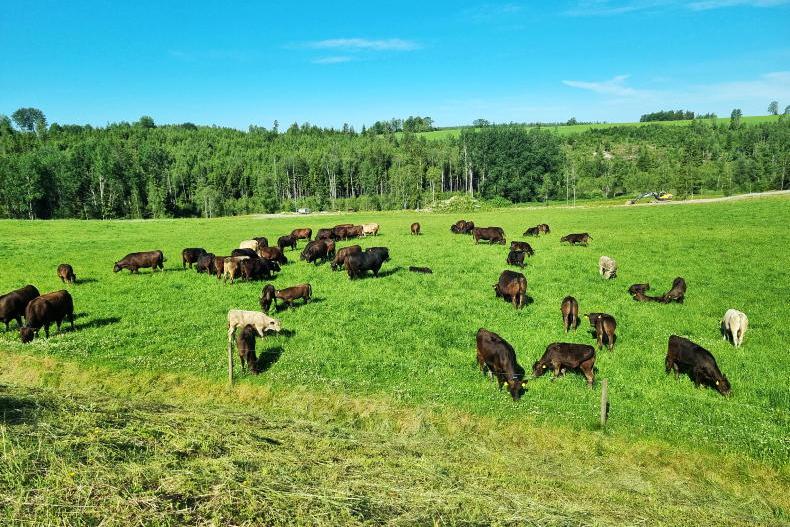
He works at the farm of Johan Bjørneby in Ås, Norway, where they keep 55 beef cows and young stock on 210 hectares of land. Norway is a huge country in which only 3% of the land is suitable for agricultural use.
Perhaps it is for this very reason that, back in 2011, the first company to bring virtual fencing to the market was founded here, under the brand name Nofence.
In recent years, a second Norwegian provider has joined the market, Monil, which focuses more on dairy cattle than Nofence does. These two Norwegian companies, along with Vence in the United States, Halter and e-Shepherd/Gallagher in New Zealand, and the Dutch start-up Collie, are currently the players offering virtual fencing systems.
Pelle, who has now been working with Monil’s system for three years, recalls: “Until last year the equipment still had quite a few teething problems.
"There was moisture in the collars that caused failures, and some collars could not withstand knocks in the feed box in the barn.
"Monil has worked on that, and now, honestly, the system runs like clockwork with basically no problems anymore.”
At home, Pelle also runs a dairy farm with 100 cows together with his parents.
“To save labour, we are now also investing in this system at home. We have several plots of around 30ha, of which only 20% is grazeable. A system like this really helps to make such a field efficient and practical to use.”
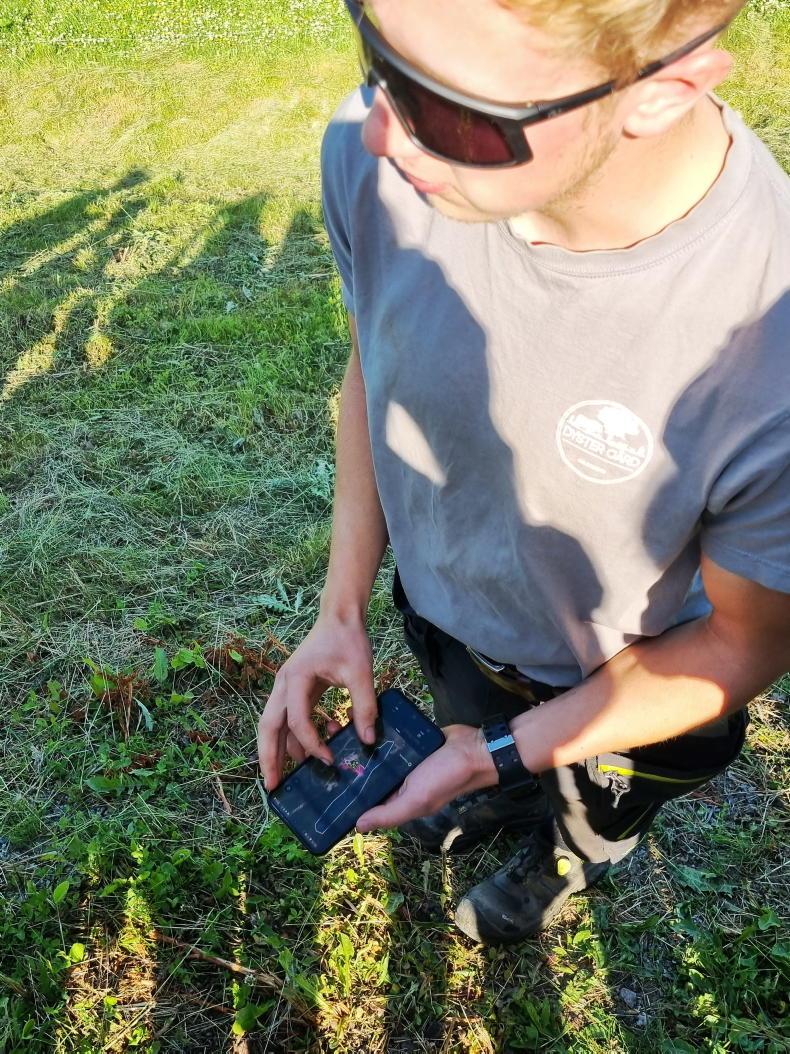
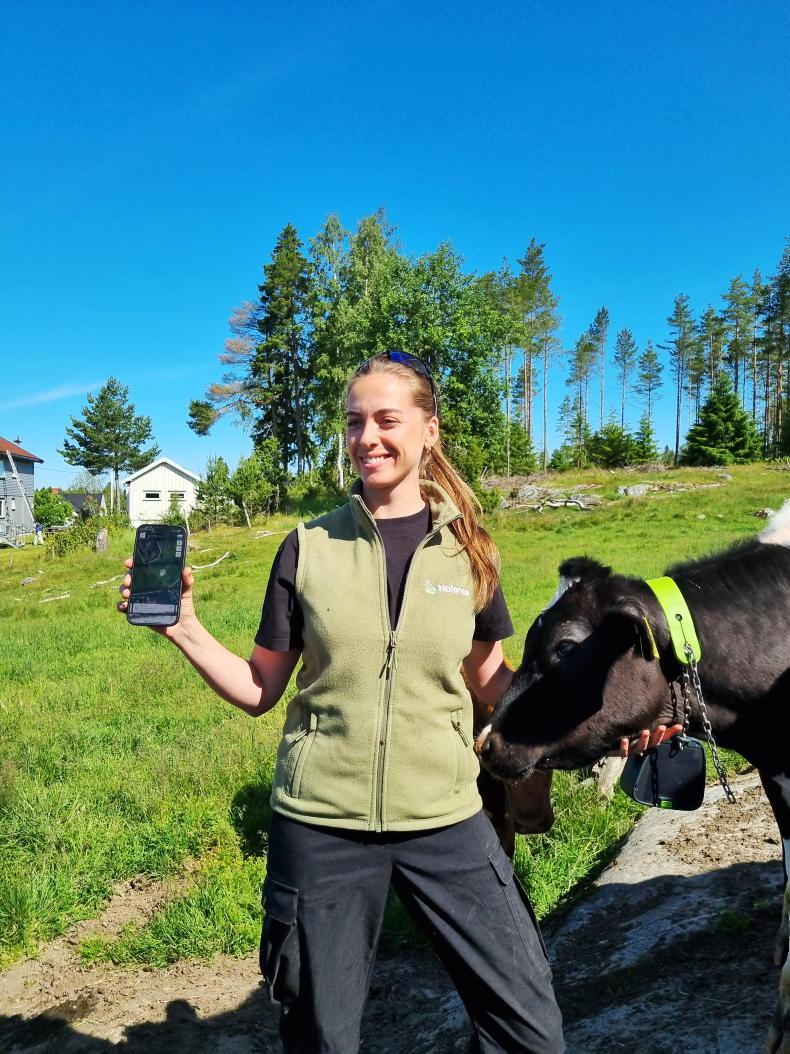
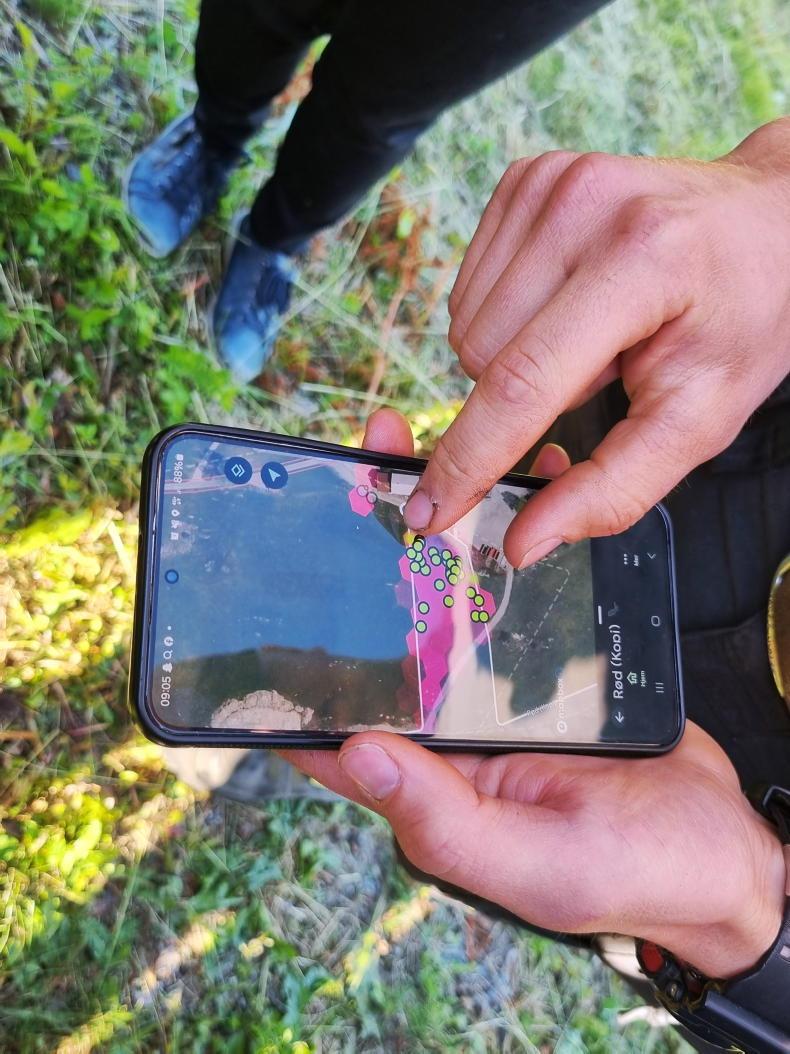
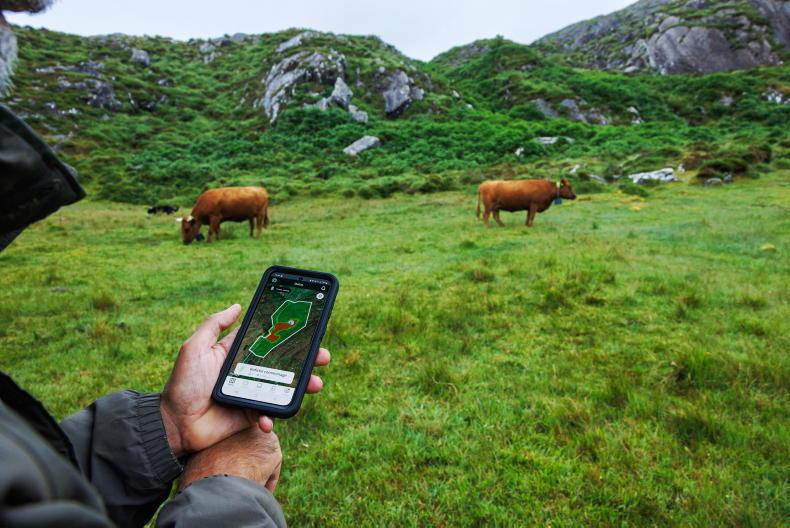
While explaining, the young Norwegian farmer shows in the meantime how the system works. With an app on his phone, he shifts the virtual fence forward.
The cows usually react immediately, after which he also moves the rear virtual fence forward, just as in traditional strip grazing. In less than a minute, the animals are given a strip of fresh grass. With Monil’s system, the sensor is placed on top of the cow’s neck.
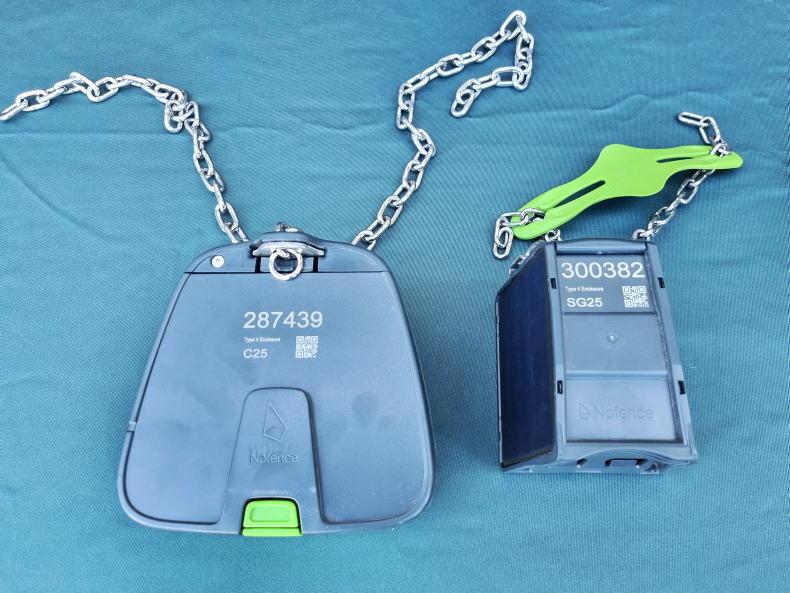
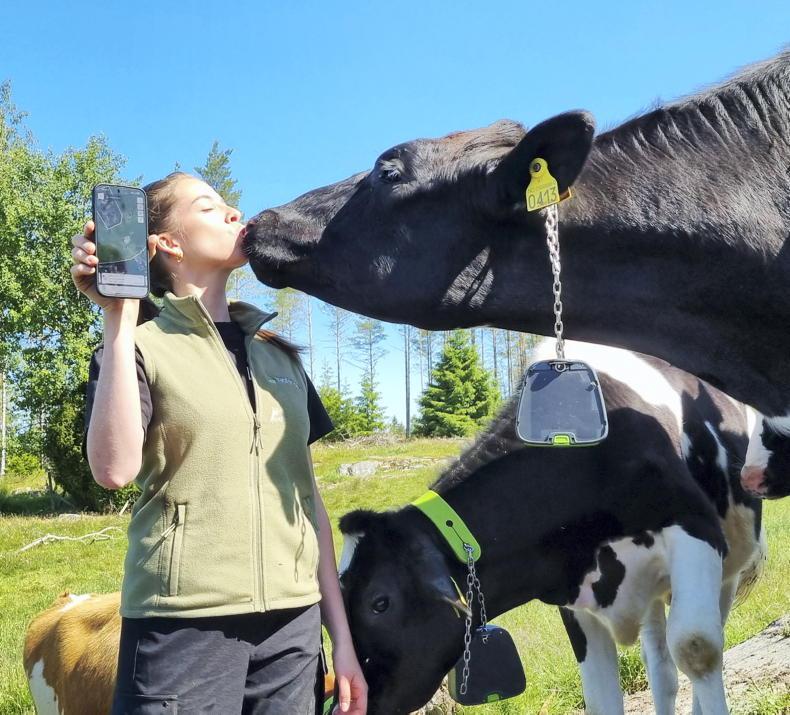
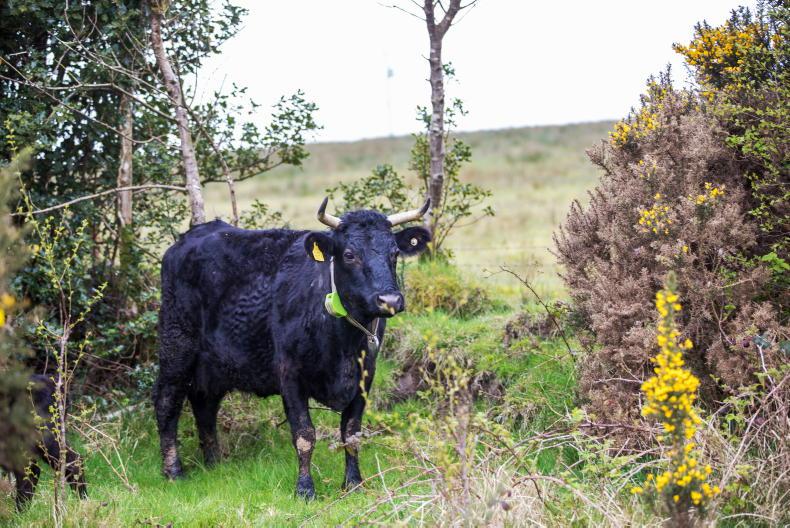
The collars fit snugly, and aren’t much bigger than those worn by cows in milking robots. This is a clear difference from Nofence, whose collars hang heavy blocks under the cow’s neck weighing up to 5kg.
They look robust but also bulky, and in a dairy barn this could cause problems. According to Oda Westby of Nofence, the company mainly focuses on beef cattle, dry cows, older young stock, sheep, and goats that are kept outdoors for certain periods.
Nofence has been active in Ireland since last year, and Monil intends to follow within one or two years. At the moment Monil operates in Norway, the US, and the UK, and plans to launch in Sweden from next year.
This was not possible earlier, because Sweden has banned the system until January 1, 2026, due to animal welfare concerns over the small electric shocks delivered when animals ignore the sound cues.
For the same reason, Germany, Denmark, and Switzerland have so far also prohibited these systems.
The pricing models of the different providers vary considerably. Monil charges €250 per collar, with a five-year warranty, and €50 per animal per year in subscription fees for the system and supporting software.
At Nofence, the price is €339 per collar, also with a five-year warranty. Subscription fees there are €4.50 per month, or €6.50 for farms with fewer than 50 animals.
Vence and Halter use a different model: they ask for an initial investment of around €8,500 in a base unit to ensure a reliable GPS connection, which is especially important in vast areas surrounded by mountain ranges.
Subscription costs are then around €50 per animal per year, with the collars included.
These companies are less relevant for Europe as they are not, or not yet, active here.
New Zealand
The situation is different with Gallagher from New Zealand and its e-Shepherd system. Since August, three dairy farms in the Netherlands have started using it, and the system is already in use in Spain and Portugal. Users pay €290 per collar and €3 to €4 per month for the software subscription.
“If the farmer removes the collars in winter and therefore does not use the software, we do not charge fees during that period,” explains Sarah Adams of Gallagher.
“What we also offer differently from other companies is that heifers above 200kg can also wear a collar with a sensor. These animals are still growing, but because our sensors hang under the cow’s neck, this is possible. Every three months you simply loosen the collar a bit.”
Through a partnership with Barenbrug, Gallagher is working on the possibility of measuring grass growth by satellite and linking this to the collars.
The idea is that the virtual fence can then move automatically based on grass growth and desired dry matter intake. This system is still under development and will not be ready for the European market by next year. What is already available with e-Shepherd is an additional tool for health and heat detection, for which users pay around €30 extra in subscription fees.
The Dutch start-up Collie has not reached that stage yet. Active since last year, it is focusing entirely on the European market for now.
“In this market, we are, alongside Halter, the only ones combining virtual fencing with virtual herding in a single sensor. By virtual herding we mean guiding the animals, using vibrations from the collar, to a specific location such as the milking parlour or robot. You can think of it as a built-in collection function,” explains Daniel Reisman, one of the founders of Collie.
He sold the system to 15 dairy farmers this year. The start-up cost is €5,000, regardless of herd size.
Farmers can then choose between a four-year contract, in which collars cost €220 each with warranty, or an eight-year contract, in which collars cost €400 each with warranty.
In both cases, subscription fees are €40 per animal per year. Leasing is also possible at €110 per animal per year.
Altogether, this quickly adds up to an investment of several tens of thousands of euros, plus recurring annual costs.
Yet Reisman does not find the strong interest surprising.
“Of course, labour savings are an important reason why farmers choose this system, but it also allows much better grazing management.
“Our app shows exactly how much surface area you add for the herd when you shift the fence.
“If you link that to the data from a grassland meter, you can steer very precisely on dry matter intake.
“Pre-programming fence movements is also possible, which means strip grazing can continue automatically, even when you are not at home. It really is a modern way to make the best use of grazing.”
Researchers at Wageningen University and Research carried out a five-week trial last spring at the Dairy Campus in Leeuwarden with 64 cows, divided into four groups, using the Nofence system.
They concluded that there were no significant differences in feed intake, body weight, or milk yield, and that the cows were able to learn the system quickly; within just a few days, almost all the animals had mastered it.
Teagasc is currently conducting similar trials in Ireland. In practice, training usually starts by placing a physical electric fence alongside the virtual one. The virtual fence is then gradually moved further ahead of the physical fence, teaching the cows to recognize and respond to it.
Several commercial providers are also working on self-learning systems in which the virtual fence shifts automatically based on cow activity.
In addition, they are in discussions with manufacturers of milking robots to integrate their systems, so that cows would no longer need to wear two collars.
The 50-head organic dairy herd of Dirk and Isabella Gravesteyn in Pijnacker was fitted with Collie collars on 30 June of this year.
“They trained the animals for five days and after that it all went smoothly,” says Dirk Gravesteyn. “We graze our cows a few months of the year, 24 hours a day. That’s why I was really waiting for a system like this. I’m already satisfied, because it really saves a lot of time otherwise spent putting up and moving fences.
“On top of that, the herding function is ideal for us in terms of labour savings. In summer we milk in a mobile milking parlour, and before this I had to fetch several cows there every day.”
The dairy farmer purchased the system with an eight-year contract and warranty, and calculates the cost at just under €100 per cow per year. “Given the way we run our farm, this investment really suits us. I had already made the decision before it turned out we could also get a 40% subsidy. That was a nice bonus.”



SHARING OPTIONS