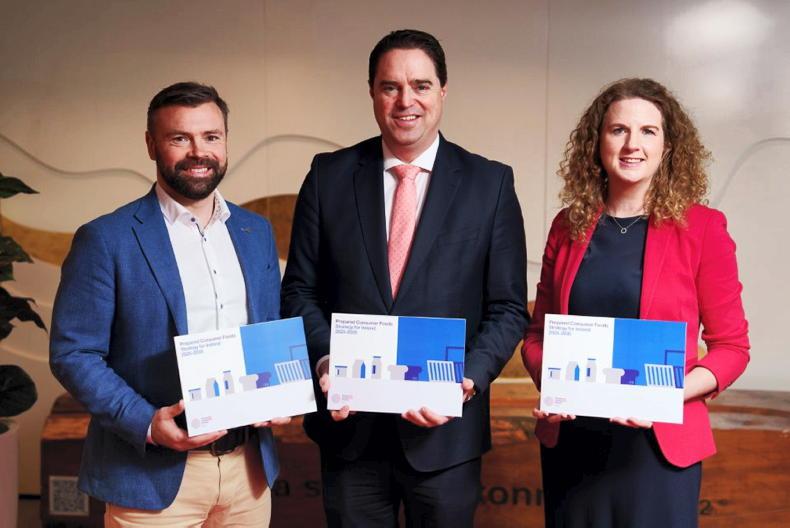
The Prepared Consumer Foods (PCF) Council, part of Ibec’s Food Drink Ireland sector, this week launched the Prepared Consumer Foods Strategy for Ireland 2025–2035. The new strategy aims to increase exports by the sector to €5.4bn by 2035, up from €3.35bn in 2024. It also targets sector employment of 38,000, a 25% increase from current levels.
Before digging into the nuts and bolts of the strategy, it is probably worth defining what a prepared consumer food is. The report says prepared consumer foods are value-added food and beverages and sold domestically or internationally to grocery or convenience retail, food service or other food companies.
The sector includes prepared consumer foods, ingredients, value-added seafood, value-added horticulture and non-alcoholic beverages.
Perhaps a simpler definition is that prepared consumer foods are value-added food and beverage products which have undergone some level of processing to become ready for sale to consumers or food service business.
However they are defined, there is no denying that they are a huge share of Ireland’s food exports. In 2024 prepared consumer foods exports amounted to €3.35bn, greater than beef or drink exports and more than pigmeat, sheepmeat, poultry, seafood and horticulture exports combined. Dairy was the only sector which added more to Ireland’s food and drink exports last year.
The sector has also seen considerable growth in recent years, with exports increasing by approximately €1bn since 2020 (see Figure 1). The industry is very diverse, dominated by smaller players. There are 1,650 companies in the sector with an average of 20 employees.
The report from the PCF Council says the employment footprint of the sector spans all parts of the country with major brands as well as small, medium and craft businesses. Turnover in the industry was €10.6bn last year.
The report notes that while sales have grown, the cost of doing business in Ireland has also grown over the past decade, meaning margins have tightened.
In order to help reach the targets for 2035, the report outlines its requirements under several headings.
Competitiveness: enable the sector to compete, grow and win in the domestic and export markets, by putting in place the policies, infrastructure and supports that reduce the cost and complexity of doing business.People: develop the supports and an employee proposition to attract, retain and grow the best people at all levels to allow individuals and organisations to thrive in this unique sector.Innovation: significantly increase innovation in the sector through enhanced funding, incentives and innovation services that place the sector at the cutting edge of food excellence.Sustainability: innovate to deliver carbon abatement, resource efficiency and waste reduction, contributing to the creation of a sustainable food system with world-class credentials and production methods.Health: cement Ireland’s reputation as a world-class manufacturer and exporter of high quality, nutritious PCF produce. Create a dialogue between industry and Government that enables healthier choices and prioritises consumer wellbeing.The report also calls on the Department of Agriculture, Food and the Marine to commit to supporting the strategy and take the lead role in coordinating the policy response.
It further calls for the plan to be adopted into the national agri-food strategy as part of the upcoming mid-term review of Food Vision 2030.
Speaking at the launch of the strategy, Minister for Agriculture, Food and the Marine, Martin Heydon said: “The Prepared Consumer Foods sector has proven its immense resilience and capacity for innovation. By advancing the goals of Food Vision 2030 through a partnership approach, the sector is not just managing the present but also actively securing a prosperous, competitive, and climate-smart future for the next generation of food companies and Irish farmers,” adding that the “Department will continue to support the sector including through the Food Vision Industry Group.”
Comment
Ireland’s PCF sector is something of an outlier when it comes to this country’s food sector. Both the dairy and meat industries are dominated by a handful of large players, whereas PCF is made up of a huge number of smaller players.
Also, PCF is unusual in Irish food as the country is a net importer of prepared consumer foods – the country imported €5.3bn worth in 2024. In fact, the domestic industry only accounted for 46% of domestic consumption of PCF last year.
In a country that prides itself on producing so much food, this can only look like a policy failure.
In some ways, the diverse nature of the PCF sector is one of its biggest handicaps when it comes to both driving and achieving policy outcomes. Support for the sector cannot be one-size-fits-all, and in some cases may end up being so broad as to have little direct impact. The new strategy from the PCF Council seeks to address some of these challenges through Food Drink Ireland, the trade association for the food and drink industry, which will provide oversight and strategic direction during the implementation phase of the strategy up to 2035.
Growth in the sector will be good for Ireland’s economy, but importantly, it will also be good for farmers who produce the raw materials for so many PCF companies. If everyone can get a piece of that added-value then the growth will be a win for everyone, no matter where they are in the food chain.
The Prepared Consumer Foods (PCF) Council, part of Ibec’s Food Drink Ireland sector, this week launched the Prepared Consumer Foods Strategy for Ireland 2025–2035. The new strategy aims to increase exports by the sector to €5.4bn by 2035, up from €3.35bn in 2024. It also targets sector employment of 38,000, a 25% increase from current levels.
Before digging into the nuts and bolts of the strategy, it is probably worth defining what a prepared consumer food is. The report says prepared consumer foods are value-added food and beverages and sold domestically or internationally to grocery or convenience retail, food service or other food companies.
The sector includes prepared consumer foods, ingredients, value-added seafood, value-added horticulture and non-alcoholic beverages.
Perhaps a simpler definition is that prepared consumer foods are value-added food and beverage products which have undergone some level of processing to become ready for sale to consumers or food service business.
However they are defined, there is no denying that they are a huge share of Ireland’s food exports. In 2024 prepared consumer foods exports amounted to €3.35bn, greater than beef or drink exports and more than pigmeat, sheepmeat, poultry, seafood and horticulture exports combined. Dairy was the only sector which added more to Ireland’s food and drink exports last year.
The sector has also seen considerable growth in recent years, with exports increasing by approximately €1bn since 2020 (see Figure 1). The industry is very diverse, dominated by smaller players. There are 1,650 companies in the sector with an average of 20 employees.
The report from the PCF Council says the employment footprint of the sector spans all parts of the country with major brands as well as small, medium and craft businesses. Turnover in the industry was €10.6bn last year.
The report notes that while sales have grown, the cost of doing business in Ireland has also grown over the past decade, meaning margins have tightened.
In order to help reach the targets for 2035, the report outlines its requirements under several headings.
Competitiveness: enable the sector to compete, grow and win in the domestic and export markets, by putting in place the policies, infrastructure and supports that reduce the cost and complexity of doing business.People: develop the supports and an employee proposition to attract, retain and grow the best people at all levels to allow individuals and organisations to thrive in this unique sector.Innovation: significantly increase innovation in the sector through enhanced funding, incentives and innovation services that place the sector at the cutting edge of food excellence.Sustainability: innovate to deliver carbon abatement, resource efficiency and waste reduction, contributing to the creation of a sustainable food system with world-class credentials and production methods.Health: cement Ireland’s reputation as a world-class manufacturer and exporter of high quality, nutritious PCF produce. Create a dialogue between industry and Government that enables healthier choices and prioritises consumer wellbeing.The report also calls on the Department of Agriculture, Food and the Marine to commit to supporting the strategy and take the lead role in coordinating the policy response.
It further calls for the plan to be adopted into the national agri-food strategy as part of the upcoming mid-term review of Food Vision 2030.
Speaking at the launch of the strategy, Minister for Agriculture, Food and the Marine, Martin Heydon said: “The Prepared Consumer Foods sector has proven its immense resilience and capacity for innovation. By advancing the goals of Food Vision 2030 through a partnership approach, the sector is not just managing the present but also actively securing a prosperous, competitive, and climate-smart future for the next generation of food companies and Irish farmers,” adding that the “Department will continue to support the sector including through the Food Vision Industry Group.”
Comment
Ireland’s PCF sector is something of an outlier when it comes to this country’s food sector. Both the dairy and meat industries are dominated by a handful of large players, whereas PCF is made up of a huge number of smaller players.
Also, PCF is unusual in Irish food as the country is a net importer of prepared consumer foods – the country imported €5.3bn worth in 2024. In fact, the domestic industry only accounted for 46% of domestic consumption of PCF last year.
In a country that prides itself on producing so much food, this can only look like a policy failure.
In some ways, the diverse nature of the PCF sector is one of its biggest handicaps when it comes to both driving and achieving policy outcomes. Support for the sector cannot be one-size-fits-all, and in some cases may end up being so broad as to have little direct impact. The new strategy from the PCF Council seeks to address some of these challenges through Food Drink Ireland, the trade association for the food and drink industry, which will provide oversight and strategic direction during the implementation phase of the strategy up to 2035.
Growth in the sector will be good for Ireland’s economy, but importantly, it will also be good for farmers who produce the raw materials for so many PCF companies. If everyone can get a piece of that added-value then the growth will be a win for everyone, no matter where they are in the food chain.
SHARING OPTIONS