



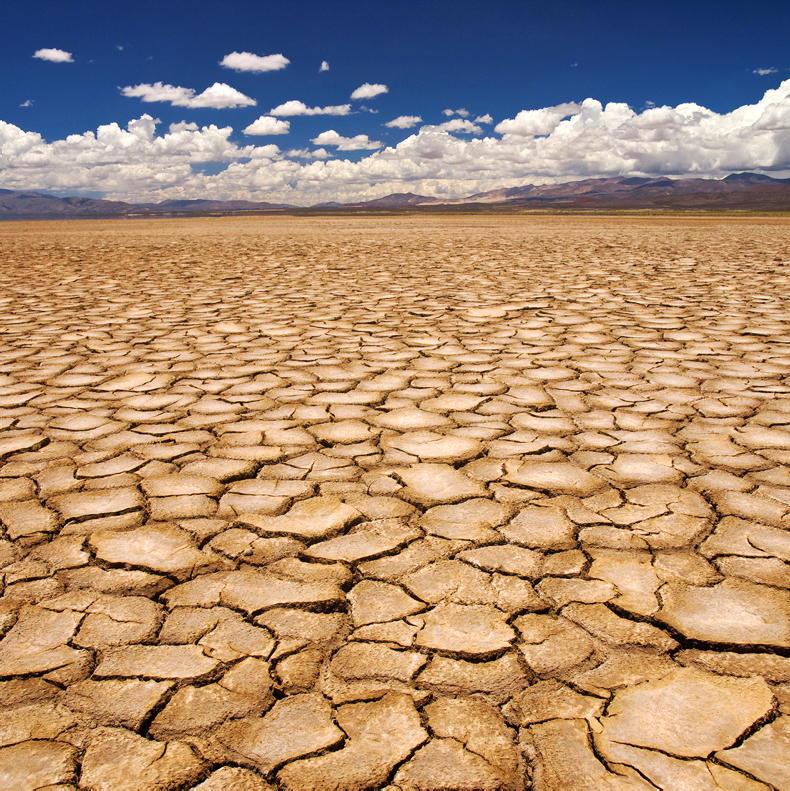
It is looking increasingly likely that there will be a strong El Niño later this year. The weather event, which manifests as a warming of the Pacific Ocean near the tropics, can lead to disruption of global weather patterns.
While the most severe effects occur in the countries in tropical or sub-tropical latitudes, a strong or very strong El Niño will be felt right across the world.
The latest forecast from the US National Oceanic and Atmospheric Administration (NOAA) suggests that there is a 98% probability of an El Niño event this year, with a 67% probability that it will be either a strong, or very strong, event by winter 2026 (see Figure 1).
The European Central Bank published research into the effects of a strong El Niño which estimated that food commodity prices would be around 8-9% higher in the year following such an event.
The research noted that the effects are different across different commodities. The price changes are most strongly seen in soybeans, corn and rice, while wheat, coffee and cocoa see little to no change.
Neville Hill, Co-CEO of Hybrid Economics, an advisory firm on the economic impacts of climate change, recently warned: “If we get a strong El Niño this year we should expect GDP growth to fall, inflation to rise and a greater likelihood of political violence and conflict. Those effects will be especially pronounced in many tropical countries.”
Hill cited economic research which shows that an average event reduces global growth by around 1%, and that while a larger El Niño would cause more damage to economic growth, the effects may not be linear.
This means that a larger event could have acutely negative economic effects.
What is El Niño
The events are a common feature of the Earth’s climate and occur once or twice a decade. Some research suggests that they will become more frequent and more severe due to climate change.
A rise of half a degree in ocean surface temperature in the eastern and central Pacific is enough to trigger an El Niño, while a rise of more than two degrees is classified as “very strong”.
The greater the rise in temperature, the greater the disruption to normal weather patterns in countries in the tropics and surrounding the Pacific. The ECB paper says El Niño typically leads to heatwaves with heavy rainfalls in South America and the southern US states, and drought in northern US states.
The 2023 event saw record rainfall across much of Australia. Southern Africa sees drought conditions, which impacts food security in the region, while east Africa can see above normal rainfall and flooding. The Indian monsoon season tends to see lower rainfall during an El Niño.
For Ireland, the weather effects are usually minimal. Met Éireann says that, while it may help drive milder, wetter winters, the effects are generally overshadowed by North Atlantic weather patterns.
Other factors
The El Niño event should not be looked at in isolation when trying to estimate the effect on global food prices over the coming year or two.
While some key sectors like tillage and dairy are dealing with something of a glut of produce at the moment, the outlook is for lower production in future.
The most recent United Nations Food and Agriculture Association world food situation suggests that an upward trajectory in food prices is already in place
The recent rapid increase in fuel and fertiliser prices, driven by the unrest in the Middle East, will feed through to future output.
Severe weather effects will only serve to amplify the trend that is already starting to take hold in production.
The most recent United Nations Food and Agriculture Association world food situation suggests that an upward trajectory in food prices is already in place. Speaking this week, ECB executive board member Isabel Schnabel described the price effects in place from the conflict in the Middle East as being, by historical standards “a very large shock”.
She added that the bank’s hope that the conflict would be quickly resolved have not materialised.
Schnabel said that the persistence of the effects from the conflict mean that the central bank can no longer ignore what it means for the inflation outlook.
She said that “even if the war ended today, a lot of damage has already been done” and that “from today’s perspective, I think a rate hike in June will be needed”.
Comment
If the El Niño event towards the end of the year comes in as strong as some forecasts suggest, then changing weather may be the driving factor for farm prices in 2027.
With the weather effects from the event on Ireland fairly minimal, it could prove to be a boon for Irish farmers. However, it does come with a sting in the tail for the dairy and beef sectors.
In a world of rising input costs, the one place that has remained relatively stable so far this year is feed prices.
If the combined effects of the increased fertiliser prices and weather disruptions reduce global cereal production into 2027, then we may see those prices rise. Adding this to high energy and the likelihood of increases in interest rates means the cost of production could rise further next year.
This means that even if output prices are higher next year, margins could remain under pressure as more money will be needed to cover operating costs.




SHARING OPTIONS