



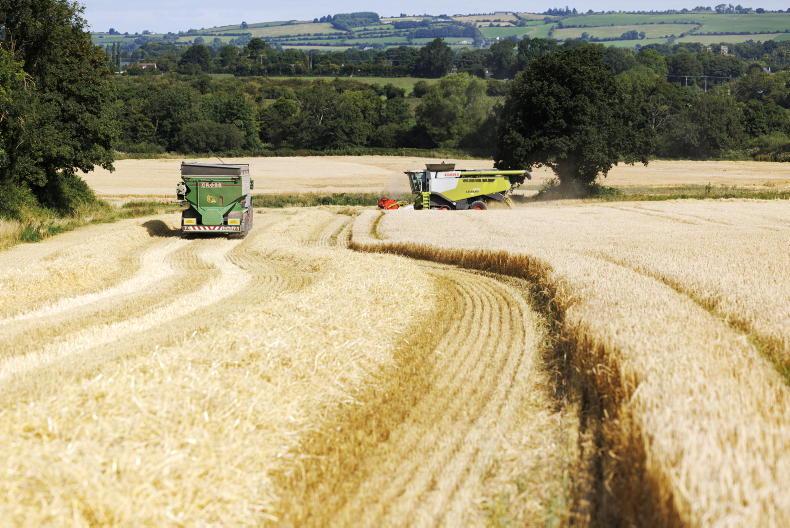
Irish agriculture is rightly proud of our level of food production. We are among the most food-secure nations in the world, ranking second of 113 countries in the most recent Global Food Security Index.
According to research by Teagasc, Ireland produces enough protein to feed 20m people, with this number rising to 35m people once protein digestibility is taken into account.
Food digestibility is a measure of how much of the protein a person ingests is actually used by the body. Animal and dairy protein is significantly more digestible than plant protein, with close to 100% of amino acids available to the body, compared to around 50% for plant protein.
The significant bias towards animal food production systems in Ireland means the vast majority of the protein produced in this country scores very highly for digestibility.
Research carried out by Marie Merlo of Teagasc and published this week, takes a deeper dive into the data on the quantity and quality of protein produced in Ireland and then also looks at how different climate policies could change the protein security for the country.
Merlo used the example of sheep production to show the difference between protein availability before digestibility is accounted for.
Calculating the amount of protein needed to produce sheepmeat and then calculating the protein availability from that sheepmeat, results in negative protein production – that is, it takes more to produce the meat than the meat can provide.
However, the cereal protein which the sheep consume is only around 50% digestible whereas the meat from the sheep has a significantly higher digestibility meaning that in real-world terms, the net useful protein calculation for sheepmeat production is actually positive (see figure 1).
Taking this calculation across the wider industry, Merlo explained that one hectare dedicated to milk production produces more protein than one dedicated to cereal production.
The crunch for animal derived protein versus plant protein comes from the environmental impact from production. Merlo cited research which shows beef emits 18 times more greenhouse gases than cereals and 50 times more than pulses per 100g of protein.
There is also an argument that feed for livestock could instead be used directly as food for people.
This is less of an issue in Ireland where the majority of the livestock are ruminants which mostly consume grass with around 5% of their food intake in the form of human-edible feed.
In examining the impact of climate policies on the current range and quantity of protein produced in Ireland, Merlo compares a “business as usual” scenario with one where the country meets its 2030 climate targets for agriculture.
Under the first scenario there would be a net increase in protein production as the current trend of increased dairy output and falling beef numbers continues. Considering the small impact of sheepmeat production on net protein output, the drop in sheep numbers will have little impact on the outcome.
Merlo calculated that under this scenario, net digestible protein production would increase by 3,258t between 2022 and 2031, meeting the needs of an additional 369,100 people.
There would also be economic benefits as dairy farms are more profitable than beef or sheep operations, meaning aggregate farm-level net margin would increase.
The second climate-policy scenario would, Merlo said, lead to a decrease in agricultural activity. The drop in beef production due to policy-driven disincentives would see 635,643 fewer beef livestock units by 2031, compared with a drop of 406,666 under the business-as-usual scenario.
Conversely, the number of dairy livestock units would see a larger increase in the second scenario, rising by 290,030, compared to 101,187.
The climate-policy scenario would also see an increase of 25,000 ha for both cereals and legumes as Ireland reaches its tillage target.
The greater emphasis on cereal and legumes under the second scenario means there is a greater increase in protein output by 2031 when compared to the business-as-usual scenario.
However, importantly, the greater share of animal proteins in the first scenario means that when the net digestible protein value for the climate policy scenario is calculated, it shows a decrease of 7,915t by 2031 when compared to 2022.
Merlo noted that Ireland is a significant exporter of beef products and that a large reduction in output could lead to substitutions of Irish grass-fed beef in importing countries for beef produced in places where beef may be less sustainably produced. This would lead to an increase in global greenhouse gas emissions.
She explained that the changes in land use, and livestock numbers, arising from climate policies would result in economic, environmental and nutritional impacts, adding: “The magnitude of the impact depends on the extent of the reduction in livestock units and financial disincentives placed on livestock products.”
Merlo said that, while there are solutions which would allow Ireland to meet its climate targets for agriculture and maintain food and protein production, they would require the implementation of measures and changes in production processes “at a highly ambitious level and rate”.
Comment
The latest projections from the EPA suggest that Ireland will exceed its greenhouse gas targets for 2030 by a wide margin. Emissions from agriculture are projected to drop by as much as 19% depending on the implementation of policies on fertiliser, livestock reductions and land use changes.
The research presented by Teagasc does serve to emphasise once again that there is a trade off in these policies when it comes to production of useful protein from this country. Ireland is rightly proud of both the country’s food security and the number of people around the world who have access to the nutritious, healthy products exported from this island.
There was another very interesting survey released in recent days by the ESRI which showed that farmers are willing to take action on climate change
It seems that it is almost inevitable that climate policies will lead to some reduction in the number of people Irish agriculture will be feeding in future. But if the polices are implemented carefully, with an eye on the science, then that reduction will be minimised, with overall farm profitability left in a sustainable situation.
There was another very interesting survey released in recent days by the ESRI which showed that farmers are willing to take action on climate change.
This suggests that the time is ripe for the right policies to be implemented. Failing to put them in place would be a government failure, rather than one to be put at the feet of the farming community.




SHARING OPTIONS