


The trouble with making any sort of big and assertive statement (especially if put in writing) is that when it comes back to haunt you, there is the additional embarrassment of people saying “that’s the exact opposite of what you wrote in the paper”.
This seems to accurately describe the state of affairs with my beef cattle, and all my cast-iron views regarding the months ahead have been turned upside down.
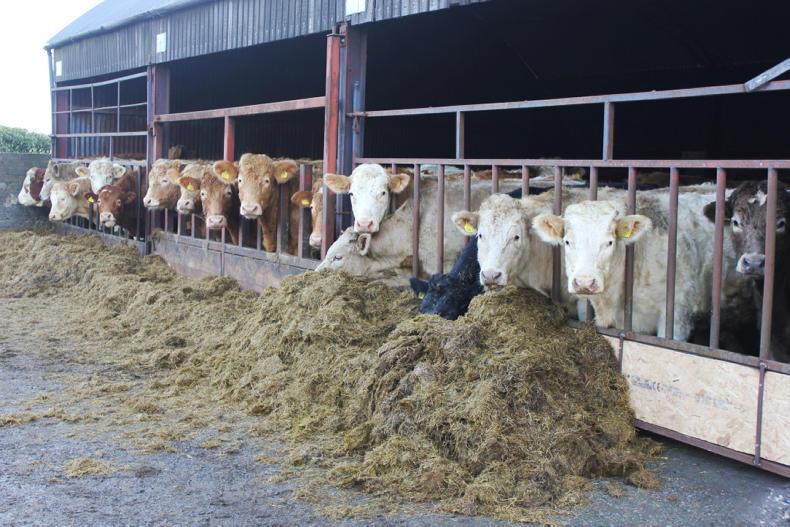
Back in the early autumn, I said I would rehouse some forward stores that weren’t near to being fat and graze them next spring with a view to killing them before mid-summer.
Unfortunately for me, I added a sentence or two, along the lines of ‘waste of time fattening cattle out of the house’ and followed this up by decreeing that I would ‘never buy stores in the spring of the year’.
Of course, farming has a lovely habit of not only making you eat your words, but also ramming them down your throat for good measure.
This situation arose, firstly, because the bullocks on the rented farm hadn’t been weighed all summer and when I picked out eight of the strongest and fed them for a couple of months (September/October), I was assuming they would kill somewhere in the region of 370kg carcase weight.
It was that erroneous assumption that the master plan was built around and probably influenced the subsequent article in the Irish Farmers Journal (edition dated 5 November). These cattle were slaughtered on 11 November and in one of those rare events in farming when results exceed expectation, they actually killed out at an average weight of 412kg.
All I can offer in my defence is the rather lame excuse that they didn’t look that big. In fact, the lightest was 390kg (R+3) and one heavily muscled animal with bad feet (that had waddled around feeling sorry for himself) weighed 446kg and graded E3. So much for my ability to estimate live weights.
Winter finished
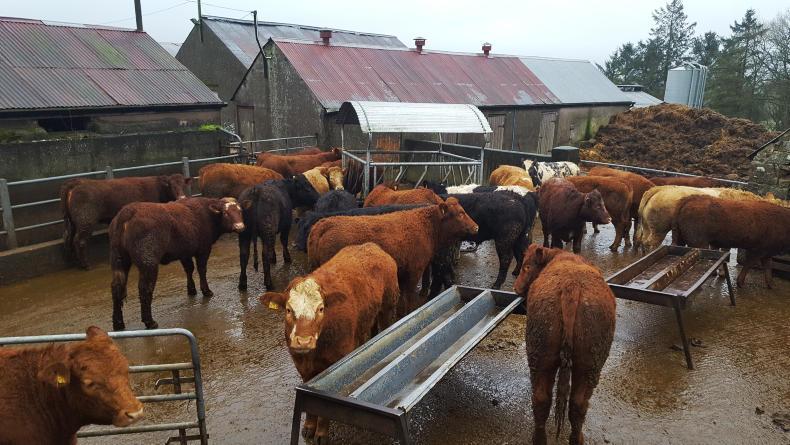
The knock-on effect of this better-than-expected outcome meant that my pen of ‘store’ cattle now needed to be finished out of the house. They were also a bit heavier than expected and the kindly autumn weather saw them averaging 670kg at time of housing (late November).
The combination of full weights off grass (at the time of weighing), then baled silage being replaced by clamp material, plus the adjustment to lying on slats probably resulted in a standstill period of at least four weeks. But they now look as if they are heading in the right direction.
They are eating 5kg of a finishing blend, which I consider to be a highly expensive way to produce beef, yet I am assured that these sort of cattle should be getting at least double that amount poured down their throats if I want to make ‘proper cattle’ out of them.
Once again, I am slightly amazed at the inability of well-bred beef steers to efficiently convert winter rations in a cost-effective manner. It is a reminder that I should not stray from the tried and trusted method of using predominantly fresh grass (topped up with judicious meal feeding when necessary) if I want decent performance from cattle on this farm.
Stores
The other embarrassing U-turn concerns the purchase of more stores. Despite being decidedly unenthusiastic about buying at this time of year, I have bought another dozen cattle.
Some may consider my logic a bit back to front, but I have surplus silage (baled and clamp), and with this part of the country awash with fodder, there isn’t much demand for it. Therefore, I reckoned I would buy a few before the prices become totally crazy (usually anytime from early March).
Buying strong stores (540kg) is not a job for the faint-hearted, especially if you have a penchant for a decent Charolais, and the glass ceiling of not paying more than £1,000 hasn’t so much been gently cracked, as blown to smithereens. They are comfortably on the wrong side of £1,100.




SHARING OPTIONS