The herd is closed with all replacements bred from within.
A strict selection policy is in place. The herd maintains a percentage of lower quality bulls that still posses good breeding as Pat says he tries to cater for all customers and provide an offering for breeders who do not want to or cannot compete at the highest level.
Like heifers, bulls are used for breeding at 13 to 14 months of age. They are grouped in smaller numbers of one bull to 30 heifers/ cows for clean-up to avoid overworking. Breeding at a younger age is seen as beneficial to limiting bulls growing into excessive weights.
Heifers are inseminated for the first round of AI with Angus or Hereford sires. These progeny are also highly sought after for feeding or for breeding.
Cows are supplemented in early spring with maize silage or alfalfa hay at grass to boost nutritional intake if grass supplies are tight or growth is late to kick in.
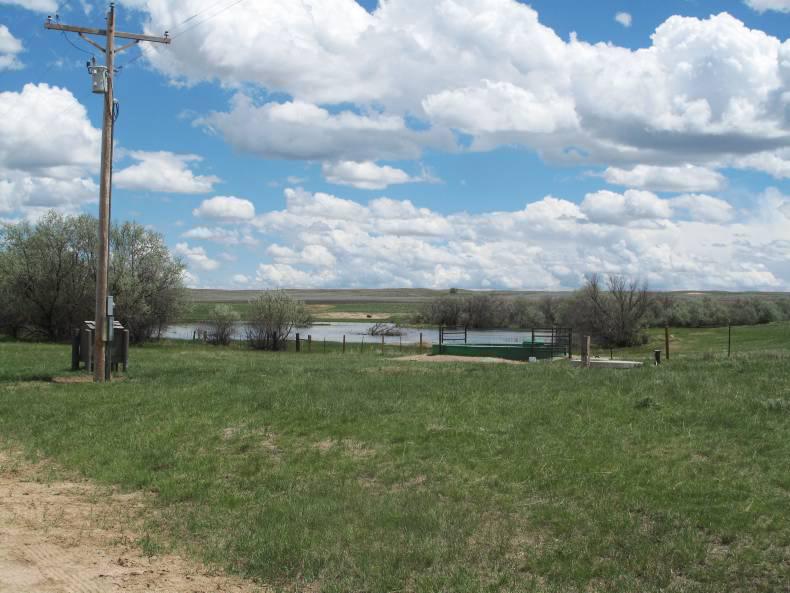
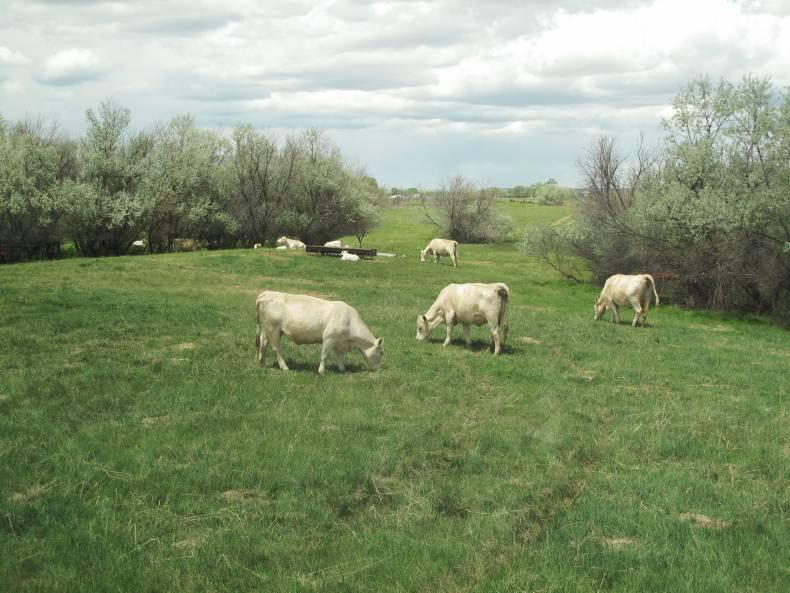
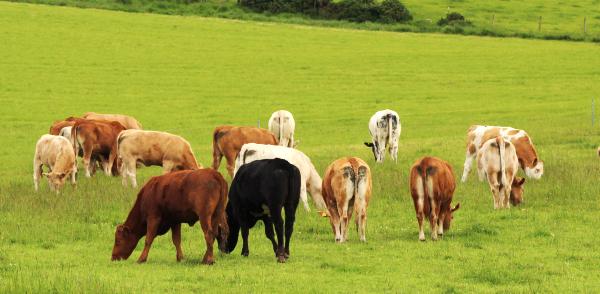
Lakes are a great resource to the farm providing access to grazing for the summer period.
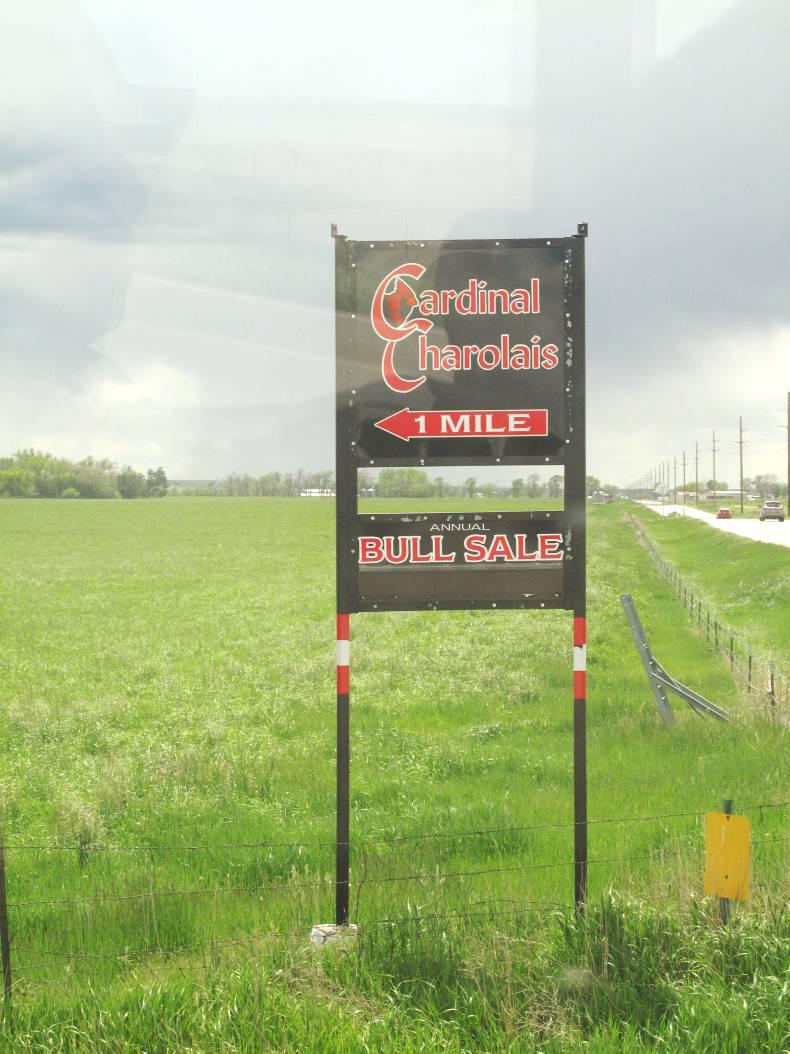
The bull sale is now well established with buyers attending from large distances while live streaming and online or telephone bidding has also increased in frequency in recent years.
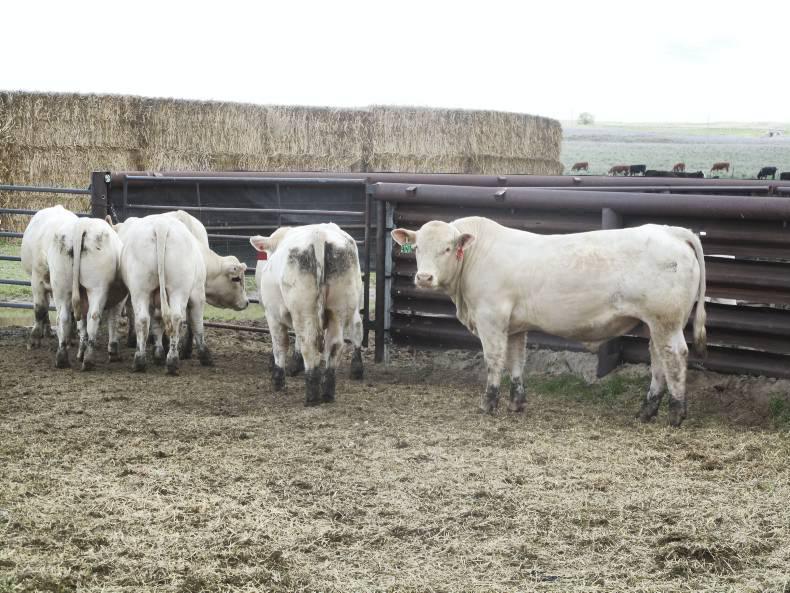
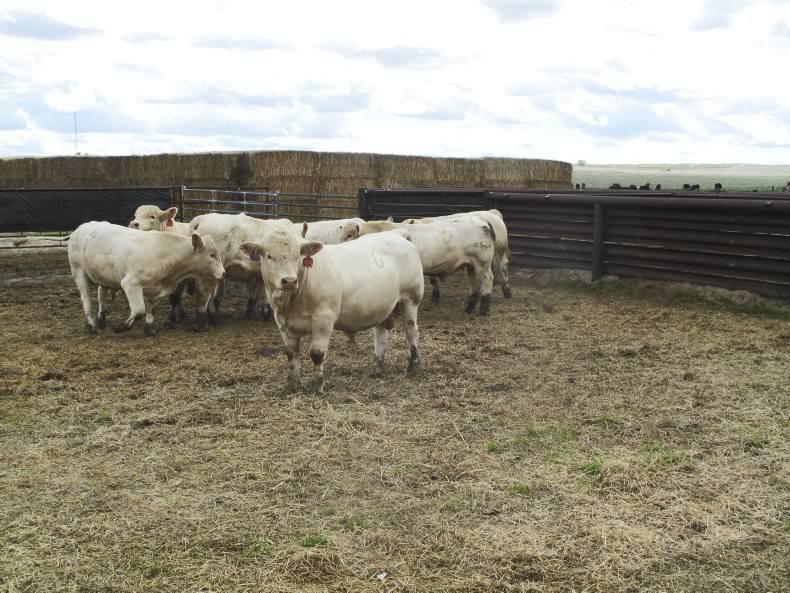
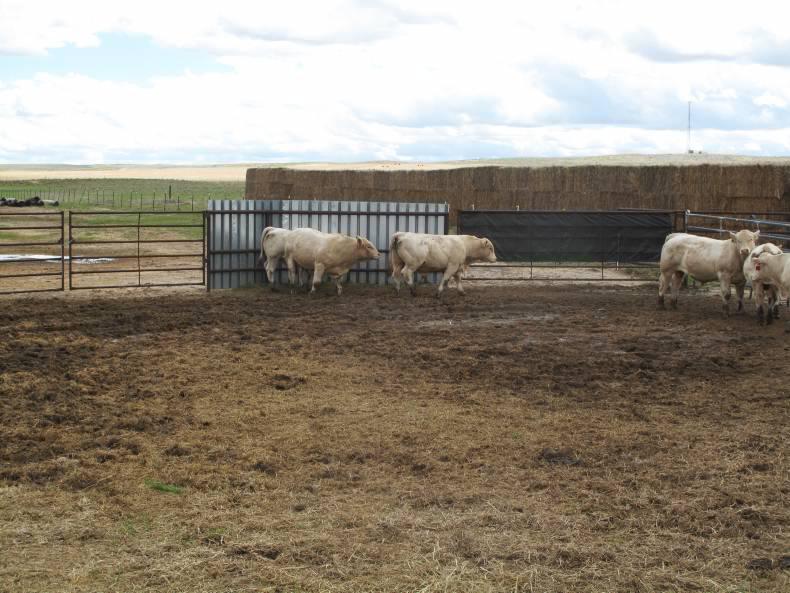
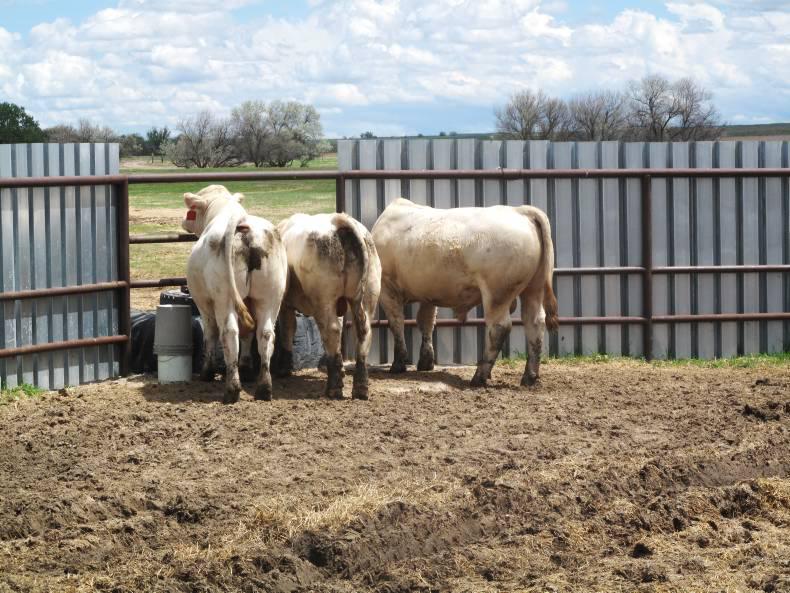
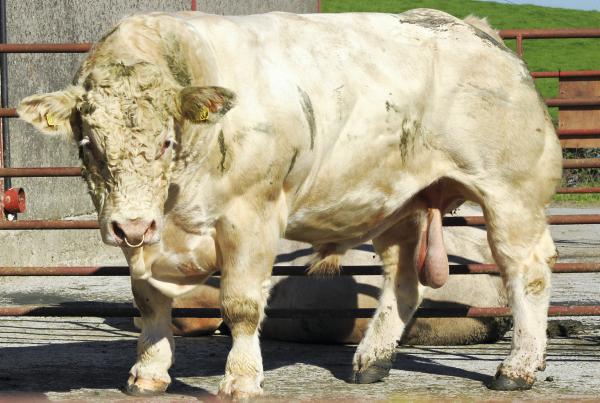
Remaining bulls awaiting collection after the herd's bull sale a few weeks earlier.
The target weight at 12 to 13 months of age is 500kg to 600kg.
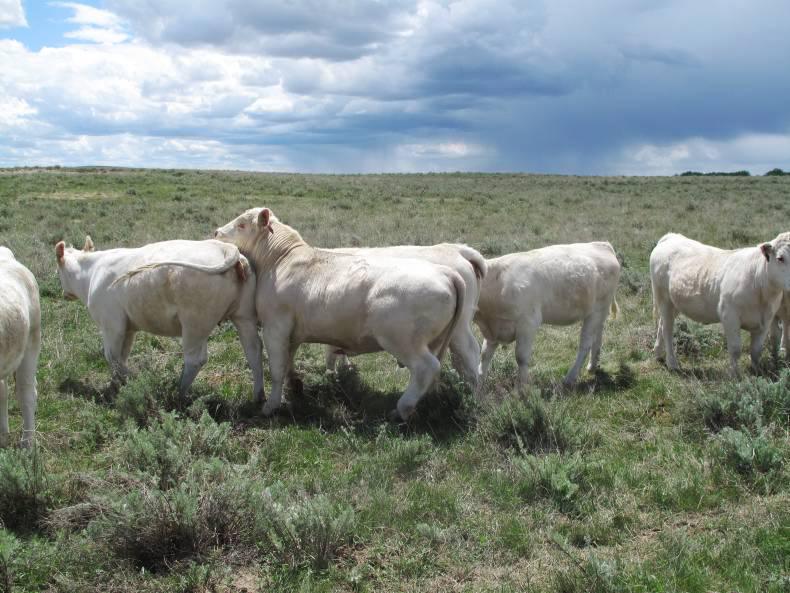
Bulls have lots of space, even when winter feeding, with the aim of keeping animals fit and ready to cover large areas during the breeding season.
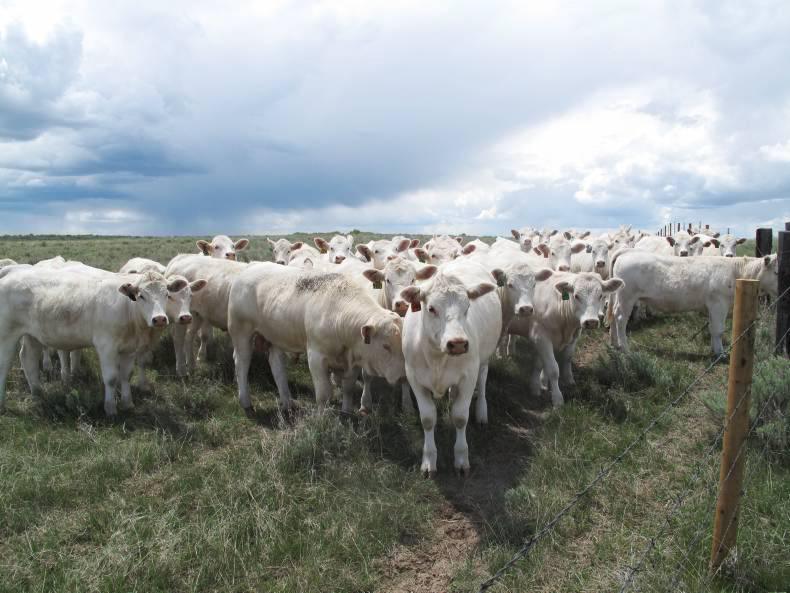
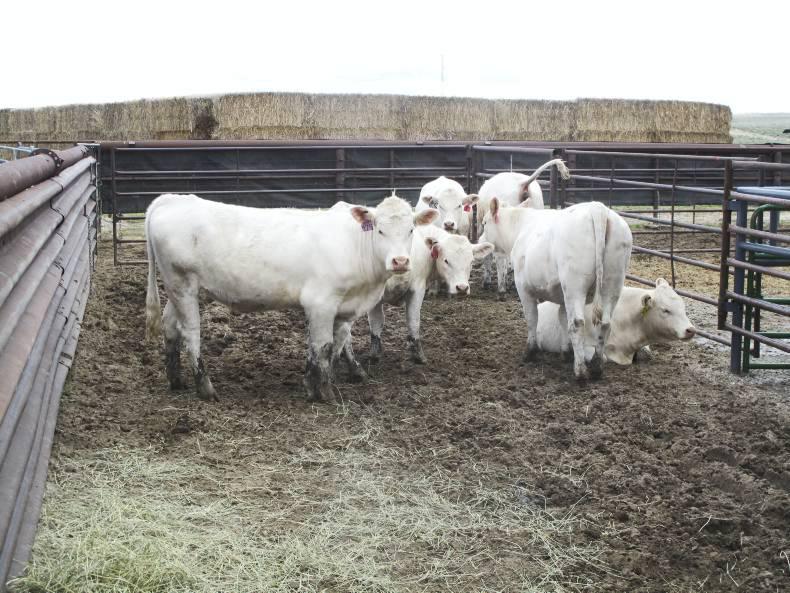
A batch of heifers drafted for sale. The top and bottom percentage of heifers are drafted for sale. This is done to avoid heifers with excessive growth rates that will grow into too heavy of weights and prevent poor performing animals entering the herd.
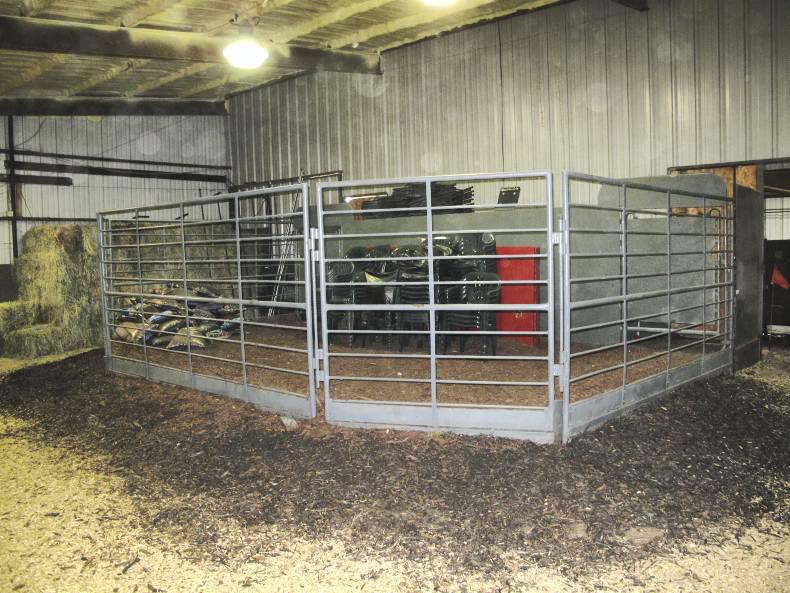
To facilitate bull and heifer sales at the yard, Cardinal Charolais have invested in a simple ring that allows sales to be held in a similar format to livestock markets.
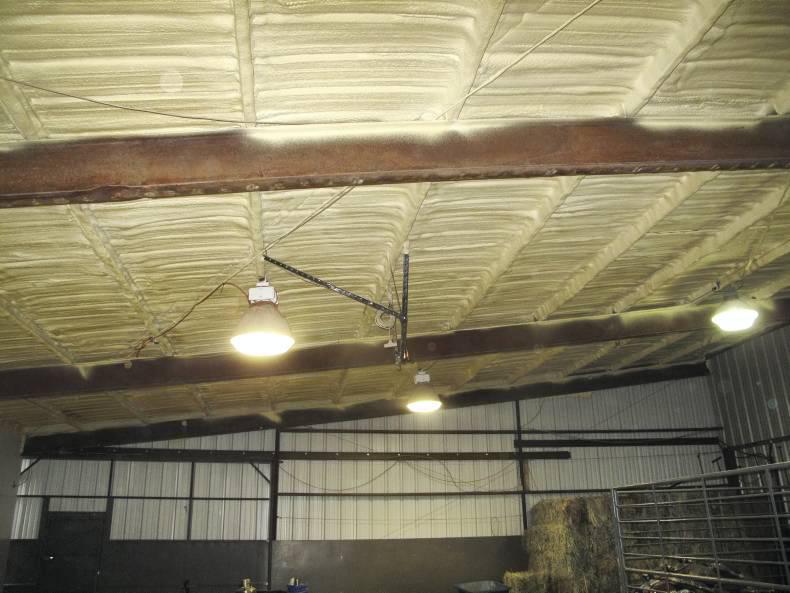
The shed for sales double up as a store for feed or for temporarily bringing young calves or sick animals indoors during severe freezing. The roof is insulated to allow temperature to be regulated and also helps to keep the shed cool in summer.
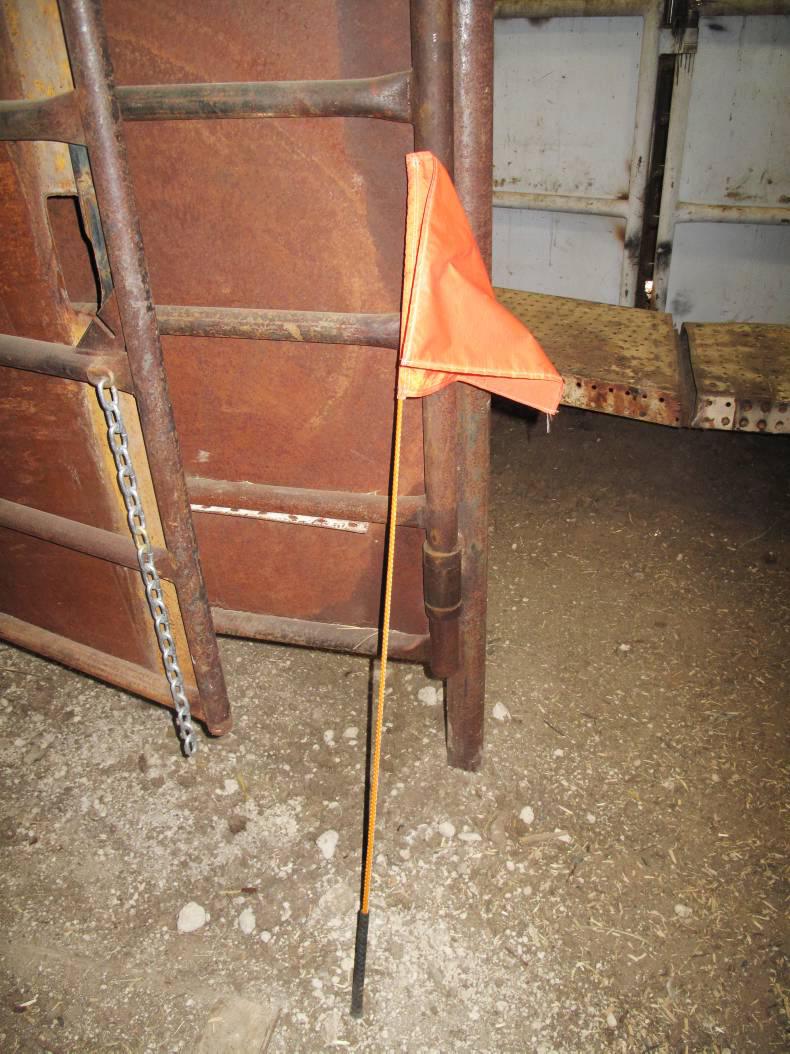
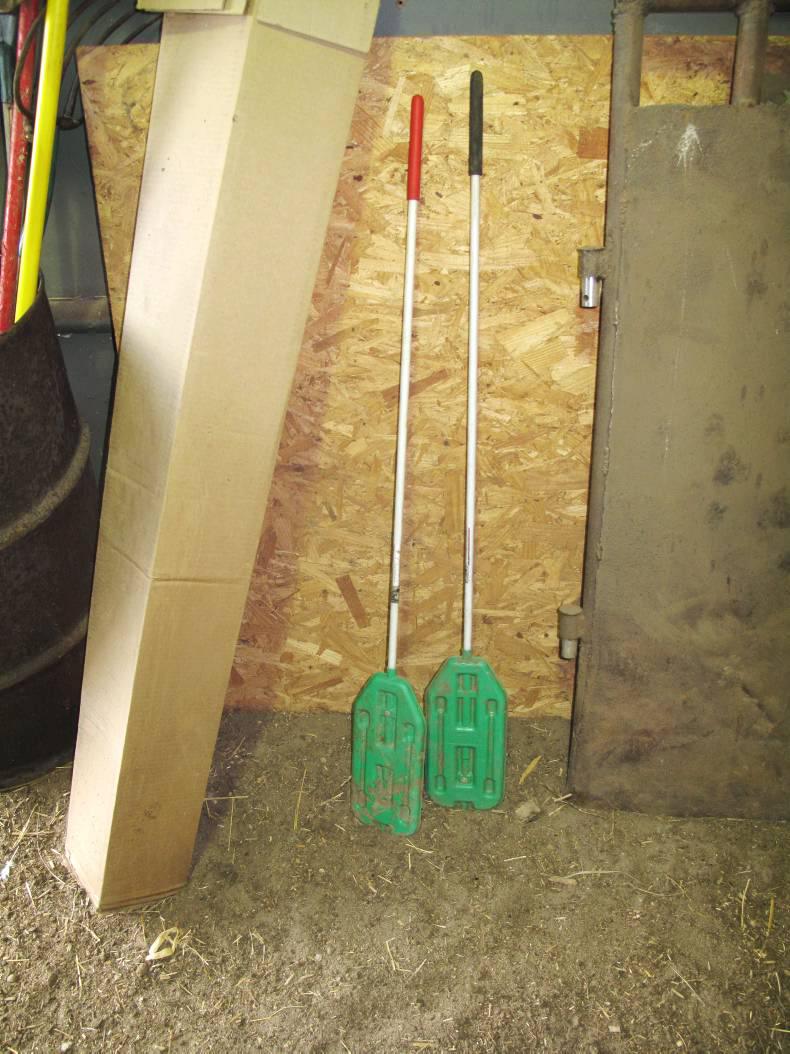
Animals are put through handling pens with a focus on minimising stress. A pvc stick with a flag on top is one option used to herd cattle.
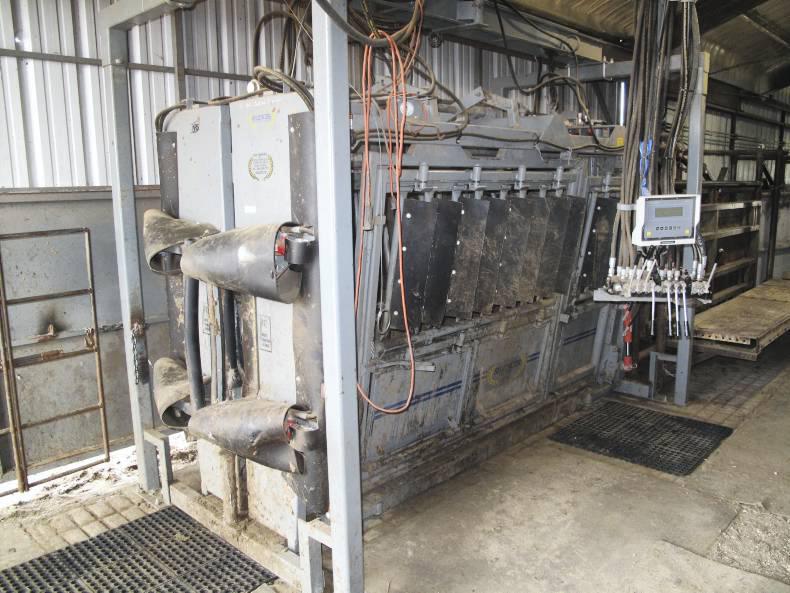
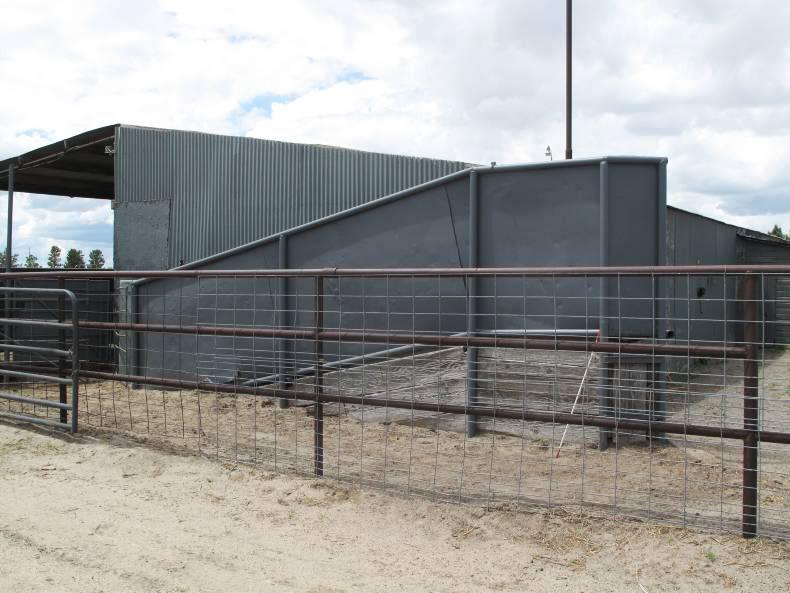
Cattle handling facilities are very impressive. The automatic crush weighs, records data and can be widened or narrowed to hold animals in place when handling and facilitate easier movement of different sized animals.
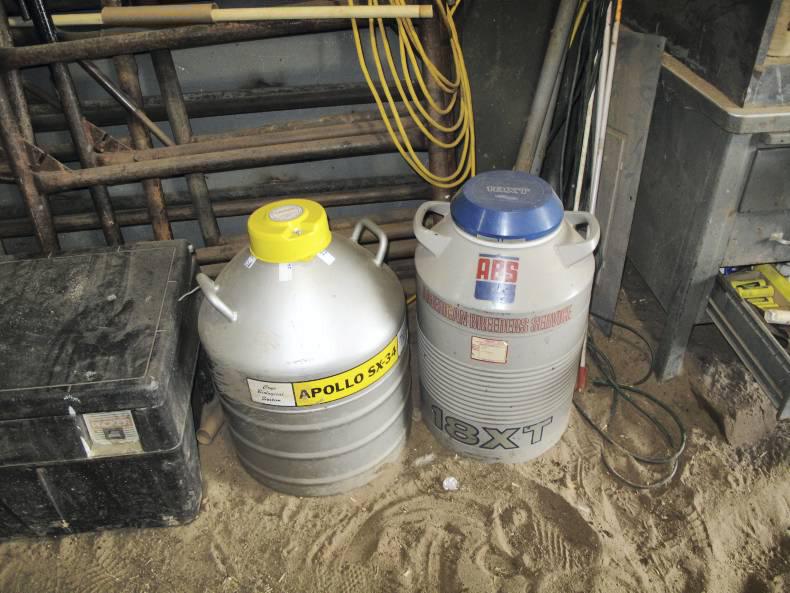
AI is carried out on heifers and cows for one cycle with stock bulls run with the herd to mop up repeat breeders.
The other aid in handling cattle through the yard and crush are these paddles that make a rattling noise.
Handling facilities are impressive with health and safety concerns well catered for.
There is a focus in the herd of breeding bulls with genetics that promote lean marbling content of beef.
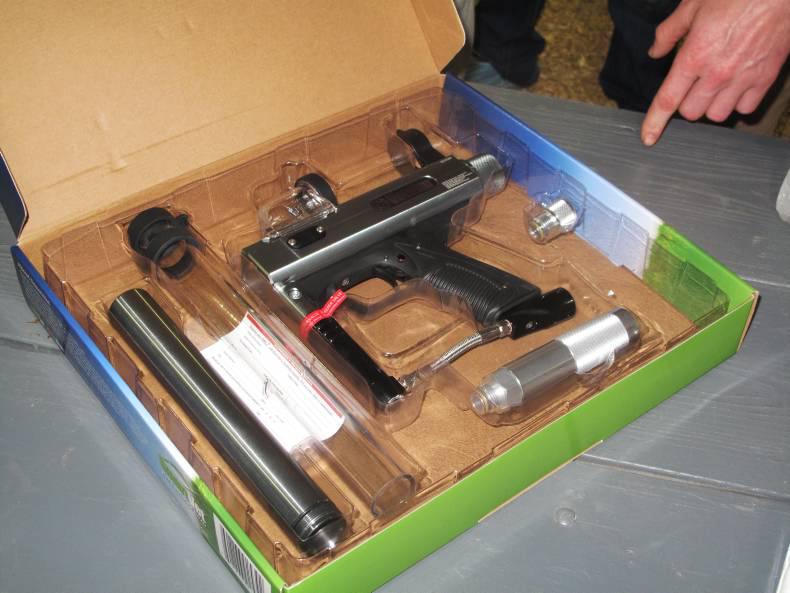
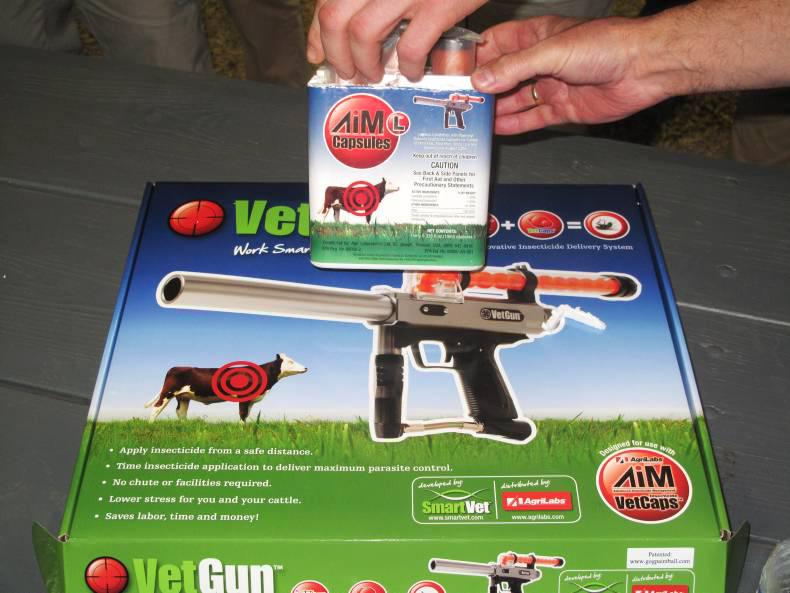
Pat explains that the gun is useful when animals are grazing in areas of the farm with poor handling facilities for individually handling animals. The cartridge containing teh insectidide is soft and bursts on impact with the animal.
The vet gun costs $360 and is used to apply insecticide without having to round up and handle cattle.
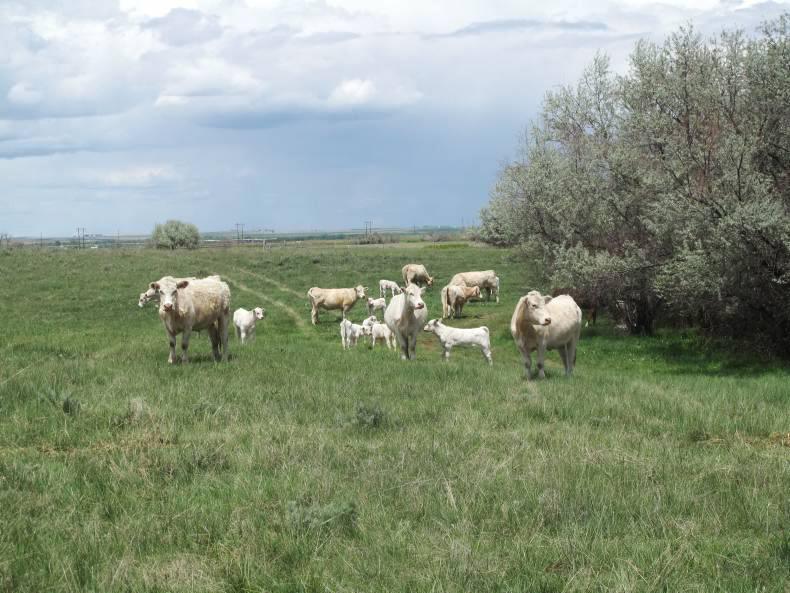
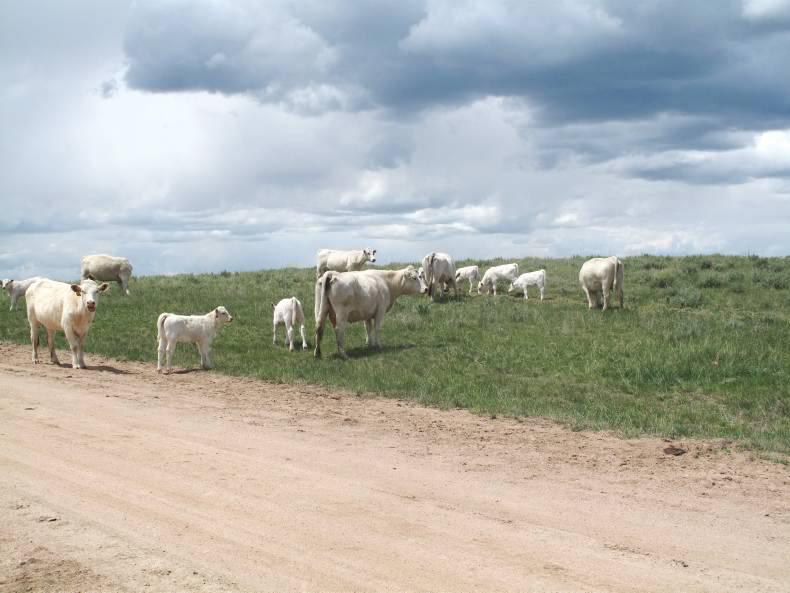
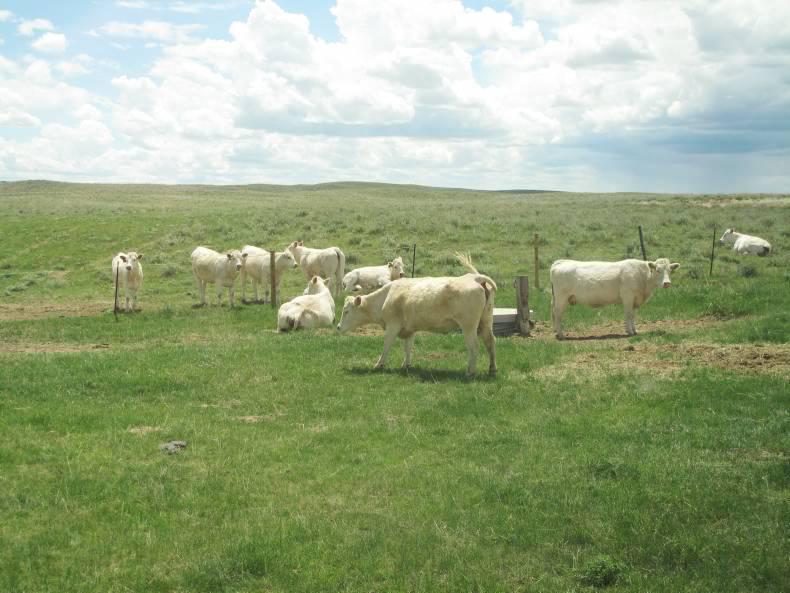
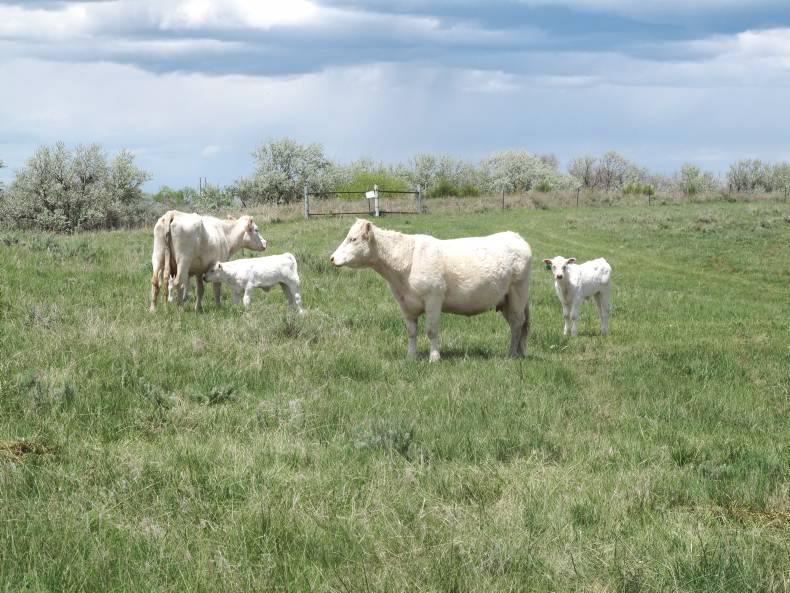
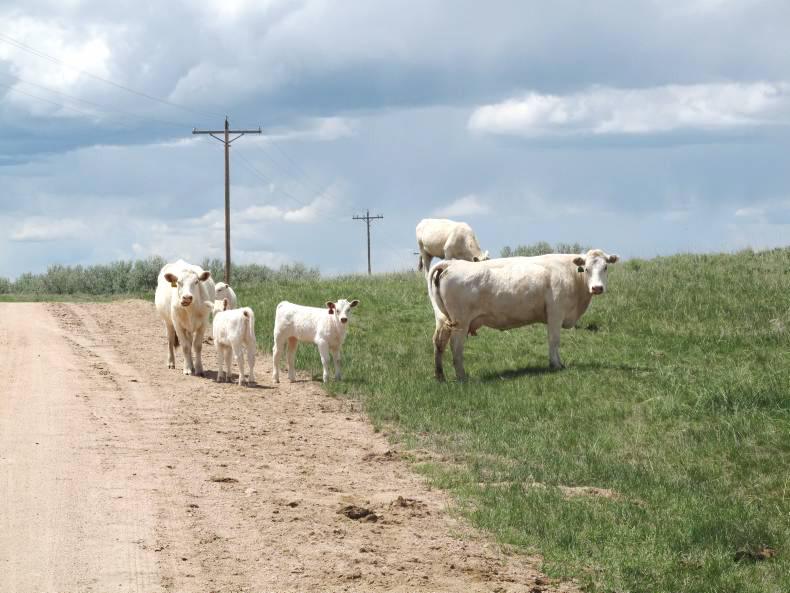
Cardinal Charolais is located in Northeast Colorado, about 100 miles east of Denver. It extends to about 6,000 acres and is a mixture of sand hill grass and sub-irrigated meadows.
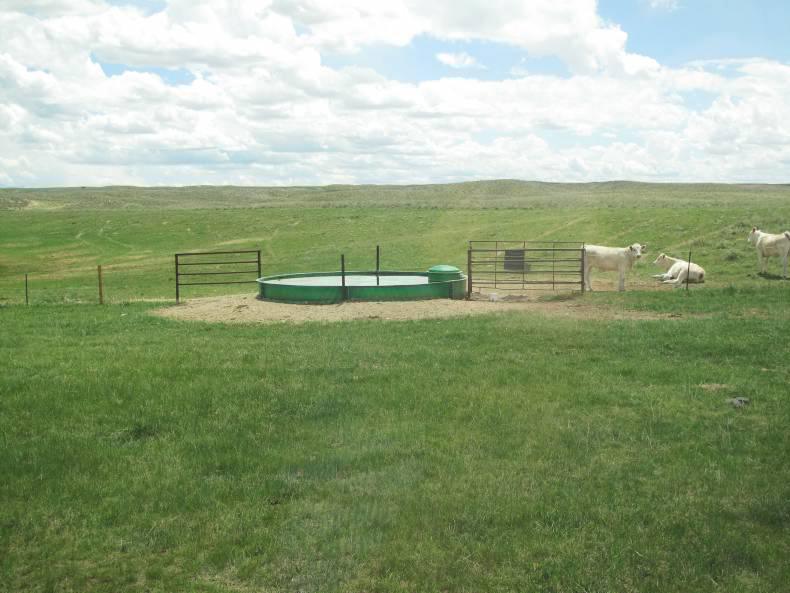
There are five miles of pipelines on the farm to transport waters to areas not srviced by streams, rivers or small ponds/lakes. Large fobreglass troughs are used as cement trucks cannot access areas to pour troughs.
The level of vegetation improves in spring following seasonal rainfall. Many sand hill areas on teh farm burn up during prolonged dry spells.
The home block of land is about 4,000 acres. There is another 1,200 acre out farm block while the farm also leases 800 to 900 acres of similar type land.
Pat says there is a greater emphasis on temperment of bulls and cows with fewer cowboys nowadays and more animals under the control of one man.
The farm is divided into divisions with large areas grazed rotationally.
A large percentage of the farm is sand hills with a cow and calf pair requiring in the region of 15 to 20 acres to provide enough grazing for the year.
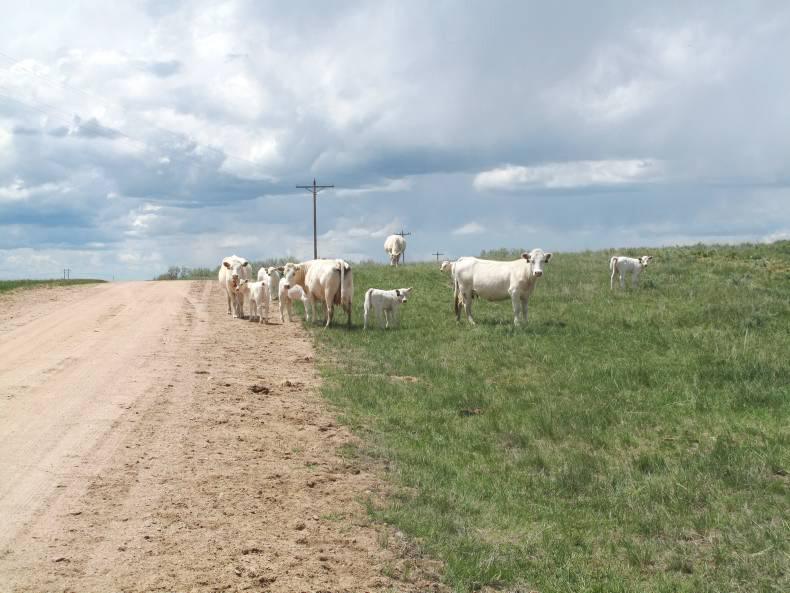
The average birth weight of calves on the farm is 82lbs or 37kg. Bulls are not retained for breeding with a birthweight exceeding 45kg.
Heifers are extremely uniform, weighing in the region of 350kg to 400kg at mating.
All heifers are bred to calve down at two years of age. Older calving is seen as a loss of output and unnecessary cost to the system.
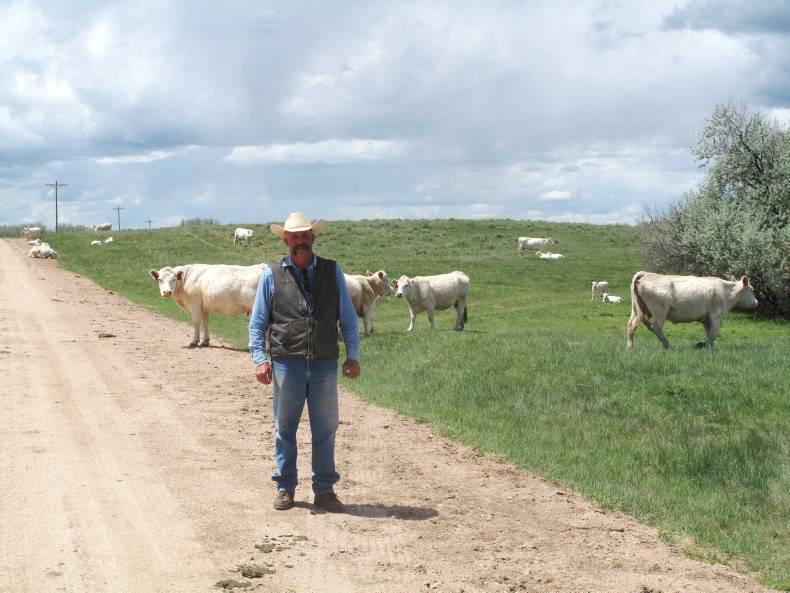
A trip to American beef farms as part of this year’s Alltech’s annual symposium included a visit to a pedigree Charolais herd that is poles apart from typical Irish herds. The herd, Cardinal Charolais, is owned by Pat Gebauer (pictured) and Luan August and is located in northeast Colorado in the US.
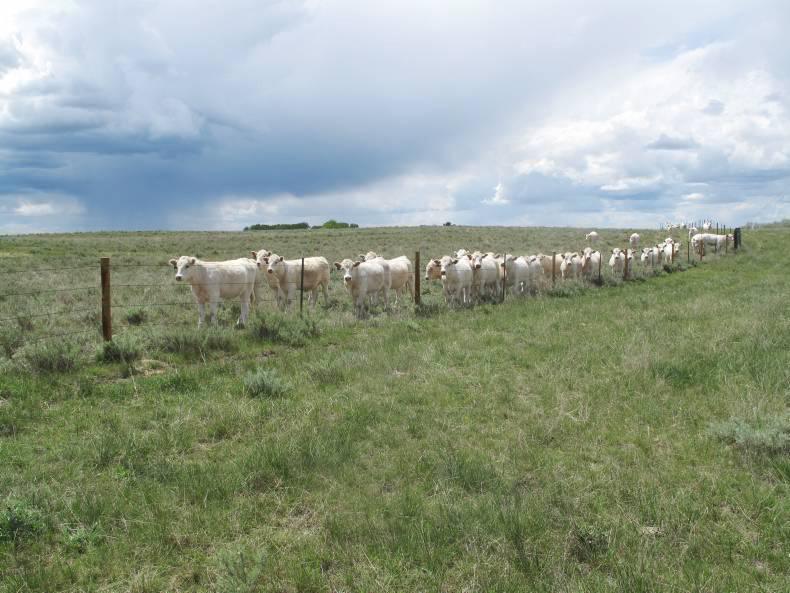
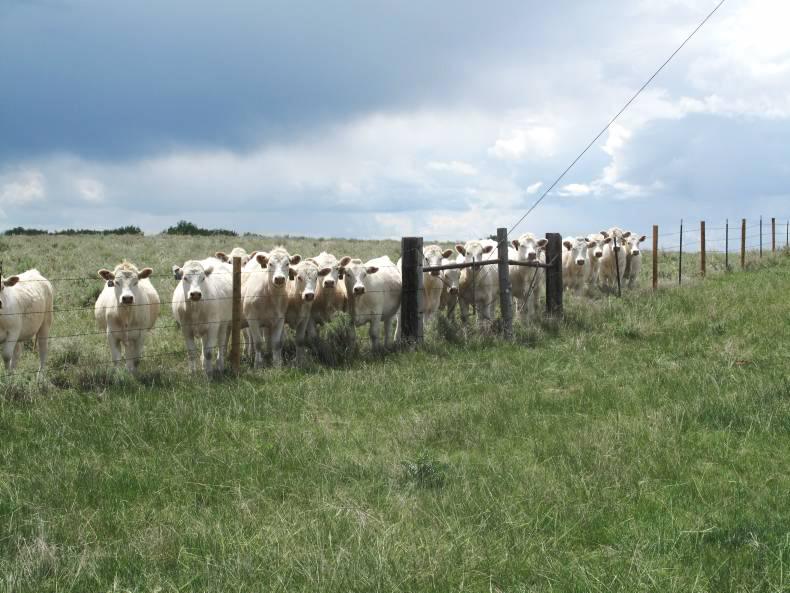
There are 300 pedigree Charolais cows run across about 6,000 acres (2,428ha).
Land type is a mixture of sandhill grass, which can be best described as rough-grazing and sub-irrigated meadows. The farm is laid out in divisions, largely influenced by the location of a lake and numerous ponds. There is also 5,000 metres of water-piping laid to bring water to different areas and to allow sub-division. In the harsher sandhill grass, a cow and calf unit requires an allocation of about 15 to 20 acres of grass to sustain it. Crops such as maize, alfalfa hay and sorghum are grown on the better quality sub-irrigated meadows and this is used to supplement weanlings and, sometimes, cows over the winter.
ADVERTISEMENT
The Charolais cattle also vary greatly in appearance. This stems from the focus on the farm with Pat explaining “some seedstock (pedigree) fellows get hung up on fads or breeding for the show ring. I went after commercial men when we took over the herd. We sell some to pedigree, but we strive to supply our primary customers – commercial men – with what they want. It would be easy to fall into the trap of the show ring. We had a full fleshed brother of the national champion, but he didn’t suit our breeding so we moved him on.”
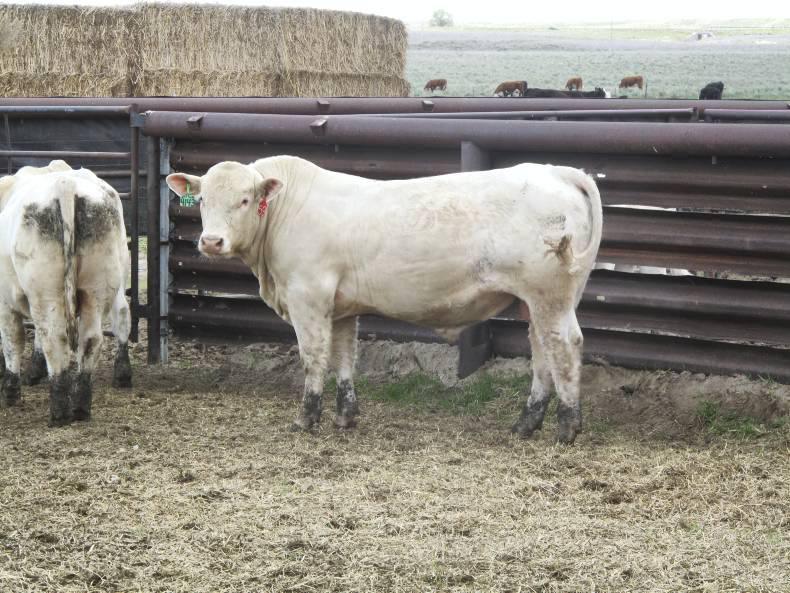
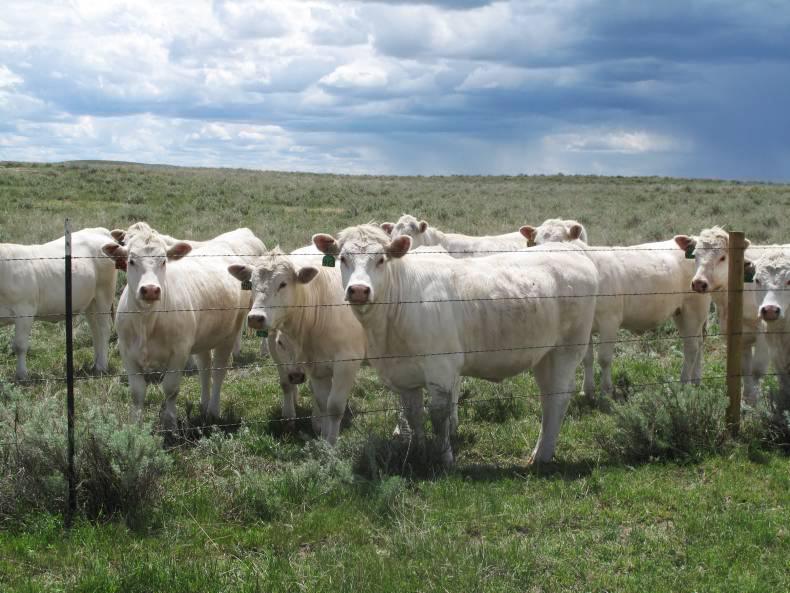
Bulls have far less conformation and bone than typical Charolais cattle in EU countries with the majority of animals, if compared to an Irish system, grading R with some Os and, likewise, a small number of U-s in the best-shaped animals. A similar trend is present in heifers, with most being good, functional O+/R grades.
Bulls have good length and easy-fleshing characteristics. Pat says that the breeding policy has focused on selecting bulls and dams that have a double marker for a leptin gene.
“The genetic programme of the herd has incorporated DNA marbling and tenderness genes into our herd. In the US, everyone got afraid of fat but good fat deposits in meat (marbling) makes it more tender and taste better.” Pat says that they are seeing the benefits with buyers placing more emphasis on predicted breeding values.
The breeding of bulls and a strong focus on breeding to what the commercial market demands has been an integral part of building up the herd’s name. “In my opinion, every pure breeder should have commercial cows and rear some pounds (commercial cattle). That way, you will know what it takes and what commercial farmers need,” Pat says.
Pat and Luan have in recent years held an annual on-farm sale comprising 100 to 120 bulls and 20 to 25 replacements heifers.
A high percentage of buyers are repeat customers or new buyers who have been enticed to sales by existing customers. Pat says that a big aspect in growing their customer base has been bulls following through on their credentials and the farm’s policy in giving a year’s guarantee with all bulls sold.
Breeding goals
A lot of questions on breeding decisions revert to focusing on commercial traits. Most customers, by nature of farm size and labour availability, want easy-calving sires. The average birth weight of calves is 82lb (37kg). Most bulls range between 80lb and 90lb (36kg to 40kg). Any bull with a birth weight of 100lb (45kg) or more is not retained for breeding purposes. According to Pat, it may not only increase calving difficulty, but higher birthweights will also put more pressure on cows in a harsher environment.
“There is no ideal cow or bull. You have to fit the environment and we had to learn quickly when we took over this farm that animals must suit the environment. Buyers won’t come back if they have problems calving cows.”
Docility and reduced labour is also much more in focus now. “A few years ago, cowboys didn’t mind wild bulls. Now, there is less manpower and one cowboy could be managing 100 cows extra, so there is no room for dealing with wild bulls. All animals are polled and cattle with horns are moved (sold) on.”
Bulls are sold at about 12 to 14 months of age for immediate breeding. The reason for selling bulls at one-year-old is to prevent bulls growing into excessive weights and to increase lifetime productivity. As mentioned earlier, birthweight is one selection factor, the next is a bull’s own performance to weaning and to sale. “We don’t keep anything less than 600lb (272kg) at weaning; the majority weigh 700lb to 850lb (317kg to 385kg) at seven to eight months of age,” says Pat.
Calves are introduced to concentrates in pellet form in the week leading up to weaning. Post-weaning, they are transferred on to hay, a different pelleted concentrate, minerals and rumensin (to improve the feed efficiency). They are gradually transferred on to a winter feeding diet which targets keeping animals performing without overfeeding. “We feed corn (maize) silage and are lucky to get beet pulp. There’s usually a mixture of hay, alfalfa and sorghum and, right down the road, there is distillers’ mash. We don’t feed too much corn, but we like to feed just enough so that the top ones can excel without overfeeding,” Pat says.
Bulls are catalogued for sale at an average weight of 1,180lb (535kg) to 1,320lb (598kg) with the best performing bulls catalogued 20kg to 30kg heavier. The sale targets top-quality bulls but, as Pat explains in the video, he also likes to include a percentage of lesser quality bulls to have an offering for customers who prefer to purchase a bull in the $3,000 to $4,000 (€2,750 to €3,668) price category as opposed to the average of $5,000 to $6,000 (€4,585 to €5,500).
A small number of autumn-born bulls are also bred to satisfy demand of customers looking for older bulls. These autumn-born bulls sold last April for $9,000 to $12,000 (€8,250 to €11,000) per head –well above previous year’s prices. The trade has increased by 20% to 30% in the last two years in line with a sharp rise in beef prices.
Female replacements
A similar tight selection process is in place for heifers being incorporated into the herd. Pat explains that he doesn’t want heifers with excessive growth as they won’t perform and go back in calf in the harsh environment while, understandably, he avoids the poorer performing animals to maintain a high level of performance.
All heifers are calved at two years of age. Like cows, they are synchronised for one round of AI with breeding taking place three to four weeks earlier than cows to give first calvers a better chance to maintain a tight calving interval. Heifers bred to AI are generally served with Angus and Hereford sires.
Progeny command a high premium with a strong feedlot demand. Some Angus and Hereford cross heifers are also carried through and sold in cases, with an embryo-transferred calf at foot commanding a sale price in excess of $3,000 to $4,000. This was a more frequent practice on the farm, but has reduced in recent years with a sharp rise in the value of yearling heifers that could previously be purchased for $700 and are now costing nearly twice that.
Concluding on the buoyancy in the beef trade, Pat says that the sector has never seen anything like the sharp rise in the trade in recent years, but says that herd rebuilding and market forces could ease the trade back.
This content is available to digital subscribers and loyalty code users only. Sign in to your account, use the code or subscribe to get unlimited access.
The reader loyalty code gives you full access to the site from when you enter it until the following Wednesday at 9pm. Find your unique code on the back page of Irish Country Living every week.
CODE ACCEPTED
You have full access to the site until next Wednesday at 9pm.
CODE NOT VALID
Please try again or contact support.
A trip to American beef farms as part of this year’s Alltech’s annual symposium included a visit to a pedigree Charolais herd that is poles apart from typical Irish herds. The herd, Cardinal Charolais, is owned by Pat Gebauer (pictured) and Luan August and is located in northeast Colorado in the US.
There are 300 pedigree Charolais cows run across about 6,000 acres (2,428ha).
Land type is a mixture of sandhill grass, which can be best described as rough-grazing and sub-irrigated meadows. The farm is laid out in divisions, largely influenced by the location of a lake and numerous ponds. There is also 5,000 metres of water-piping laid to bring water to different areas and to allow sub-division. In the harsher sandhill grass, a cow and calf unit requires an allocation of about 15 to 20 acres of grass to sustain it. Crops such as maize, alfalfa hay and sorghum are grown on the better quality sub-irrigated meadows and this is used to supplement weanlings and, sometimes, cows over the winter.
The Charolais cattle also vary greatly in appearance. This stems from the focus on the farm with Pat explaining “some seedstock (pedigree) fellows get hung up on fads or breeding for the show ring. I went after commercial men when we took over the herd. We sell some to pedigree, but we strive to supply our primary customers – commercial men – with what they want. It would be easy to fall into the trap of the show ring. We had a full fleshed brother of the national champion, but he didn’t suit our breeding so we moved him on.”
Bulls have far less conformation and bone than typical Charolais cattle in EU countries with the majority of animals, if compared to an Irish system, grading R with some Os and, likewise, a small number of U-s in the best-shaped animals. A similar trend is present in heifers, with most being good, functional O+/R grades.
Bulls have good length and easy-fleshing characteristics. Pat says that the breeding policy has focused on selecting bulls and dams that have a double marker for a leptin gene.
“The genetic programme of the herd has incorporated DNA marbling and tenderness genes into our herd. In the US, everyone got afraid of fat but good fat deposits in meat (marbling) makes it more tender and taste better.” Pat says that they are seeing the benefits with buyers placing more emphasis on predicted breeding values.
The breeding of bulls and a strong focus on breeding to what the commercial market demands has been an integral part of building up the herd’s name. “In my opinion, every pure breeder should have commercial cows and rear some pounds (commercial cattle). That way, you will know what it takes and what commercial farmers need,” Pat says.
Pat and Luan have in recent years held an annual on-farm sale comprising 100 to 120 bulls and 20 to 25 replacements heifers.
A high percentage of buyers are repeat customers or new buyers who have been enticed to sales by existing customers. Pat says that a big aspect in growing their customer base has been bulls following through on their credentials and the farm’s policy in giving a year’s guarantee with all bulls sold.
Breeding goals
A lot of questions on breeding decisions revert to focusing on commercial traits. Most customers, by nature of farm size and labour availability, want easy-calving sires. The average birth weight of calves is 82lb (37kg). Most bulls range between 80lb and 90lb (36kg to 40kg). Any bull with a birth weight of 100lb (45kg) or more is not retained for breeding purposes. According to Pat, it may not only increase calving difficulty, but higher birthweights will also put more pressure on cows in a harsher environment.
“There is no ideal cow or bull. You have to fit the environment and we had to learn quickly when we took over this farm that animals must suit the environment. Buyers won’t come back if they have problems calving cows.”
Docility and reduced labour is also much more in focus now. “A few years ago, cowboys didn’t mind wild bulls. Now, there is less manpower and one cowboy could be managing 100 cows extra, so there is no room for dealing with wild bulls. All animals are polled and cattle with horns are moved (sold) on.”
Bulls are sold at about 12 to 14 months of age for immediate breeding. The reason for selling bulls at one-year-old is to prevent bulls growing into excessive weights and to increase lifetime productivity. As mentioned earlier, birthweight is one selection factor, the next is a bull’s own performance to weaning and to sale. “We don’t keep anything less than 600lb (272kg) at weaning; the majority weigh 700lb to 850lb (317kg to 385kg) at seven to eight months of age,” says Pat.
Calves are introduced to concentrates in pellet form in the week leading up to weaning. Post-weaning, they are transferred on to hay, a different pelleted concentrate, minerals and rumensin (to improve the feed efficiency). They are gradually transferred on to a winter feeding diet which targets keeping animals performing without overfeeding. “We feed corn (maize) silage and are lucky to get beet pulp. There’s usually a mixture of hay, alfalfa and sorghum and, right down the road, there is distillers’ mash. We don’t feed too much corn, but we like to feed just enough so that the top ones can excel without overfeeding,” Pat says.
Bulls are catalogued for sale at an average weight of 1,180lb (535kg) to 1,320lb (598kg) with the best performing bulls catalogued 20kg to 30kg heavier. The sale targets top-quality bulls but, as Pat explains in the video, he also likes to include a percentage of lesser quality bulls to have an offering for customers who prefer to purchase a bull in the $3,000 to $4,000 (€2,750 to €3,668) price category as opposed to the average of $5,000 to $6,000 (€4,585 to €5,500).
A small number of autumn-born bulls are also bred to satisfy demand of customers looking for older bulls. These autumn-born bulls sold last April for $9,000 to $12,000 (€8,250 to €11,000) per head –well above previous year’s prices. The trade has increased by 20% to 30% in the last two years in line with a sharp rise in beef prices.
Female replacements
A similar tight selection process is in place for heifers being incorporated into the herd. Pat explains that he doesn’t want heifers with excessive growth as they won’t perform and go back in calf in the harsh environment while, understandably, he avoids the poorer performing animals to maintain a high level of performance.
All heifers are calved at two years of age. Like cows, they are synchronised for one round of AI with breeding taking place three to four weeks earlier than cows to give first calvers a better chance to maintain a tight calving interval. Heifers bred to AI are generally served with Angus and Hereford sires.
Progeny command a high premium with a strong feedlot demand. Some Angus and Hereford cross heifers are also carried through and sold in cases, with an embryo-transferred calf at foot commanding a sale price in excess of $3,000 to $4,000. This was a more frequent practice on the farm, but has reduced in recent years with a sharp rise in the value of yearling heifers that could previously be purchased for $700 and are now costing nearly twice that.
Concluding on the buoyancy in the beef trade, Pat says that the sector has never seen anything like the sharp rise in the trade in recent years, but says that herd rebuilding and market forces could ease the trade back.
If you would like to speak to a member of our team, please call us on 01-4199525.
Link sent to your email address
We have sent an email to your address. Please click on the link in this email to reset your password. If you can't find it in your inbox, please check your spam folder. If you can't find the email, please call us on 01-4199525.
ENTER YOUR LOYALTY CODE:
The reader loyalty code gives you full access to the site from when you enter it until the following Wednesday at 9pm. Find your unique code on the back page of Irish Country Living every week.






SHARING OPTIONS