A Stabiliser is a four-way cross between and Red Angus, Hereford, Simmental and Gelbvieh (a functional German breed).
It came about during a trial conducted by the USDA involving three breed composites. The breed is strong for fertility, ease of calving, docility, beef traits and feed efficiency.
ADVERTISEMENT
The Stabiliser is a composite breed. This means that when we cross two pure Stabilisers, 70% to 80% of the hybrid vigour we would attain when crossing different breeds is maintained.
Is there a Stabiliser breed society?
Yes, the Stabiliser breed has pedigree status and is owned by the Stabiliser Cattle Company (SCC).
Breeding stock are generated on 90 multiplier farms which between them carry 9,000 cows. All of these are performance-recorded. Selection and the importation of new bloodlines are determined centrally by the SCC.
Can I buy Stabilisers?
Yes. However, all trading of Stabiliser cattle is done privately, through the SCC. Prices are agreed between the SCC and multiplier herds annually and based on EBVs (index values). These are generated by the SCC and calculated using performance and on-farm data recording.
Neil Rowe, Oxfordshire
Neil Rowe manages a 150-cow Stabiliser herd on 170 acres at Abingdon in Oxfordshire.
“Seventy acres of the farm is protected river meadow that floods annually. It’s natural grass and must be grazed once annually.
"This land is about as productive as 15 normal acres. It’s funny, because I must keep the river fenced along my conventional acres.
"So one inspector wants me to show evidence of cattle having access to a river and the other is making sure I stay out of it,” Neil says.
He traditionally sold on bulls to beef finishers for feeding, but has recently become one of the multiplier herds for the Stabiliser Cattle Company, meaning he produces breeding stock for sale to commercial farmers.
Notwithstanding his herd’s genetics, Neil Rowe is no ordinary beef farmer.
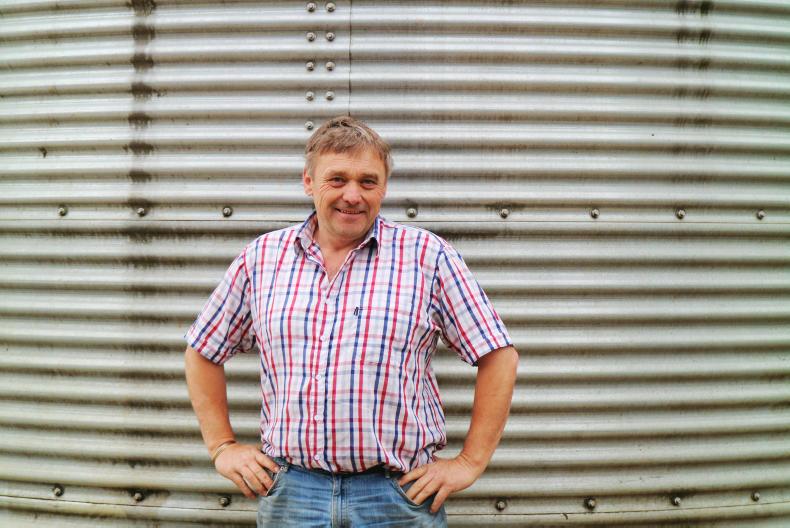
Neil Rowe
In recent years, the former Nuffield scholar has won multiple farm awards and designed a state-of-the art cattle shed with the help of world-renowned animal behaviour guru Temple Grandin.
Neil first became interested in Stabilisers on his Nuffield travels in 2005 and started off with a base of Angus x Brown Swiss cows and Stabiliser bulls, before buying in more Stabiliser females to increase numbers.
“I like innovation and being disruptive,” he tells me as we walk through the herd at his yard.
“The vast majority of UK beef farmers calve in the spring and have been doing so for 25 years. Given the typical margins on beef cow farms, they’re obviously all wrong.
"Two-thirds of the herd here calves from 12 September to 1 November. Calves are born outside then come in on 1 November."
Around the world there are competitive advantages like GMOs and hormones, which we cannot use.
"One of the advantages we have is cheap grazed grass but its feeding value is not consistent. When it is at its best in late-spring/early summer, our spring calf’s digestive system has not developed enough to get the most from it. That’s why I look to turn a more mature animal out in the spring that is primed and ready to graze.
"My animals will do 1.3kg to 1.4kg of weight gain daily up until the last week in June, when grass quality starts to dwindle. By splitting the herd, we spread the cost of our stock bulls – which can be in excess of £7,000 – over more calves.”
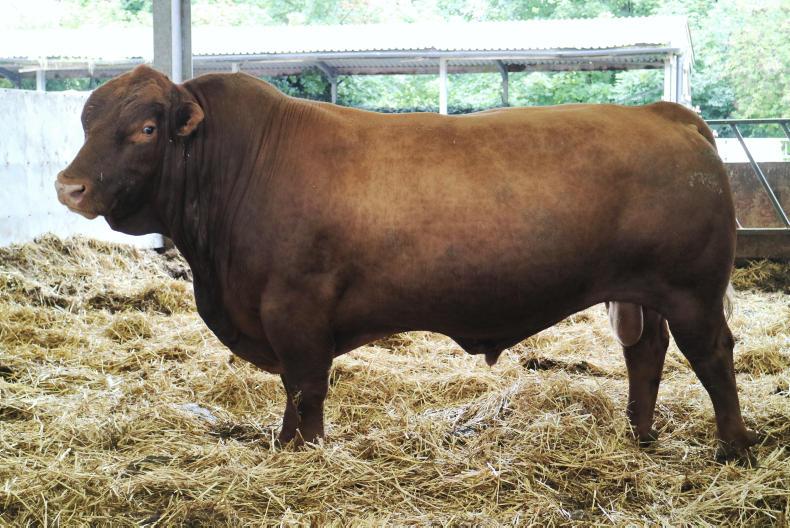
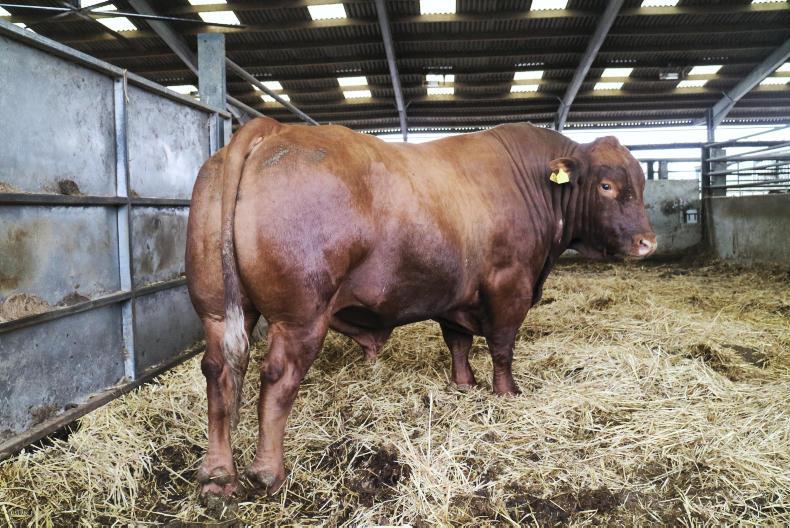
Stabiliser stock bull on Neil Rowe's farm.
When asked about the the merits of the Stabiliser breed, Neil says: “For a start, out of 100 calvings last autumn, we assisted four – two heifers and two sets of twins that we had scanned and knew about. At calving time, the herd is checked three times daily: 7.30am, lunchtime and 6pm – that’s all.
"The bottom line is that I have a small amount of help during busy periods, but must largely run this herd on my own. And I do consultancy work off-farm three days a week. I need easy calving and good mothers; Stabiliser ticks both boxes.”
Neil aims to get 95% of cows pregnant in 60 days of breeding and to have 60% calving in the first three weeks.
For him, another benefit of the Stabiliser is the early onset of maturity in females: “You get fertile standing heats from 16 weeks of age with some animals. Obviously it depends on nutrition, but they’re common from 20 weeks. It can be a bit of a headache from a bull management point of view.”
Feed efficiency and ability to hold condition are traits Neil’s herd exhibits too.
“If you take industry standard energy requirement for 640kg [Stabiliser mature cow weight] animals producing 14 litres of milk daily, my cows needed 27% less than this last winter. They’re an exceptionally efficient breed which means I can feed the autumn herd forage only while they’re rearing a calf indoors. I have a rule that I don’t like feeding cattle feed that humans can eat.
“However, all of this rubbish about cows being a problem from an environmental point of view is just that, rubbish. Bad decision-making and management of cows is the problem.”
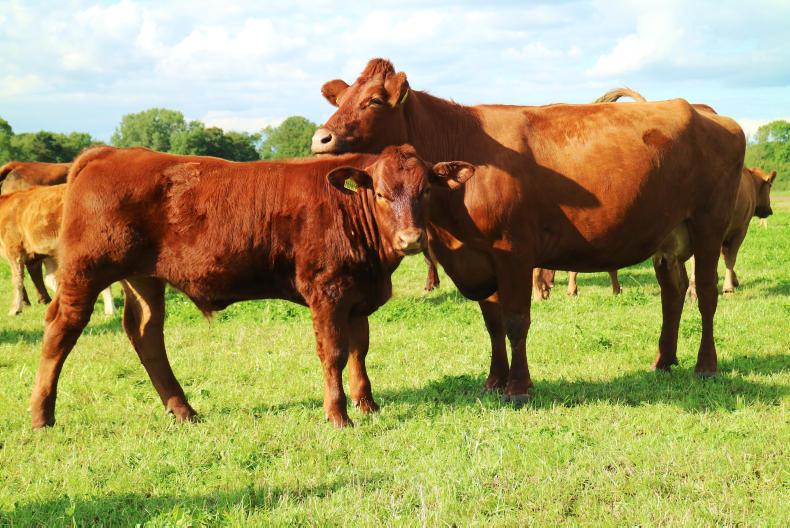
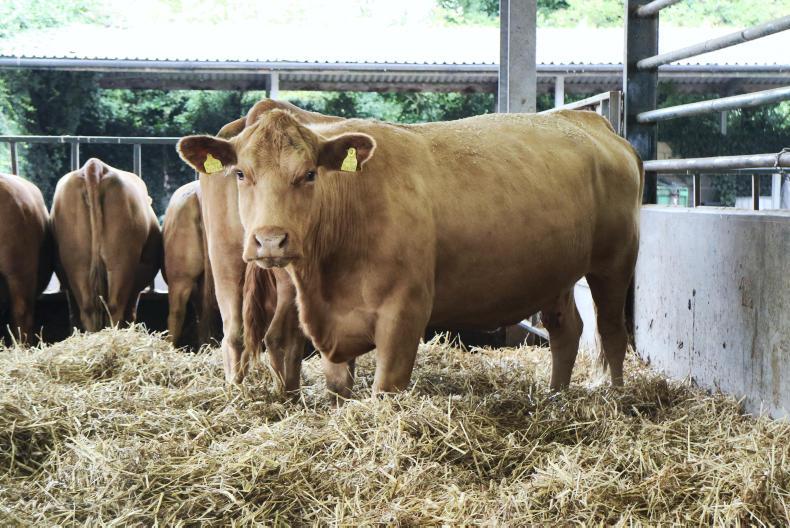
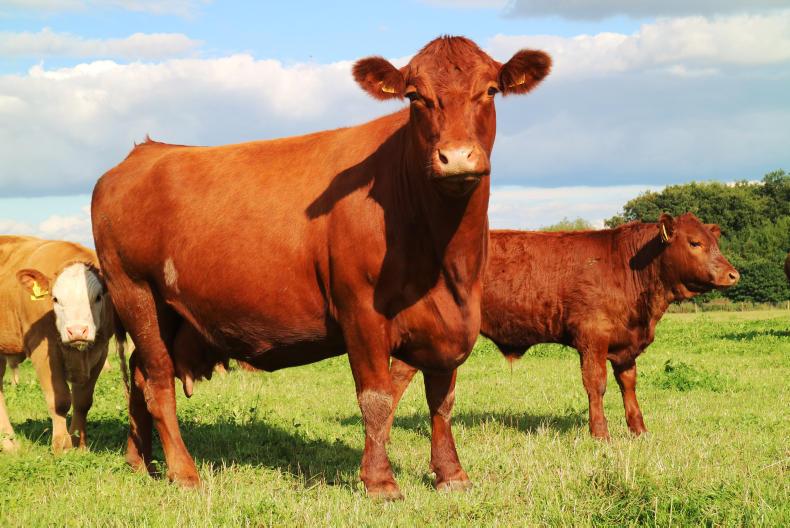
Stabiliser dry cows on Neil Rowe's farm
Neil told me how he sometimes actually finds it a challenge to keep condition off of cows.
“Our whole farm is run on a calendar basis – vets are booked a year in advance for the bigger jobs, bulls are in from 1 December to 10 February for the autumn herd etc.
"The only date that’s dynamic is weaning and we wean based on cow body conditions and calf growth rate. Three years ago we weaned autumn calves on 21 June as it was a shocking summer. One year we weaned 21 days pre-calving.
"The vets warned me about colostrum quality but there were no issues. It helped keep the cows from getting overfat and was cheaper than feeding the weanlings."
Neil’s female calves were traditionally sold as commercial breeding heifers, while bulls would be moved to a specialised Stabiliser finishing farm in Yorkshire, working in association with retailer Morrison’s.
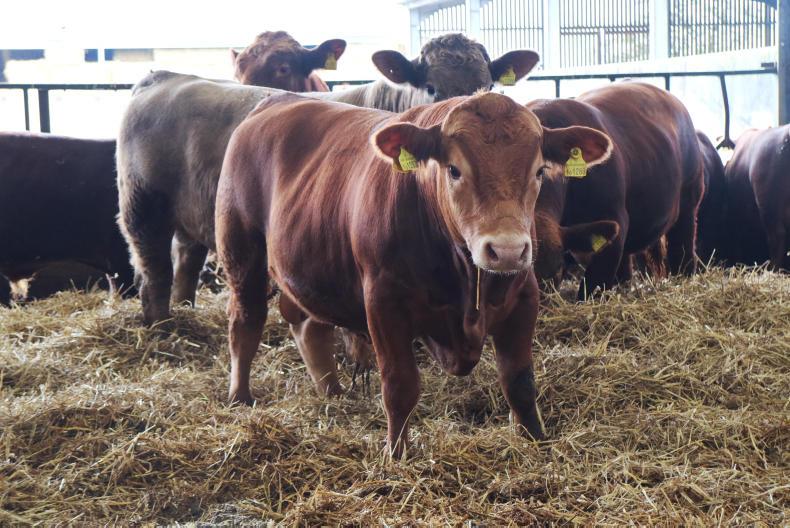
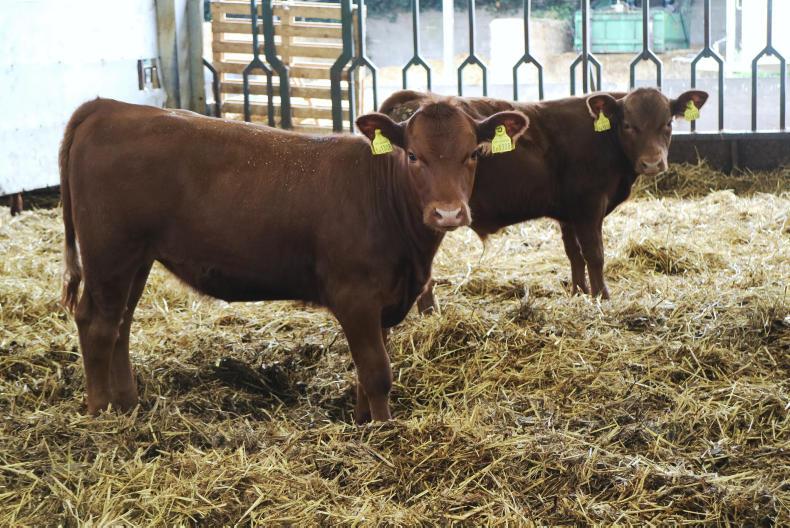
Stabiliser weanlings
Cattle would have been acclimatised to their finishing diet on Neil’s farm for six weeks prior to their move. At approximately 14 months of age, Neil’s bulls would have achieved a liveweight of 630kg and a killout of 54.5%, having grown at a rate of 1.9kg daily during the finishing period.
However, now that Neil has become a multiplier herd for the Stabiliser breed, he will sell his best stock privately through the Stabiliser Cattle Company.
Andrew Crow, Shropshire
Andrew Crow runs the 900-acre Cherrington Farm operation, near Newport in Shropshire. The 900 includes 350 acres of grass, on which the beef herd is run.
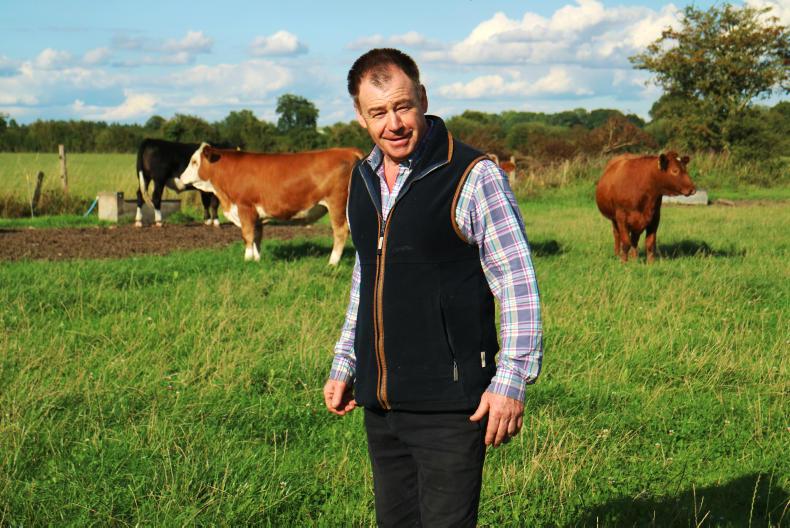
Andrew Crow
“We started with sheep in the 70s and then went arable in a big way. There have been potatoes and beet along the way too. But over-farming the land led to reduced worm activity, reduced organic matter in the soil and, ultimately, reduced yields.
"We are getting wheat in at 4t today – we were doing the same yields in 1986,” Andrew says.
He looked to beef as a means of diversifying. Four years ago there were 120 Hereford cross cows on the farm, running with Charolais stock bulls.
“They were what you’d call ‘high-quality’ beef cattle. They had the shape and were great to look at, but when we did the figures we weren’t making any money.
“The decision was made to switch to Stabiliser. We bought in stock bulls and began to breed our own herd. There’s now over 200 cows here."
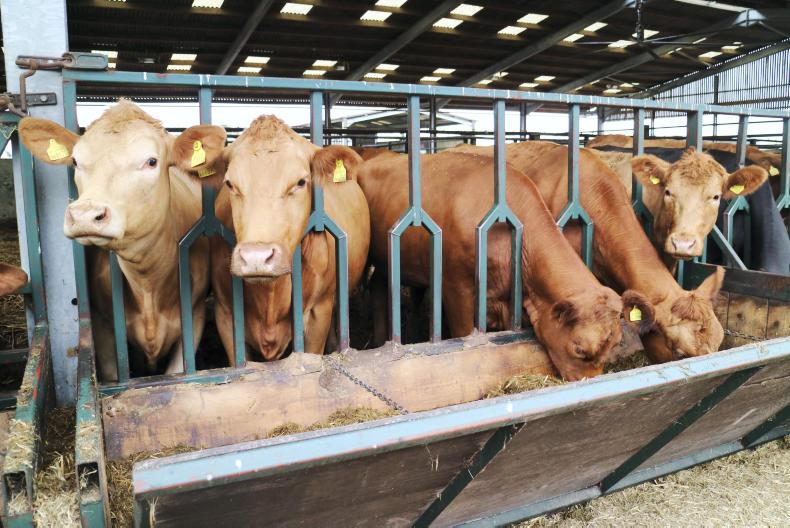
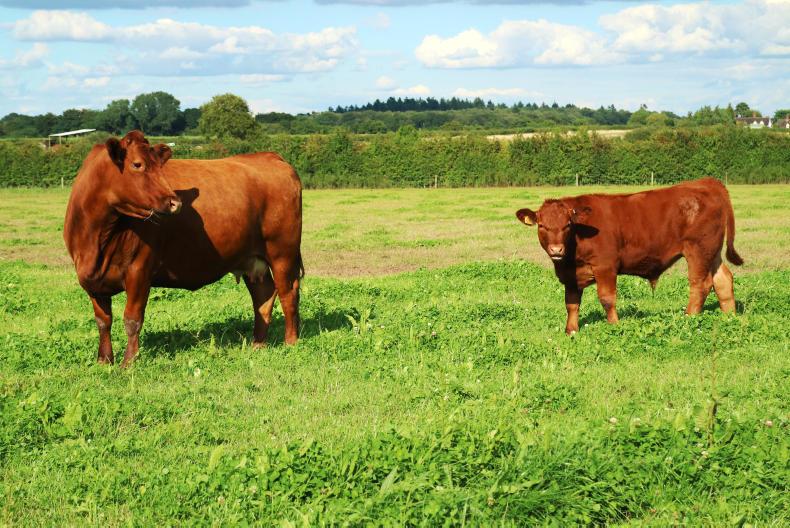
Andrew Crow's sucklers
"I’m aiming for a smaller, more efficient cow that will survive on forage alone and give me progeny that’ll grow well from forage.
"Average cow weight here was 680kg and I’m trying to get all of my cows under 650kg, while still maintaining a good 200-day calf weight, one of our important performance indicators here [see panel].
“I run them in mobs of 50. Three mobs calves in the spring and one mob is autumn-calving. My plan is to have six mobs by 2019, with 150 autumn-calvers and 150 spring-calvers."
The idea behind Andrew’s split calving is to get more from his stock bulls, as well as obviously reducing labour around calving.
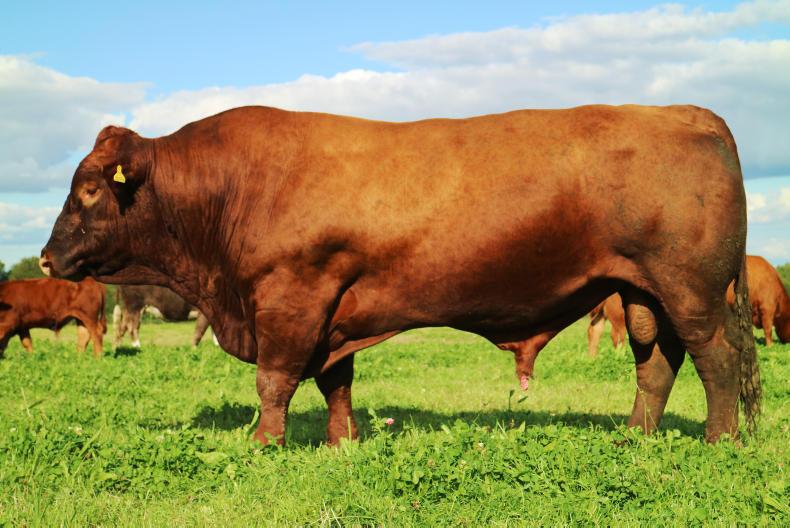
Stabiliser bull on Andrew Crow's farm
He is breeding up from his own cows and plans to go from assisting one in five to one in 20 calvings, as Stabiliser genetics become more prominent. All heifer calving is at two years of age and any heifer over 360kg in May goes to the bull.
Spring calving begins in early March and lasts eight weeks, while the autumn herd calves from September. Andrew is very strict that cows remain in their respective mobs for the purpose of calving and breeding – cattle cannot slip between calving seasons and he can control inbreeding as bulls are rotated between mobs.
However, autumn and spring mobs will run together (100 cows and 50 calves) during grazing, once his autumn dry cows have scanned in-calf. This is simply for ease of management.
Labour is important. Currently, the farm’s labour bill is around £50,000 annually. There is one full-time herdsperson employed on Cherrington Farm, with part-time help got in when needed and Andrew jumping between the farm and his butcher shop. Most of the farm’s progeny go through the shop.
The autumn-born males are currently left intact and sold as store bulls at 10 months of age at +400kg. This is to aid farm cashflow. Males from the spring herd are castrated and most of these go through the butcher shop, with the heavier animals sold as stores.
Eighteen-month-old bulls at a live weight of 580kg will generally sell live for £2/kg to £2.20/kg.
At nine months of age, Andrew aims to wean bulls at 310kg and heifers at 280kg, with no supplement input pre-weaning. Average lifetime weight gain on the farm is just over 1.1kg – animals are 600kg after 500 days. All animals are outwintered on Cherrington Farm’s tillage ground, with beef cattle grazing an Italian ryegrass/rape/turnip sward, supplemented with red clover bales.
There is no concentrate feed offered to animals and typical winter weight gain is 0.85kg daily.
Once sufficient covers have built up in the spring, animals move to grass and rotationally graze as mobs, with each allocated eight 2ha divisions. Grass is established in three-year leys between cereal crops.
Swards are diverse, including Abergrasses as well as broadleaf plants such as plantain. Andrew measures grass weekly and uses the Agrinet system to budget grass and manage his grassland. Prior to adopting grazing technologies, he ran a set stocking system. He is now carrying twice the amount of stock as previously.
Andrew Crow has bought in to rotational grazing
“Are we making a profit? I would say this will be our first year in the black. Three years ago I was losing £150/head. But the combination of our Stabiliser genetics and focus on grass has given us a fertile, fast-growing, easily managed animal, a cheap feed source and the capacity to get more from every hectare.
This content is available to digital subscribers and loyalty code users only. Sign in to your account, use the code or subscribe to get unlimited access.
The reader loyalty code gives you full access to the site from when you enter it until the following Wednesday at 9pm. Find your unique code on the back page of Irish Country Living every week.
CODE ACCEPTED
You have full access to the site until next Wednesday at 9pm.
CODE NOT VALID
Please try again or contact support.
What is a Stabiliser?
A Stabiliser is a four-way cross between and Red Angus, Hereford, Simmental and Gelbvieh (a functional German breed).
It came about during a trial conducted by the USDA involving three breed composites. The breed is strong for fertility, ease of calving, docility, beef traits and feed efficiency.
The Stabiliser is a composite breed. This means that when we cross two pure Stabilisers, 70% to 80% of the hybrid vigour we would attain when crossing different breeds is maintained.
Is there a Stabiliser breed society?
Yes, the Stabiliser breed has pedigree status and is owned by the Stabiliser Cattle Company (SCC).
Breeding stock are generated on 90 multiplier farms which between them carry 9,000 cows. All of these are performance-recorded. Selection and the importation of new bloodlines are determined centrally by the SCC.
Can I buy Stabilisers?
Yes. However, all trading of Stabiliser cattle is done privately, through the SCC. Prices are agreed between the SCC and multiplier herds annually and based on EBVs (index values). These are generated by the SCC and calculated using performance and on-farm data recording.
Neil Rowe, Oxfordshire
Neil Rowe manages a 150-cow Stabiliser herd on 170 acres at Abingdon in Oxfordshire.
“Seventy acres of the farm is protected river meadow that floods annually. It’s natural grass and must be grazed once annually.
"This land is about as productive as 15 normal acres. It’s funny, because I must keep the river fenced along my conventional acres.
"So one inspector wants me to show evidence of cattle having access to a river and the other is making sure I stay out of it,” Neil says.
He traditionally sold on bulls to beef finishers for feeding, but has recently become one of the multiplier herds for the Stabiliser Cattle Company, meaning he produces breeding stock for sale to commercial farmers.
Notwithstanding his herd’s genetics, Neil Rowe is no ordinary beef farmer.
Neil Rowe
In recent years, the former Nuffield scholar has won multiple farm awards and designed a state-of-the art cattle shed with the help of world-renowned animal behaviour guru Temple Grandin.
Neil first became interested in Stabilisers on his Nuffield travels in 2005 and started off with a base of Angus x Brown Swiss cows and Stabiliser bulls, before buying in more Stabiliser females to increase numbers.
“I like innovation and being disruptive,” he tells me as we walk through the herd at his yard.
“The vast majority of UK beef farmers calve in the spring and have been doing so for 25 years. Given the typical margins on beef cow farms, they’re obviously all wrong.
"Two-thirds of the herd here calves from 12 September to 1 November. Calves are born outside then come in on 1 November."
Around the world there are competitive advantages like GMOs and hormones, which we cannot use.
"One of the advantages we have is cheap grazed grass but its feeding value is not consistent. When it is at its best in late-spring/early summer, our spring calf’s digestive system has not developed enough to get the most from it. That’s why I look to turn a more mature animal out in the spring that is primed and ready to graze.
"My animals will do 1.3kg to 1.4kg of weight gain daily up until the last week in June, when grass quality starts to dwindle. By splitting the herd, we spread the cost of our stock bulls – which can be in excess of £7,000 – over more calves.”
Stabiliser stock bull on Neil Rowe's farm.
When asked about the the merits of the Stabiliser breed, Neil says: “For a start, out of 100 calvings last autumn, we assisted four – two heifers and two sets of twins that we had scanned and knew about. At calving time, the herd is checked three times daily: 7.30am, lunchtime and 6pm – that’s all.
"The bottom line is that I have a small amount of help during busy periods, but must largely run this herd on my own. And I do consultancy work off-farm three days a week. I need easy calving and good mothers; Stabiliser ticks both boxes.”
Neil aims to get 95% of cows pregnant in 60 days of breeding and to have 60% calving in the first three weeks.
For him, another benefit of the Stabiliser is the early onset of maturity in females: “You get fertile standing heats from 16 weeks of age with some animals. Obviously it depends on nutrition, but they’re common from 20 weeks. It can be a bit of a headache from a bull management point of view.”
Feed efficiency and ability to hold condition are traits Neil’s herd exhibits too.
“If you take industry standard energy requirement for 640kg [Stabiliser mature cow weight] animals producing 14 litres of milk daily, my cows needed 27% less than this last winter. They’re an exceptionally efficient breed which means I can feed the autumn herd forage only while they’re rearing a calf indoors. I have a rule that I don’t like feeding cattle feed that humans can eat.
“However, all of this rubbish about cows being a problem from an environmental point of view is just that, rubbish. Bad decision-making and management of cows is the problem.”
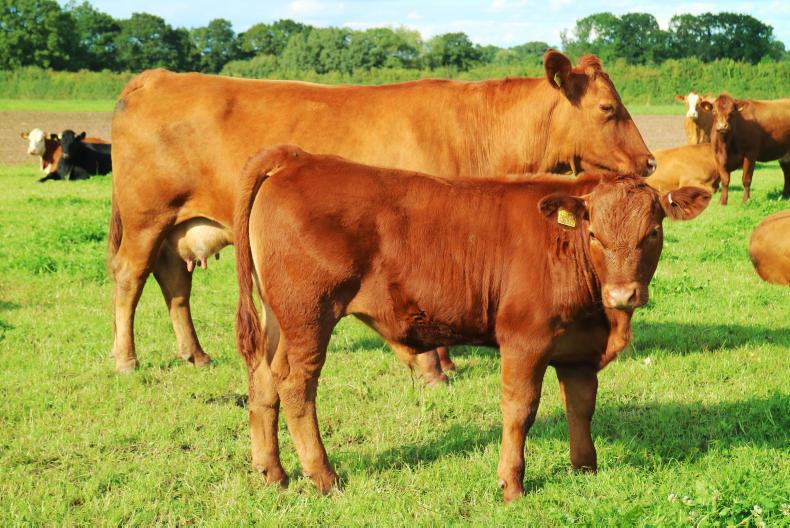
Stabiliser dry cows on Neil Rowe's farm
Neil told me how he sometimes actually finds it a challenge to keep condition off of cows.
“Our whole farm is run on a calendar basis – vets are booked a year in advance for the bigger jobs, bulls are in from 1 December to 10 February for the autumn herd etc.
"The only date that’s dynamic is weaning and we wean based on cow body conditions and calf growth rate. Three years ago we weaned autumn calves on 21 June as it was a shocking summer. One year we weaned 21 days pre-calving.
"The vets warned me about colostrum quality but there were no issues. It helped keep the cows from getting overfat and was cheaper than feeding the weanlings."
Neil’s female calves were traditionally sold as commercial breeding heifers, while bulls would be moved to a specialised Stabiliser finishing farm in Yorkshire, working in association with retailer Morrison’s.
Stabiliser weanlings
Cattle would have been acclimatised to their finishing diet on Neil’s farm for six weeks prior to their move. At approximately 14 months of age, Neil’s bulls would have achieved a liveweight of 630kg and a killout of 54.5%, having grown at a rate of 1.9kg daily during the finishing period.
However, now that Neil has become a multiplier herd for the Stabiliser breed, he will sell his best stock privately through the Stabiliser Cattle Company.
Andrew Crow, Shropshire
Andrew Crow runs the 900-acre Cherrington Farm operation, near Newport in Shropshire. The 900 includes 350 acres of grass, on which the beef herd is run.
Andrew Crow
“We started with sheep in the 70s and then went arable in a big way. There have been potatoes and beet along the way too. But over-farming the land led to reduced worm activity, reduced organic matter in the soil and, ultimately, reduced yields.
"We are getting wheat in at 4t today – we were doing the same yields in 1986,” Andrew says.
He looked to beef as a means of diversifying. Four years ago there were 120 Hereford cross cows on the farm, running with Charolais stock bulls.
“They were what you’d call ‘high-quality’ beef cattle. They had the shape and were great to look at, but when we did the figures we weren’t making any money.
“The decision was made to switch to Stabiliser. We bought in stock bulls and began to breed our own herd. There’s now over 200 cows here."
Andrew Crow's sucklers
"I’m aiming for a smaller, more efficient cow that will survive on forage alone and give me progeny that’ll grow well from forage.
"Average cow weight here was 680kg and I’m trying to get all of my cows under 650kg, while still maintaining a good 200-day calf weight, one of our important performance indicators here [see panel].
“I run them in mobs of 50. Three mobs calves in the spring and one mob is autumn-calving. My plan is to have six mobs by 2019, with 150 autumn-calvers and 150 spring-calvers."
The idea behind Andrew’s split calving is to get more from his stock bulls, as well as obviously reducing labour around calving.
Stabiliser bull on Andrew Crow's farm
He is breeding up from his own cows and plans to go from assisting one in five to one in 20 calvings, as Stabiliser genetics become more prominent. All heifer calving is at two years of age and any heifer over 360kg in May goes to the bull.
Spring calving begins in early March and lasts eight weeks, while the autumn herd calves from September. Andrew is very strict that cows remain in their respective mobs for the purpose of calving and breeding – cattle cannot slip between calving seasons and he can control inbreeding as bulls are rotated between mobs.
However, autumn and spring mobs will run together (100 cows and 50 calves) during grazing, once his autumn dry cows have scanned in-calf. This is simply for ease of management.
Labour is important. Currently, the farm’s labour bill is around £50,000 annually. There is one full-time herdsperson employed on Cherrington Farm, with part-time help got in when needed and Andrew jumping between the farm and his butcher shop. Most of the farm’s progeny go through the shop.
The autumn-born males are currently left intact and sold as store bulls at 10 months of age at +400kg. This is to aid farm cashflow. Males from the spring herd are castrated and most of these go through the butcher shop, with the heavier animals sold as stores.
Eighteen-month-old bulls at a live weight of 580kg will generally sell live for £2/kg to £2.20/kg.
At nine months of age, Andrew aims to wean bulls at 310kg and heifers at 280kg, with no supplement input pre-weaning. Average lifetime weight gain on the farm is just over 1.1kg – animals are 600kg after 500 days. All animals are outwintered on Cherrington Farm’s tillage ground, with beef cattle grazing an Italian ryegrass/rape/turnip sward, supplemented with red clover bales.
There is no concentrate feed offered to animals and typical winter weight gain is 0.85kg daily.
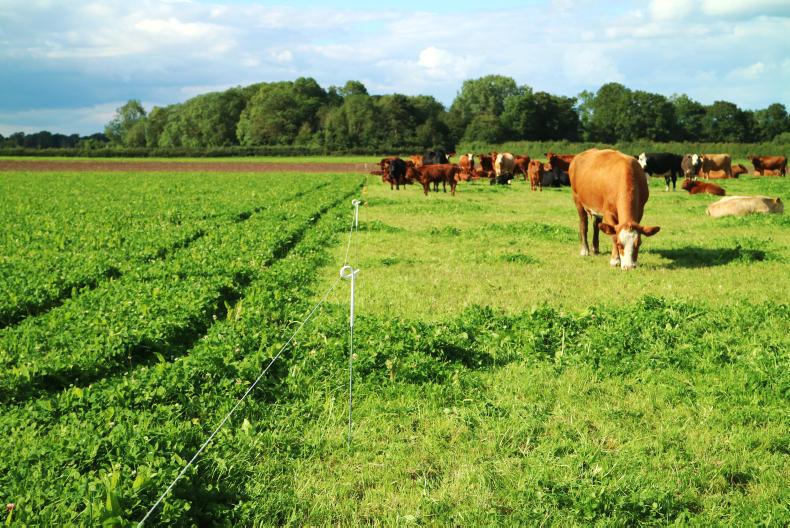
Once sufficient covers have built up in the spring, animals move to grass and rotationally graze as mobs, with each allocated eight 2ha divisions. Grass is established in three-year leys between cereal crops.
Swards are diverse, including Abergrasses as well as broadleaf plants such as plantain. Andrew measures grass weekly and uses the Agrinet system to budget grass and manage his grassland. Prior to adopting grazing technologies, he ran a set stocking system. He is now carrying twice the amount of stock as previously.
Andrew Crow has bought in to rotational grazing
“Are we making a profit? I would say this will be our first year in the black. Three years ago I was losing £150/head. But the combination of our Stabiliser genetics and focus on grass has given us a fertile, fast-growing, easily managed animal, a cheap feed source and the capacity to get more from every hectare.
If you would like to speak to a member of our team, please call us on 01-4199525.
Link sent to your email address
We have sent an email to your address. Please click on the link in this email to reset your password. If you can't find it in your inbox, please check your spam folder. If you can't find the email, please call us on 01-4199525.
ENTER YOUR LOYALTY CODE:
The reader loyalty code gives you full access to the site from when you enter it until the following Wednesday at 9pm. Find your unique code on the back page of Irish Country Living every week.





SHARING OPTIONS