


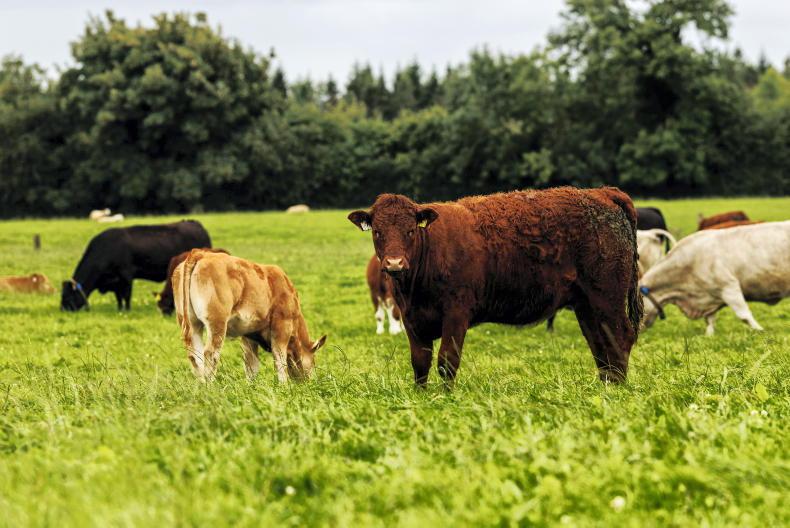
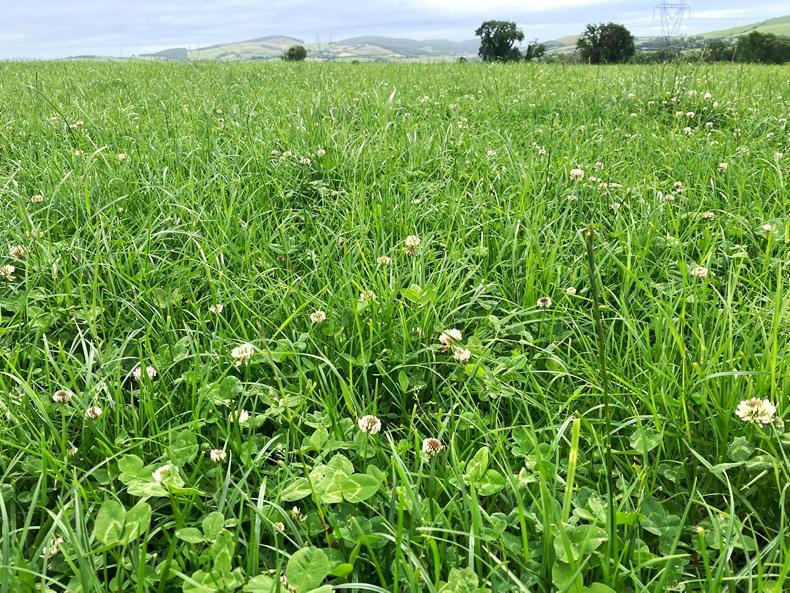
Growth continues to be strong on most drystock farms, not due to any fantastic management reasons but because of the rainfall combined with heat allowing grass to grow as was never seen before for this time of year.
The question a lot of farmers are asking themselves now is what do they do with it all? Mowing is tempting, but you have to remember that we are in mid-August now and days are shortening.
While we have excellent growing conditions now, they are unlikely to last by law of averages. Some farms will have to take out paddocks as surplus all right, but be cautious that too large an area is not removed.
If growth dips, then this is likely the paddock that will struggle the most.Even where pre-grazing yields have crept up, the good underfoot conditions and leafy swards should allow for strip grazing or pre-mowing to hit utilisation and clean outs.
With regard to fertiliser, it’s coming close to the final application for many, as even though mid-September is the cut off point, utilisation of N will drop. It is better to spread a little now than a lot in September, as they will both likely yield the same results.
Ger McSweeney – Millstreet, Co Cork
I have some paddocks earmarked for mowing out, but I am still weighing up whether this is the right thing to do or not. If we were to get colder weather combined with the shorter days, growth could dip quickly.
Calves are grazing ahead of cows now, and the high dry matter in the grass is keeping cattle content. Faecal egg counts were done on the bull and heifer calves, with the heifers showing up with a slight burden so they were dosed.
I might stitch in grass on one of the paddocks that has been set aside for mowing if I do bale.
Last year I cut a paddock, disced it and stitched it and it worked really well. I may potentially do this with this paddock.
System Suckler to weanling
Soil Type Variable
Farm cover (kg/DM/ha) 966
Growth (kg/DM/ha/day) 59
Demand (kg/DM/ha/day) 32
Shaun Diver – Tullamore Farm, Co Offaly
Our whole crop silage was harvested last week yielding 12 bales/acre. It was mown and grouped in to 30ft swards as opposed to raking to prevent loss of grain and peas.
This ground has been stitched in with rape, with a view to running 20-25 of the strongest heifers on this ground in November. The whole crop was wrapped with six layers of film and vermin will be monitored.
Grass growth is still good and we are targeting the best covers of grass to our weaned lambs, with concentrates yet to be introduced.
Our barley crop was also harvested during the week yielding 3t/acre, and the straw will be baled in the coming days and used on farm for winter bedding.
System Suckler to beef
Soil Type Variable
Farm cover (kg/DM/ha) 844
Growth (kg/DM/ha/day) 49
Demand (kg/DM/ha/day) 32
James Strain – Burnfoot, Co Donegal
Two weeks ago, we looked to be under pressure but we have seen growth lift and we are in an ok position now.
Pre-grazing covers are slightly low; I’m heading into some covers of 6-7cm when I would like to be going in to them at 10cm, though there is a share of heavier covers too. If growth stays as is, we will be fine.
If I do get tight, then some of our contract reared heifers can return to the dairy farmer.
I have some cattle grazing red clover ground in its fifth year which has been cut twice already this year.
Some ground has been taken out for reseeding. Two weeks ago, we ploughed one field, while a second was stitched with red clover yesterday (Tuesday).
System Beef/contract rearing
Soil Type Variable
Farm cover (kg/DM/ha) 747
Growth (kg/DM/ha/day) 60
Demand (kg/DM/ha/day) 58



SHARING OPTIONS