



Even though it has made extremely heavy rain in a lot of places, grass growth and grazing conditions are still holding up very well, with growth in particular ahead of the norm for the time of year. It’s a welcome relief to farmers that had found themselves on a winter diet just a short month ago.
The focus now should be on closing up paddocks in the right order, to set the farm up for spring grazing. For most farms, the final rotation should begin now, while drier farms can push this out until 10 October. Looking to next spring, we want the paddocks with the heaviest covers of grass on them to be grazed last, when we have the grazing power (more cows calved, more stock turned out) to eat them out. Grazing your wettest paddocks now and closing them up first mean that we can leave these until the end of the first rotation in spring, when we have more mouths to eat grass and weather conditions should be more favourable.
Next up are your paddocks that we want to graze first. These should be dry, sheltered paddocks close to the yard with good access. We want a medium cover of grass on these, so target grazing mid-way through the final round now to ensure nice covers of 700-800kg DM/ha on them come February. A medium cover like this is easier to graze out and high in energy for first-calved cows or store cattle.
Shaun Diver, Tullamore Farm, Co Offaly
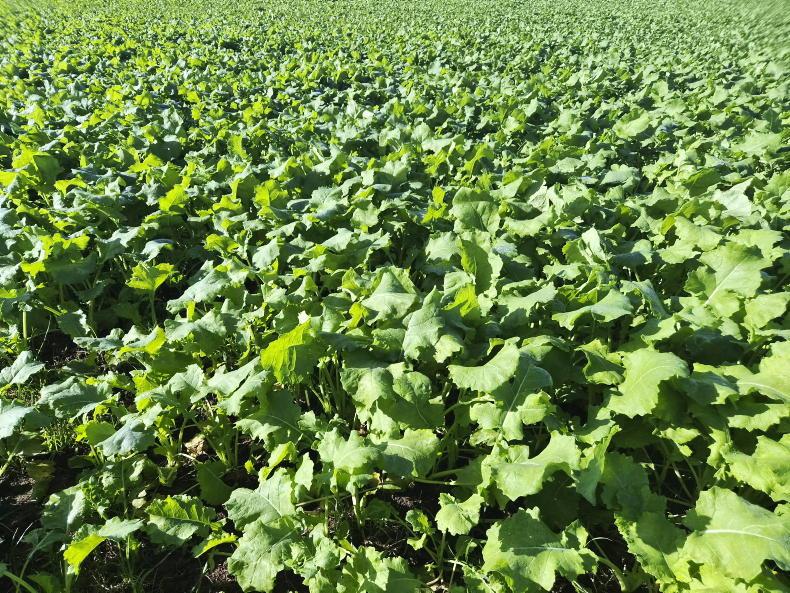
Bull calves were weaned Saturday and their dams restricted to help to dry them up. Nose paddles were used and weaning was done with very little stress. Cull cows will be pulled from this bunch at the weekend for further feeding. We will look towards weaning some of the cows from the heifer bunch (culls and first calvers) towards the end of the week as well. On the sheep front, all ewes, rams and replacement ewe lambs were dipped for ecto parasites, with ewes due to receive a mineral drench in the coming days. Twenty-six lambs were drafted last week at an average dead weight of 21.89kg, to total €179.50/head. Our sown rape is now ankle high, with a target to graze this with heifers in mid-November. The forage rye is just greened up, with the plan being to graze this with ewes out with the ram in six weeks or so.
System:Suckler to beef
Soil Type:Variable
Farm cover (kg/DM/ha):874
Growth (kg/DM/ha/day):68
Demand (kg/DM/ha/day):30
Sasha Lavin, Newford Herd, Co Roscommon
Fourth-cut silage was completed on Monday on the out-block for our finishing shed, with 40 bales of surplus taken off the main grazing block at home. Paddocks are roughly 4ac in size and we are splitting them according to mob size, into 24-hour blocks. While covers are heavy, grazeouts are very good, even in our beef bullocks that are now receiving 2kg meal/head at grass. Forty replacement dairy-beef heifers have arrived on-farm to increase cow numbers. They received Bovipast and are grazing in their own separate mob. Weaning hasn’t begun yet, as we are looking to get some heavy covers grazed off by cows. Calves are being creep-grazed ahead of cows. A faecal egg count will be done this week, with calves having received no worm dose to date, following monthly FEC tests.
System:Suckler to beef
Soil Type:Variable
Farm cover (kg/DM/ha):1,017
Growth (kg/DM/ha/day):31
Demand (kg/DM/ha/day):37
Niall O’Meara, Killimor, Co Galway
I have 23 of the 28 cows and heifers calved down now, with four of the five remaining calving to a FTAI programme within the next week. Cows are a little unsettled with the low dry matter grass, but are still grazing out paddocks well. I’m on the last rotation now, with the plan being to introduce some silage into the diet from 20 October and house on 1 November, ahead of breeding. One of the weanling bulls has been retained and vasectomised to aid with heat detection.
Eight acres was mown on Monday 21 September and yielded 23 bales, which has me bang on target for my winter fodder needs. The grass was on the softer side going in and bales have sagged, but it’s still great to have it in the yard. Heifers were weighed recently and averaged 437kg at just a few days over the year-old mark .
System:Suckler to weanling
Soil Type:Variable
Farm cover (kg/DM/ha):705
Growth (kg/DM/ha/day):30
Demand (kg/DM/ha/day):32



SHARING OPTIONS