


The spring was a particularly trying one for most farmers in the northwest, west and midlands and for farmers on heavy land. The cold, wet weather reduced grass growth in most parts of the country, while farmers on heavy land suffered from continued poor traficability, compounded by the need to re-house at times.
Niall and Jane Patterson farm near Carrigallen in Co Leitrim on very heavy land. This spring has been a very difficult one for them as their winter period was prolonged dramatically. All stock were housed on 20 October. The last group of cows went back to grass on June 8, some seven and a half months later.
Weather increasing costs
One of the major costs associated with the suckler cow is the wintering cost. With most farmers around the country operating on a three- to four-month winter, the cost on the Patterson farm is always much higher.
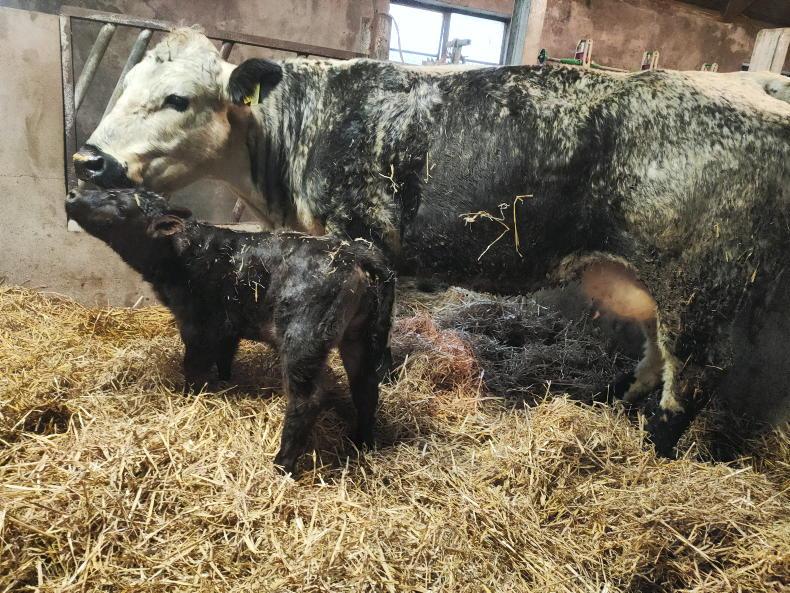
The herd calves from December to early April which means that additional supplementation is required compared to most herds. Conception rates last year were poor due to an iodine and selenium deficiency in the herd. This resulted in just 28 cows and heifers calving down this spring out of 40 that were put to the bull.
Although Niall said that this was disappointing as output would be back given the weather which they experienced this spring, the reduced numbers helped to minimise the demand for bought-in fodder. After calving, cows were supplemented with 2kg concentrates per day until they went back in-calf, at which stage meal was removed.
Along with this the calves were supplemented with about a pound (0.5kg) of concentrates per day. Niall said that he prefers not to push calves too hard with concentrates prior to turnout, as in the past he has found that when he does this they melt a little after turnout and the weight gain in the first month post turnout is very poor.
However, this May when he realised that cows and calves would not get out due to ground conditions, he increased the meal input to the calves to about 2.2 pounds (1kg) per day. In total, he estimates that just two additional tonnes of concentrates have been used, which is low.
However, in March they thought they would have about a month’s silage left over. Last year, 97 additional round bales were made on top of the normal first- and second-cut silage due to strong grass growth. But along with using all silage reserves on the farm this spring, Niall and Jane had to buy a further 24 bales at €20 per bale. The estimated cost of additional silage this spring was €1,800, along with a further €520 of additional concentrates. This equates to about €83 per cow and calf unit over the average winter cost.
Grassland management
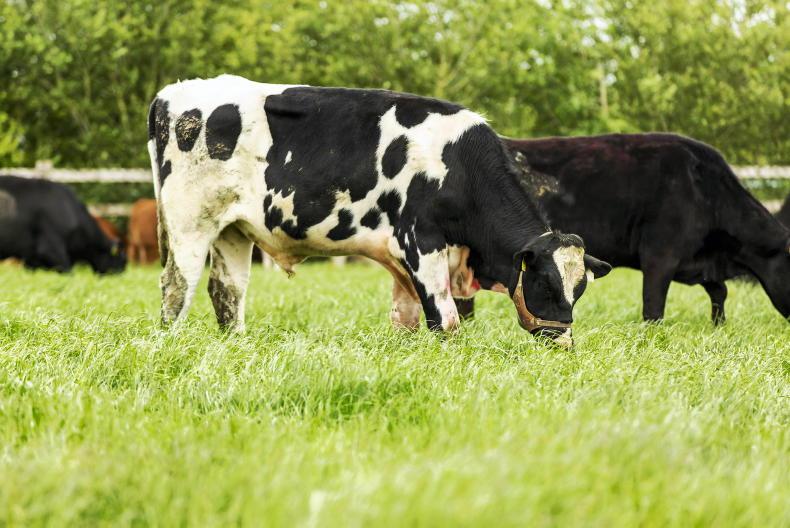
Heifers went to grass in April, but were re-housed again for about a week in May due to weather. Since early June, all cattle and sheep are at grass. Grass growth was very poor right across the spring irrespective of nitrogen application.
Despite poor weather, Niall continued to apply nitrogen using a quad and trailed spreader through the spring. To date, he has about 70-75 units N/acre spread on the drier areas of the farm, and is on the third round of grazing on these. However, there are about 40 acres which have not been grazed at all yet, but with ground conditions finally firming up, this will be grazed off in the coming weeks.
The bigger issue currently is trying to control grass quality. Because they were unable to graze out covers earlier in the year, grass has become stemmy on many fields. Topping is being carried out in order to get grass quality back in check. This is not ideal, but given the grazing conditions, there is nothing that could have been done to avoid this.
This spring, 100 ewes lambed down on the farm, up from 70 last year. Niall said that this has been a major benefit to the farm, as the sheep allowed some drier areas to be grazed through the spring when it was too wet to graze cattle. Without the sheep enterprise, grass quality would be a lot poorer currently.
Silage making
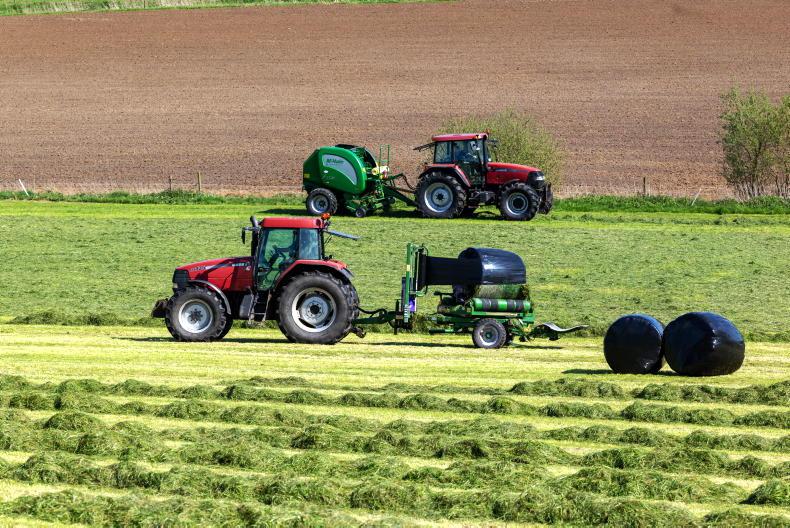
So far this year, 40 bales of silage have been made. In addition, 23 acres of first-cut pit silage was harvested earlier this week. Initially Niall thought that the yield was back significantly. However, on further inspection just seven acres of the 23 acres had a very disappointing yield.
This area will be shored and reseeded in the coming weeks to try to increase further yields. They are planning on taking out a larger area than normal for second-cut silage. Approximately 16 acres will be closed for second cut. This will get about 3,000gals/acre of slurry and CAN.
Niall is planning to apply one bag of CAN per acre on five acres of this to allow him to have some flexibility if they run tight on grazing. If it is not required for grazing, it will be topped up with nitrogen to cut with the remainder of the second cut.
Breeding
Because last year’s in-calf rates were disappointing due to mineral deficiencies, an extra effort has been made this year to get numbers back up again.
Cows received a bolus for iodine and selenium, and additional iodine supplementation is taking place in drinkers at grass currently. At the end of May, all cows were scanned. 16 proved in-calf, eight cows which were not cycling were given CIDRs and served to AI.
A young stock bull is currently running with the herd to mop up any cows that are not in-calf. The current plan is to leave the bull in until the end of June. This will result in the calving interval extending by about a week, but Niall and Jane are hopeful that their efforts will get cow numbers back up to over 30 once culling takes place.
Catherine Egan
Many farmers on heavy land in the west and northwest have experienced a very difficult spring. One factor to bear in mind on the Patterson farm is the role of the sheep enterprise in a difficult year such as this. Local B&T adviser Tom Coll has been central in getting Niall and Jane to expand their sheep enterprise. This has allowed them to have greater flexibility in wet years such as this and has helped to control grass quality by cleaning out swards.



SHARING OPTIONS