



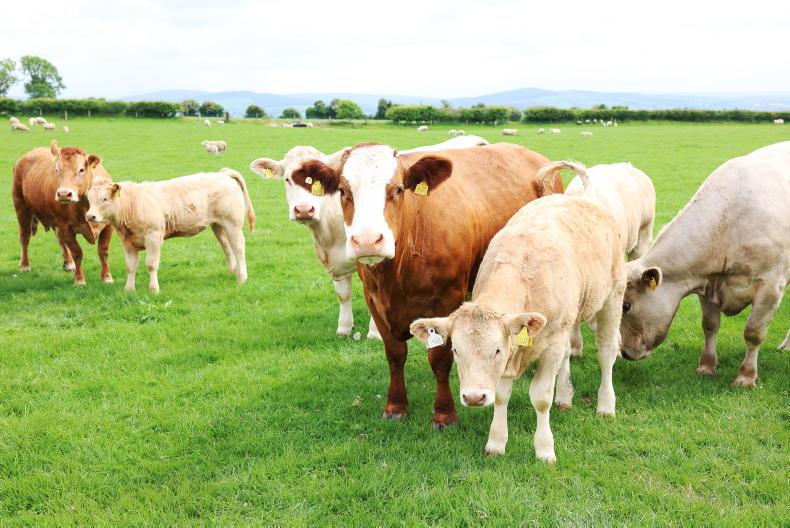
With calving finished up for the year on many local suckler farms, it is worth taking the time to assess performance against the eligibility requirements of the new suckler cow scheme, launched by DAERA on 1 April 2025.
That information can be accessed via the DAERA website (www.daera-ni.gov.uk) and clicking on the link to the Beef Sustainability Package which is on the right-hand side of the home screen. Farmers can then sign in by using the same log-in information used for other DAERA online services such as NIFAIS.
Once signed in, it is possible to view data relating to both the new £100/head suckler payment and the £75 per beef carbon reduction scheme.
For the suckler scheme, a report can be generated showing all eligible calving events on the farm since the 1 April 2025 start date.
For heifers, eligibility is dictated by age at first calving, which is a maximum of 34 months in the first year (1 April 2025 – 31 March 2026), falling to 29 months by the fourth year (1 April 2028 – 31 March 2029). For mature suckler cows, eligibility is reliant on calving interval (CI), which is the number of days from one calving to the next. Each CI must be at least 271 days, while in year 1, there is a maximum of 415 days, dropping to 385 days by year 4.
To help farmers work out whether an animal will be eligible for the scheme, a new calculator has been added. By inputting the date of last calving, the calculator shows the date range when it must calve again to be eligible for payment.
Problem
It is these CI targets that will be the main problem issue for farmers, especially if DAERA follow through with proposals to cut the CI target to just 385 days by year 4.
Even in the very best herds with an overall calving index around the 365-day mark, approximately 30% of cows will not meet this target. If you think that isn’t true, take a close look at your own data.



SHARING OPTIONS