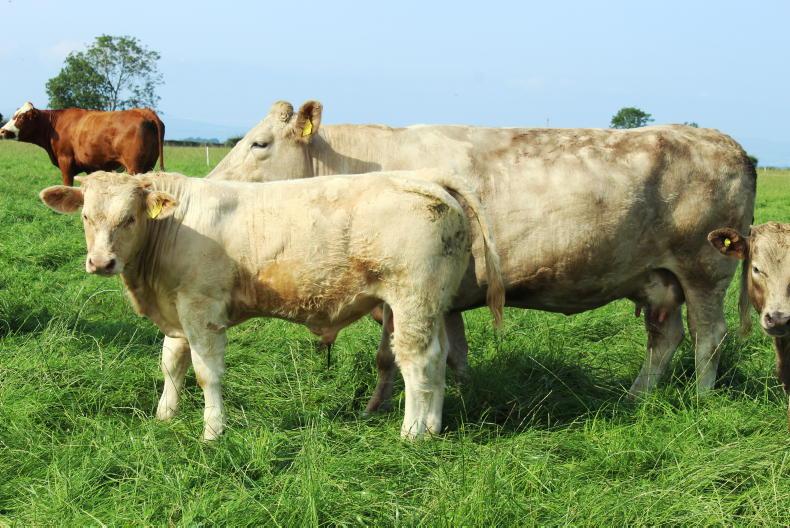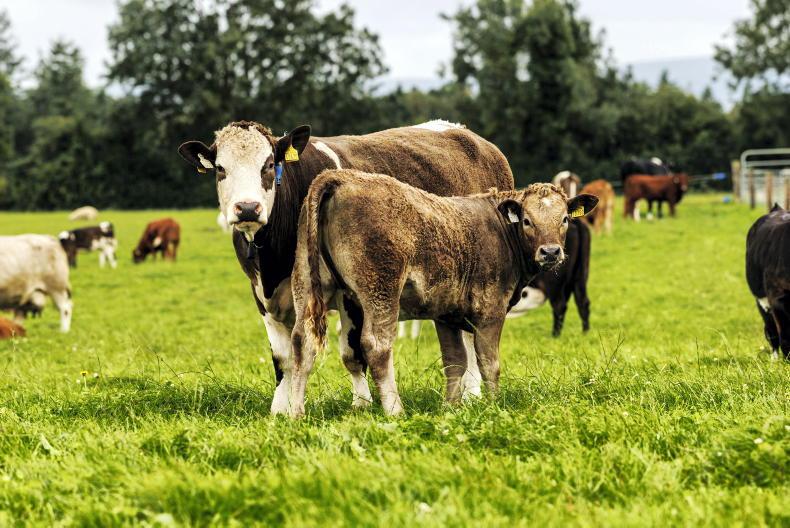
Early weaning: First-calving heifers which calved in early spring, and particularly those who have calved at 24 months of age, have in most cases likely brought their calf to a point where it will perform adequately if weaned onto grass and concentrates.
The optimum scenario is where calves are consistently eating upwards of 1kg concentrate supplementation.
There is little merit in leaving strong calves suckling first calvers that are just OK on body condition, as it will only result in excessive weight loss that can have longer-term impacts on performance and fertility.
Any weight gain achieved now will have significant benefits in cows regaining condition at a lower cost and put them in a much better position ahead of winter housing.
Where weaning, remember to ensure that dates comply with scheme requirements for the Beef Welfare Scheme and the Suckler Carbon Efficiency Programme if participating in them.
Culling earlier: An option for suckler farms that are tight on fodder is considering weaning cull cows earlier, or segregating them and their calves and introducing concentrate supplementation. This may allow animals to be culled before housing and reduce the number of mouths to feed.
If introducing supplementation, the focus should be on the energy content of the ration or nut, protein content is not important if the aim is to put flesh cover on. Feeding simple two- or- three-way mixes, or even straights such as barley, can be a much lower-cost option in finishing animals.
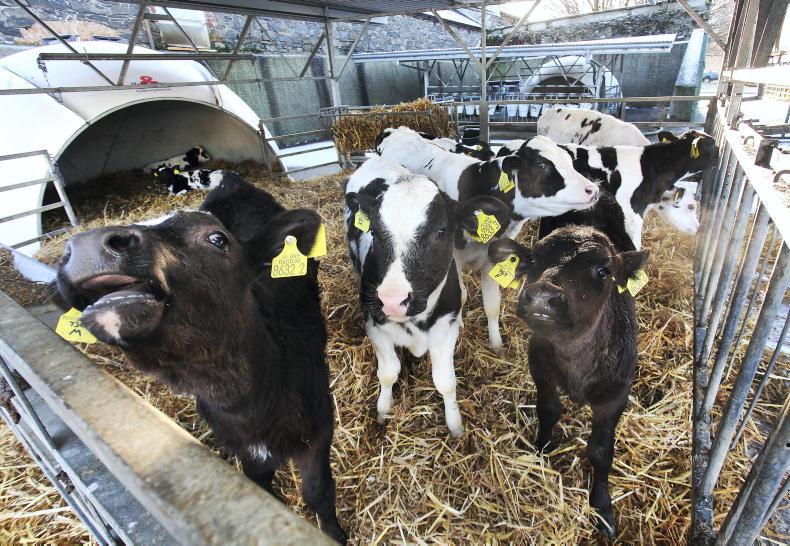
Purchasing weanlings: There is plenty of information in this week’s paper to assist farmers in having weanlings in prime condition for sale with features on pages 34 and 35, 48, 49 and 50. For purchasers of weanlings providing animals with comfort and space to avoid stressful situations, such as mixing with new herd mates is desirable, especially where animals have been traded through a mart and mixed with unfamiliar animals.
A shed with a deep bed of straw is the preference if animals are remaining indoors while if turning outdoors it is best to keep in small batches in a sheltered paddock. The aim is to get treatments administered as quickly as possible to safeguard biosecurity, but there is a happy balance to be achieved in not increasing stress levels. Access to a clean supply of fresh water is vital.
Dates for diary: A Teagasc Dairy Beef 500 farm walk takes place on Thursday 3 September at 5.30pm on the farm of James O’Sullivan, Moyross, near Union Hall, Co Cork, P81 CK00. In addition to a farm overview, there will be a Grasstec demo of a SKAI spot sprayer and a look at new housing.
A Future Beef farm walk takes place on the farm of James Skehan and family in Killaloe, Co Clare, V94 VW1H on Friday 4 September at 6pm, covering the farm’s physical and financial performance, breeding, soil fertility, herd health and a finishing cattle demonstration.