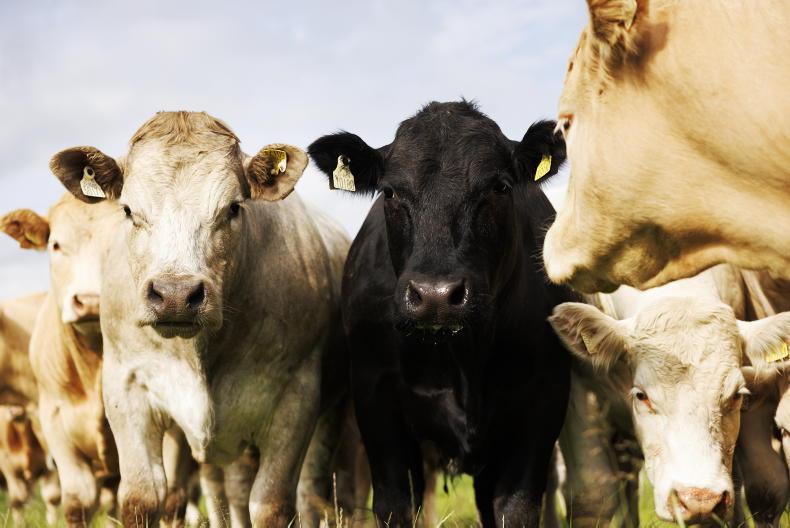
Ringworm in cattle can become a problem on some farms at this time of year.
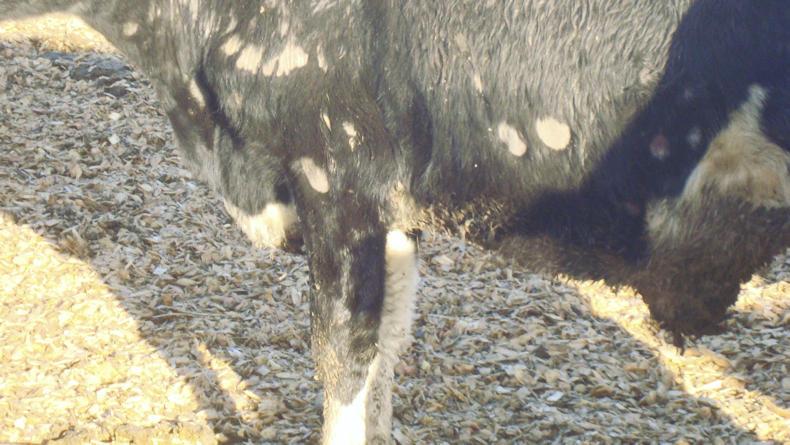
Ringworm is a spore-forming fungal disease of the skin. It’s these spores that can survive for years in a dry environment and that act as a source of infection. It attacks the skin cells and hair follicles, resulting in the classical grey-white circular lesions with an ash-like appearance.
In calves, it’s most commonly found around the eyes, ears and back; in adult cattle, on the chest and legs. Treatment can involve topical medication (Imaverol) of the lesions, which will also facilitate removal of the skin crusts by brushing and washing. This may not always be practical where large numbers are involved.
ADVERTISEMENT
A vaccine for ringworm, Bovilis Ringvac, is available on the Irish market. The live vaccine is licensed for active immunisation of cattle to reduce clinical signs of ringworm and also to shorten the recovery time of infected cattle showing clinical signs of ringworm. The vaccine is a prescription-only medicine, meaning it is only available on prescription from your veterinary surgeon/practice.
The recommended dose rate is 2ml in calves aged from two weeks to four months, which costs in the region of €5 per calf dose. A higher dosage rate is required in older and mature animals, which will make the treatment more expensive. Always wear gloves when handling animals with ringworm as it’s contagious and humans coming into contact can become infected.
This content is available to digital subscribers and loyalty code users only. Sign in to your account, use the code or subscribe to get unlimited access.
The reader loyalty code gives you full access to the site from when you enter it until the following Wednesday at 9pm. Find your unique code on the back page of Irish Country Living every week.
CODE ACCEPTED
You have full access to the site until next Wednesday at 9pm.
CODE NOT VALID
Please try again or contact support.
Ringworm in cattle can become a problem on some farms at this time of year.
Ringworm is a spore-forming fungal disease of the skin. It’s these spores that can survive for years in a dry environment and that act as a source of infection. It attacks the skin cells and hair follicles, resulting in the classical grey-white circular lesions with an ash-like appearance.
In calves, it’s most commonly found around the eyes, ears and back; in adult cattle, on the chest and legs. Treatment can involve topical medication (Imaverol) of the lesions, which will also facilitate removal of the skin crusts by brushing and washing. This may not always be practical where large numbers are involved.
A vaccine for ringworm, Bovilis Ringvac, is available on the Irish market. The live vaccine is licensed for active immunisation of cattle to reduce clinical signs of ringworm and also to shorten the recovery time of infected cattle showing clinical signs of ringworm. The vaccine is a prescription-only medicine, meaning it is only available on prescription from your veterinary surgeon/practice.
The recommended dose rate is 2ml in calves aged from two weeks to four months, which costs in the region of €5 per calf dose. A higher dosage rate is required in older and mature animals, which will make the treatment more expensive. Always wear gloves when handling animals with ringworm as it’s contagious and humans coming into contact can become infected.
If you would like to speak to a member of our team, please call us on 01-4199525.
Link sent to your email address
We have sent an email to your address. Please click on the link in this email to reset your password. If you can't find it in your inbox, please check your spam folder. If you can't find the email, please call us on 01-4199525.
ENTER YOUR LOYALTY CODE:
The reader loyalty code gives you full access to the site from when you enter it until the following Wednesday at 9pm. Find your unique code on the back page of Irish Country Living every week.
SHARING OPTIONS