


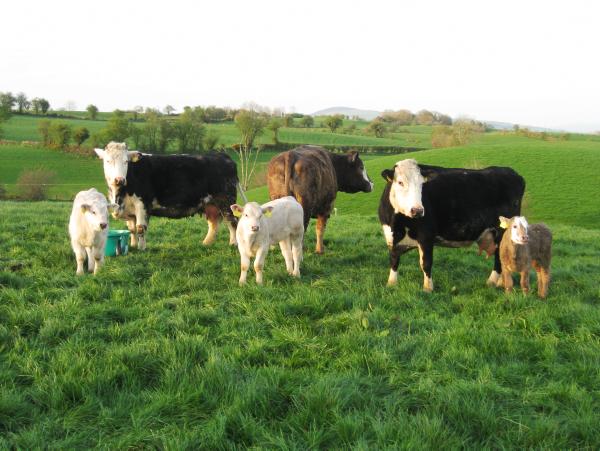
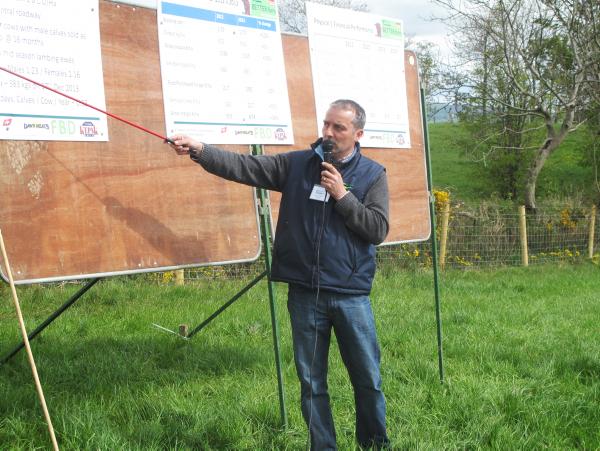
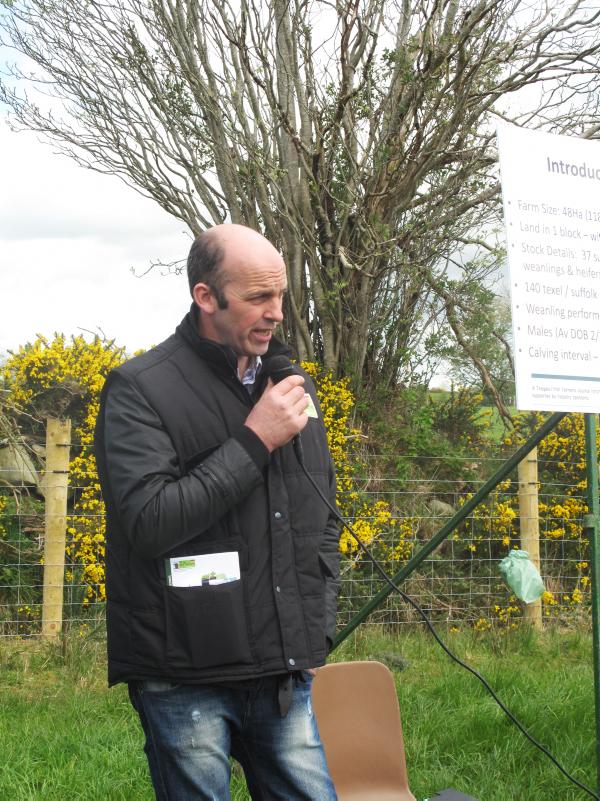
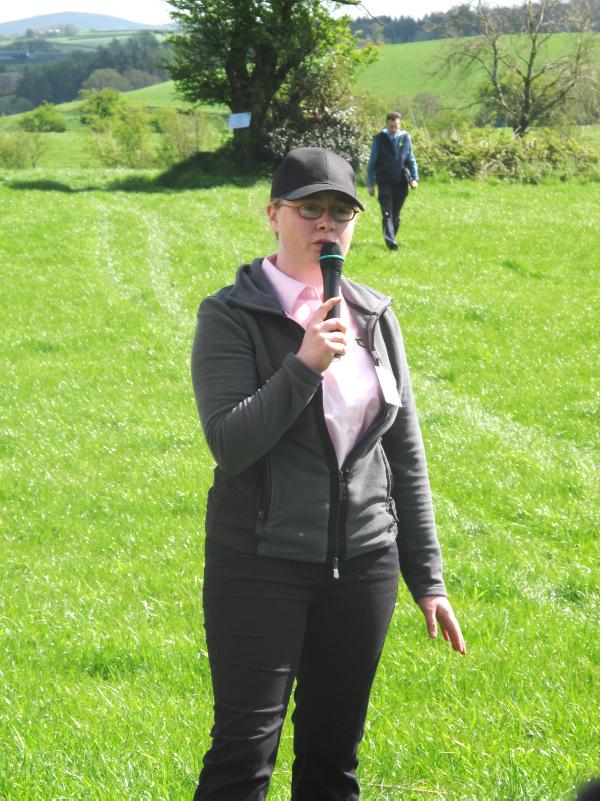
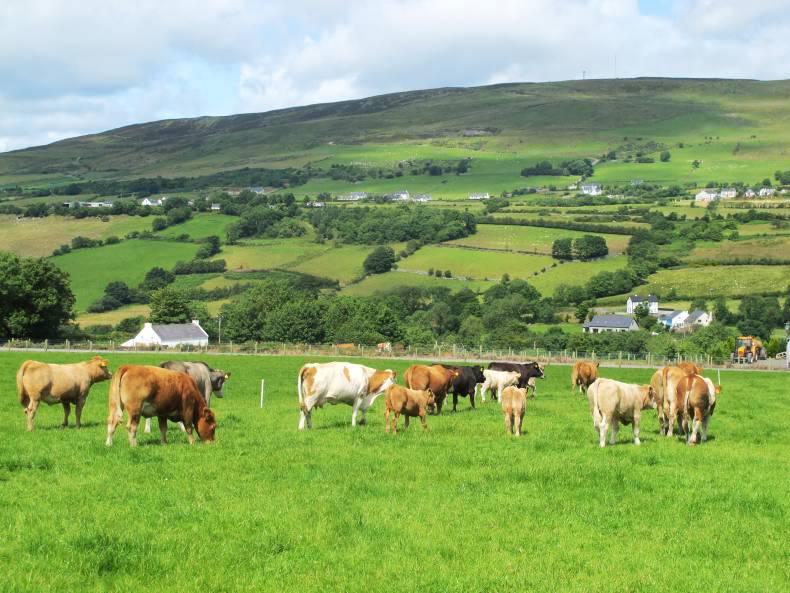
Over 500 farmers attended last week’s regional farm walk on the farm of Charles Crawford, Alt, Castlefinn, Donegal. The farm extends to 48ha, with mixed suckler and sheep enterprises. When running mixed farming systems, one of the greatest issues frequently faced is grassland management.
This was identified as an area of weakness when completing the three-year farm plan in 2012, but it was also highlighted as an area offering huge potential to increase output while keeping costs in check.
Charles admitted: “At the start of the programme, there were sheep in every field and a few cattle grazing and I found it very hard to have grass. I thought I was saving money by letting sheep and cattle graze late in the year and over the winter, but it was costing me money not being able to get stock out early and buying extra meal.”
Improved grassland management
One of the first tasks in improving grassland management was implementing a grazing plan. This consisted of setting defined dates for closing fields in autumn and winter in order to have a supply of grass in spring.
An ongoing programme to increase the volume of grass grown and utilised is also in place. One aspect of this is improving boundary fences of large fields and creating more paddocks through permanent and temporary field divisions (mainly through electric fencing).
Programme adviser Catherine Egan said the second aspect was going back to basics in terms of soil fertility. The entire farm was soil sampled and while it showed up relatively favourable for soil pH, 82% of the farm was index two for phosphorus (P) with 64% index two and 32% index three for potassium (K).
Addressing soil fertility through applying compound fertilizers and lime has led to fertilizer and lime costs increasing from €163/ha in 2012 to €217/ha in 2013. However, it should be noted that a portion of the higher costs occurred due to the slow spring in 2013 and extra fertilizer applied to boost grass growth.
Despite this, the payback in terms of extra grass grown is clear to be seen. The stocking rate on the farm has increased from 1.59LU/ha in 2012 to 1.77LU/ha in 2013, while variable costs have reduced by 5% or from €685/ha in 2012 to €651/ha in 2013.
Gary Fisher told farmers that increasing stocking rate and lifting output is central to improving the farm’s gross margin. However, he cautioned farmers to only increase the stocking rate if you are able to grow the extra grass needed first.
Failing to adopt this approach can result in costs escalating and deterioration in gross margin. He said that farmers should not be afraid of growing more grass.
“With Charles planning on going from 35 to 50 cows and from 100 to 200 ewes, he has to be able to grow more grass first. With the good grass growth last year, he was in a position to capitalise on the extra growth, even without extra stock, and sold surplus grass as a standing crop of silage and as hay,” he said.
Maximising output
The importance of tailoring the production system to best utilise grass was also discussed. In the past, the 35-cow herd was split into an autumn-calving herd of 10 cows and a spring-calving herd of 25 cows.
Autumn calving no longer takes place, with spring calving favoured as a lower-cost system that reduces labour on the farm (one calving period) and eliminates concentrate usage over the winter months. The calving date is being pulled back gradually from January to April to December to mid-March. Cows and calves can be released outdoors in a normal year from mid-March onwards and, as such, January and February born calves can be targeted for early turnout.
Tailoring the calving date to turnout date is viewed as highly advantageous in boosting milk yield and achieving positive reproductive performance. Charles said there was also a focus of getting back to basics with breeding and maintaining a source of milk in cows.
“Most of the cows in the herd are black white heads or heifers bred from these dairy crosses. I had started to go away from this a bit by retaining beefier heifers, but I quickly saw the difference in weaning weights of calves. You would probably not buy a lot of my cows in the mart if you saw them, but they are producing plenty of milk and have heavy weanlings when it comes to selling.”
To increase the suckler herd, replacements will be bred from within the herd by inseminating the cows with the best milk yield with proven AI maternal sires or a maternal stock bull. Cows not bred to AI will be mated to a terminally bred Charolais bull with the aim of producing heavy weanlings that are suitable for the specialised bull beef market.
Adding value
Cows will be weaned in September with the aim of adding an extra 100kg liveweight to bull weanlings before selling at the end of November (weaned at 345kg and gaining 1.2kg to 1.3kg with excellent quality grass and 2.5kg concentrates for 90 days). The target sale weight of bull weanlings is 450kg. Heifers are retained over the winter and sold live in July for further finishing.
Gradual progress
There have been impressive improvements made on the farm in the last two years. This is shown in Table 1 along with target performance by 2015. Charles feels that making changes in a gradual manner rather than making substantial changes overnight has put the farm in a better place to continue to implement improvements that can be sustained into the future.
Further information on the sheep enterprise and operating a mixed farming enterprise is detailed on page 35.



SHARING OPTIONS