



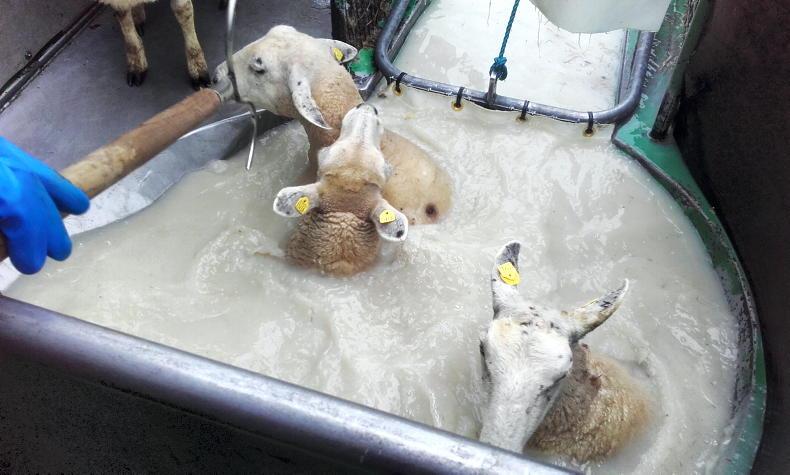
Spotlight on dipping: The control of spent sheep dip remains under a spotlight with the mid-term review of the National Hazardous Waste Management Plan highlighting challenges that lie ahead.
The evaluation lists several challenges for the management of spent sheep dip in Ireland and lists possible management practices being introduced, including the introduction of a system of registration of end users, the regulation of mobile sheep-dipping contractors, the viability of an authorisation process for the disposal of spent dip including licensing requirements for storing, transporting and disposing of spent dip.
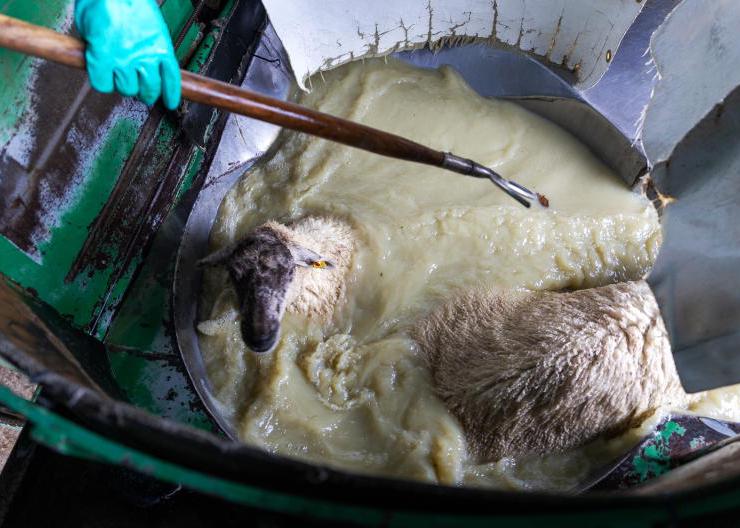
The safe disposal of spent sheep dip in Donegal is particularly under the spotlight with close monitoring of water quality ongoing. It is vital that spent sheep dip is handled carefully. The greatest obvious threat is from incorrect disposal of spent dip, but freshly dipped sheep also pose a significant risk – where they have access to watercourses or there is a risk of runoff from fleeces.
Sheep should not be dipped in advance of forecast heavy rainfall and the advice is also to refrain from returning sheep to grazing areas where there is a risk of sheep accessing watercourses for at least 24 hours.
In terms of disposal of spent sheep dip the advice is to dilute at a ratio of at least 1:3 with slurry/water. Remember application of such materials is also governed by prohibited application periods for slurry. Extensive information and videos relating to sheep dipping can be found at https://www.teagasc.ie/news--events/daily/sheep/catchmentcare---teagasc-sheep-dipping-demonstration.php.
There are strict regulations in Northern Ireland concerning the discharge of spent dip onto agricultural lands. Authorisation is required for most farms for the discharge of ‘hazardous substances and non-hazardous pollutants’ onto lands from the Northern Ireland Environment Agency (NIEA). This includes the disposal of spent sheep dip (including cosmetic dips and shampoo) and waste pesticides (including tank washings not sprayed back over the target crop).
Wormer efficacy: Reports on worm burdens remain variable with some vets pointing to a potential spike after recent rainfall. Now is the time to carry out a faecal egg count (FEC) reduction test to test the efficacy of the product being used. Ensure that the repeat FEC count is carried out at the correct timeframe, ie. seven days later for yellow or group 2 levamisoles, 14 days later for white or group 1 benzimidazoles and 14 to 16 days later for clear or group 3 macrocyclic lactones.
It is also critical that all other variables which can influence the efficacy of an anthelmintic are accounted for. This includes dosing animals to the correct weight, ensuring the recommended volume is administered and animals are dosed correctly. There is no merit in dosing ewes pre-mating unless there is a demonstrated need. Consult your vet with very high worm counts, possibly indicative of haemonchus contortus or barbers pole worm.
Date for diary: A Teagasc BETTER farm sheep programme hill sheep farm walk will take place on the farm of Martin Joe and Martin Kerrigan on 11 September at 6.30pm in Glentrague, Clonbur, Co Galway, F12 VH72. Topics to be discussed include an overview of the farm system and flock performance, ewe and ram management pre-mating, hill grazing practices and an update on the Sheep Ireland OviFlock project.





SHARING OPTIONS