In the past few years farmers have moved away from breeding Belgian Blue cattle for the live export market. But demand and prices are still firm. The move away from Belgian Blues occurred as some farmers were having difficult calvings, this resulted in losses and subsequent poorer fertility while others just saw it as too expensive a system. However these issue were not experienced by everyone targeting that market.
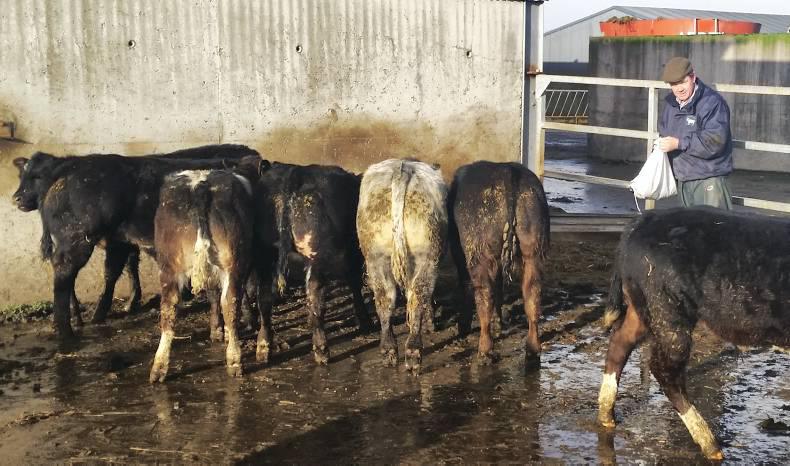
Nicholas Bergin is one farmer that stuck with it in recent years and is happy he did so. Like so many others, he did question himself; but then focused on ensuring the system was working for him. He calves 85 cows in total, 15 of which are pedigree Belgian Blue with the remainder commercials. Previously he would have calves 70 in the autumn (Sept/Oct) and the remainder in the spring, but more recently he has started to focus on moving all cows to autumn calving. The main reason for this is to ensure he can achieve good weight for age before selling calves. Nicholas also works for Dovea Genetics and as a result he can bring the knowledge he gains looking at bulls progeny around the country back to his own herd.
Cow type
Like many others, while striving to produce that perfect export animal he ran into problems with difficult calving. He said ‘my cows at that stage were getting a little too well muscled and were predominantly U grades.’ He added ‘I now have changed my focus slightly and am culling harder where cows are getting very well muscled.’
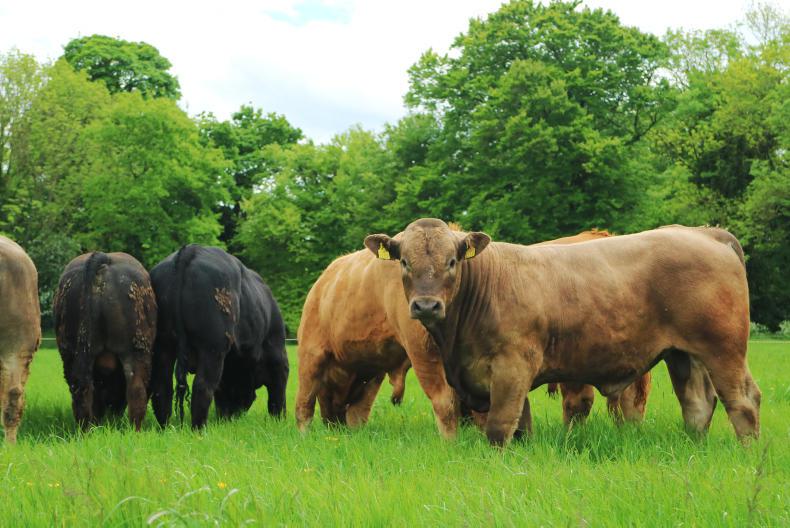
Cow type is predominantly second and third cross Limousin. ‘I am looking to breed a good quality R grade cow that I will work well with the right AI bull.’ Originally all the cows derived as Limousins from the dairy herd. Over the years he has bred it up, however, he now feels that there may be too much Limousin blood in the cows, and has started to use some Partenaise also for replacements. Other replacements are bought in. Because all the cows are quite uniform, Nicholas feels that calf quality is similar. At the start, when a lot of cows were first crosses, there was much more variability in the calves. The second and third Limousin cross he finds ads uniformity.
In the past year or two, while trying to get all calving dates moved to the autumn, he has bulled more cows than usual and has been quite ruthless in culling based on poor calf quality, milk and temperament. He has done this because cull cow prices were high and the cost of replacing some of the heavier, well muscled cows was quite low. The target replacement rate is 10-15%, but last year was higher due to voluntary culling
Breeding
All breeding is carried out indoors through AI. Coming from an AI background, he has good experience of what traits each bull brings through in the calf and uses this to match the bull to the cow. He said ‘ I am not looking for a hard calved bull, over the years I have found that its not always the hardest calved calf that turns out the best. I am looking for a bull that will be easy calved but who will bring muscle as the calf develops.
In the first three weeks of breeding, no heat detection aids or vasectomised bulls are used. The cows are watched closely for about a half hour in the morning and the same length of time again in the evening. After three weeks heat detection aids are placed on cows backs. The reason for not doing it in the first few weeks is that Nicholas feels that cows are very active and some false positives can result. He tries to keep the breeding season tight to ensure that sale weights are fairly uniform.
Maiden heifers are served with easy calving Limousin bulls, which does take from output value slightly, but he feels it is necessary – as live calves are what is needed. Heifers are served to bulls such as TWR, KJB and BZB.
In terms of getting cows back in calf easily, he does have one trick that helps him. Anout 6 weeks prior to breeding he scans all the cows to see if they are cycling, any cows that need to be cleaned will be washed out at this stage. He said it is surprising, even though you think all cows have cleaned and have no infections, he still usually finds 5-6% of them that need attention. The cows are scanned again after 6 weeks breeding to assess how things are going and once more then about 35-45 days after the end of the breeding season.
Calving
Despite having 85 cows calved down last year, just three caesareans took place, Nicholas said that two of them were due to calves coming back-ways and getting breached, while the third cow just didn’t open enough to calve. In general he said that once the cow is not too well muscled and a relatively easy calving bull is used, then there should be no great problems at calving.
Supplementation
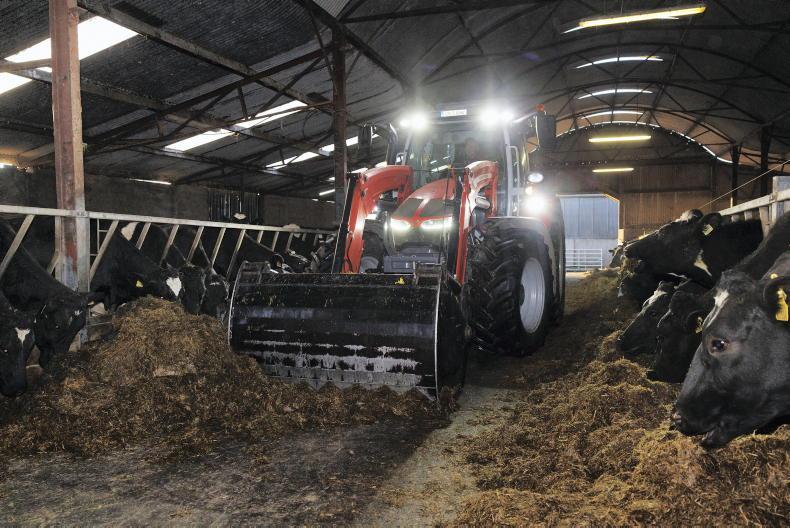
The words ad-lib feeding springs to mind when you here someone that is targeting the Italian, high value live trade. Although he does use a bit of meal, no excessive feeding is carried out. As cows calve from 1 September onwards, he does supplement during the first winter. He said that currently the calves are getting about 0.75kg concentrates per day and this will continue until turnout in early March. The farm is quite heavy in nature so he cant turn out an earlier. They then remain out with no supplementation until about 6 weeks prior to sale. Over the six week period, Nicholas feeds about 2kg per head per day on average. They are weaned about 4 weeks prior to sale and at that stage will be eating about 3kg concentrates per day. The cows are not supplemented indoors over the winter, he relies on good quality silage to ensure they have good energy intake.
Performance and costs
All bulls and heifers are sold of the land to exporters in July. Nicholas is focused on achieving high weight for age which sometimes comes against the price per kilo that he receives, but he is happy with this as the high weights keep the output per cow high. Last July the batch of Blue bulls that were sold off the land weighed 432kg on average and he got €1347/head for them, just over €3.10/kg. His heifers Belgian Blue heifers weighed 400kg and were sold at the same time for the export market.
Nicholas will host a farm walk for the Irish Belgian Blue Cattle Society next month. His profit monitor analysis is currently being completed and will be available on the day. However, he said that in 2013 he analysed his costs on a cow basis, and will all charges included, even the cost of rented land, he estimated that the cow cost him about €700 to keep in that year. Nicholas admits that the system is not for everyone, but at the moment he is satisfied to how it is performing on his farm.
In the past few years farmers have moved away from breeding Belgian Blue cattle for the live export market. But demand and prices are still firm. The move away from Belgian Blues occurred as some farmers were having difficult calvings, this resulted in losses and subsequent poorer fertility while others just saw it as too expensive a system. However these issue were not experienced by everyone targeting that market.
Nicholas Bergin is one farmer that stuck with it in recent years and is happy he did so. Like so many others, he did question himself; but then focused on ensuring the system was working for him. He calves 85 cows in total, 15 of which are pedigree Belgian Blue with the remainder commercials. Previously he would have calves 70 in the autumn (Sept/Oct) and the remainder in the spring, but more recently he has started to focus on moving all cows to autumn calving. The main reason for this is to ensure he can achieve good weight for age before selling calves. Nicholas also works for Dovea Genetics and as a result he can bring the knowledge he gains looking at bulls progeny around the country back to his own herd.
Cow type
Like many others, while striving to produce that perfect export animal he ran into problems with difficult calving. He said ‘my cows at that stage were getting a little too well muscled and were predominantly U grades.’ He added ‘I now have changed my focus slightly and am culling harder where cows are getting very well muscled.’
Cow type is predominantly second and third cross Limousin. ‘I am looking to breed a good quality R grade cow that I will work well with the right AI bull.’ Originally all the cows derived as Limousins from the dairy herd. Over the years he has bred it up, however, he now feels that there may be too much Limousin blood in the cows, and has started to use some Partenaise also for replacements. Other replacements are bought in. Because all the cows are quite uniform, Nicholas feels that calf quality is similar. At the start, when a lot of cows were first crosses, there was much more variability in the calves. The second and third Limousin cross he finds ads uniformity.
In the past year or two, while trying to get all calving dates moved to the autumn, he has bulled more cows than usual and has been quite ruthless in culling based on poor calf quality, milk and temperament. He has done this because cull cow prices were high and the cost of replacing some of the heavier, well muscled cows was quite low. The target replacement rate is 10-15%, but last year was higher due to voluntary culling
Breeding
All breeding is carried out indoors through AI. Coming from an AI background, he has good experience of what traits each bull brings through in the calf and uses this to match the bull to the cow. He said ‘ I am not looking for a hard calved bull, over the years I have found that its not always the hardest calved calf that turns out the best. I am looking for a bull that will be easy calved but who will bring muscle as the calf develops.
In the first three weeks of breeding, no heat detection aids or vasectomised bulls are used. The cows are watched closely for about a half hour in the morning and the same length of time again in the evening. After three weeks heat detection aids are placed on cows backs. The reason for not doing it in the first few weeks is that Nicholas feels that cows are very active and some false positives can result. He tries to keep the breeding season tight to ensure that sale weights are fairly uniform.
Maiden heifers are served with easy calving Limousin bulls, which does take from output value slightly, but he feels it is necessary – as live calves are what is needed. Heifers are served to bulls such as TWR, KJB and BZB.
In terms of getting cows back in calf easily, he does have one trick that helps him. Anout 6 weeks prior to breeding he scans all the cows to see if they are cycling, any cows that need to be cleaned will be washed out at this stage. He said it is surprising, even though you think all cows have cleaned and have no infections, he still usually finds 5-6% of them that need attention. The cows are scanned again after 6 weeks breeding to assess how things are going and once more then about 35-45 days after the end of the breeding season.
Calving
Despite having 85 cows calved down last year, just three caesareans took place, Nicholas said that two of them were due to calves coming back-ways and getting breached, while the third cow just didn’t open enough to calve. In general he said that once the cow is not too well muscled and a relatively easy calving bull is used, then there should be no great problems at calving.
Supplementation
The words ad-lib feeding springs to mind when you here someone that is targeting the Italian, high value live trade. Although he does use a bit of meal, no excessive feeding is carried out. As cows calve from 1 September onwards, he does supplement during the first winter. He said that currently the calves are getting about 0.75kg concentrates per day and this will continue until turnout in early March. The farm is quite heavy in nature so he cant turn out an earlier. They then remain out with no supplementation until about 6 weeks prior to sale. Over the six week period, Nicholas feeds about 2kg per head per day on average. They are weaned about 4 weeks prior to sale and at that stage will be eating about 3kg concentrates per day. The cows are not supplemented indoors over the winter, he relies on good quality silage to ensure they have good energy intake.
Performance and costs
All bulls and heifers are sold of the land to exporters in July. Nicholas is focused on achieving high weight for age which sometimes comes against the price per kilo that he receives, but he is happy with this as the high weights keep the output per cow high. Last July the batch of Blue bulls that were sold off the land weighed 432kg on average and he got €1347/head for them, just over €3.10/kg. His heifers Belgian Blue heifers weighed 400kg and were sold at the same time for the export market.
Nicholas will host a farm walk for the Irish Belgian Blue Cattle Society next month. His profit monitor analysis is currently being completed and will be available on the day. However, he said that in 2013 he analysed his costs on a cow basis, and will all charges included, even the cost of rented land, he estimated that the cow cost him about €700 to keep in that year. Nicholas admits that the system is not for everyone, but at the moment he is satisfied to how it is performing on his farm.






SHARING OPTIONS