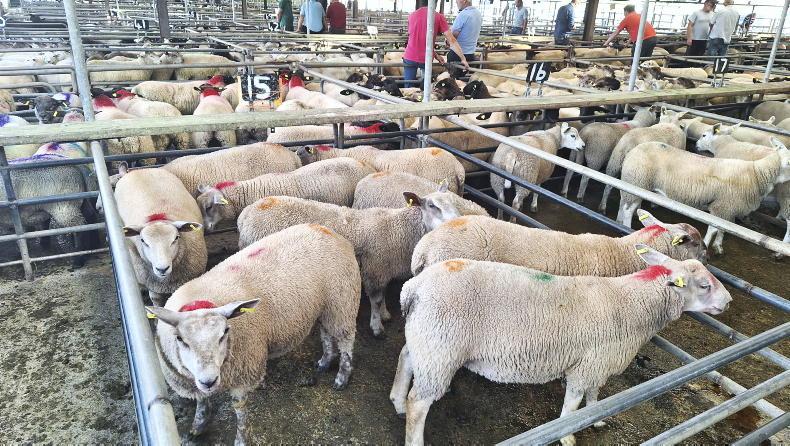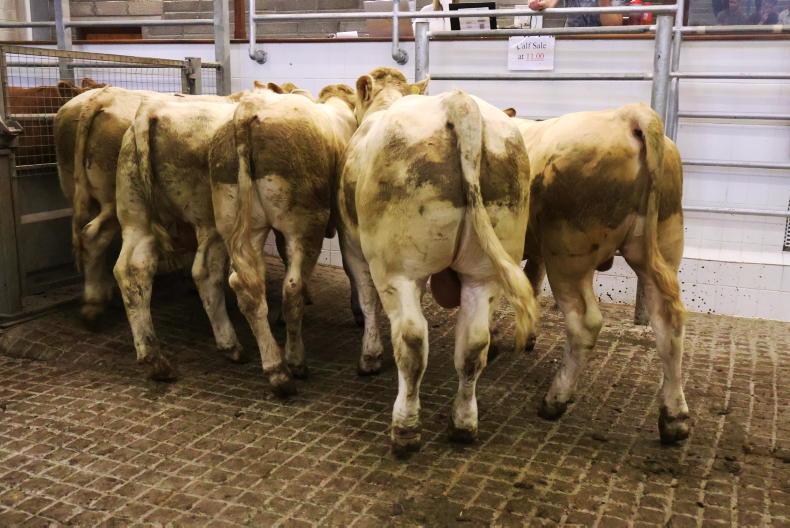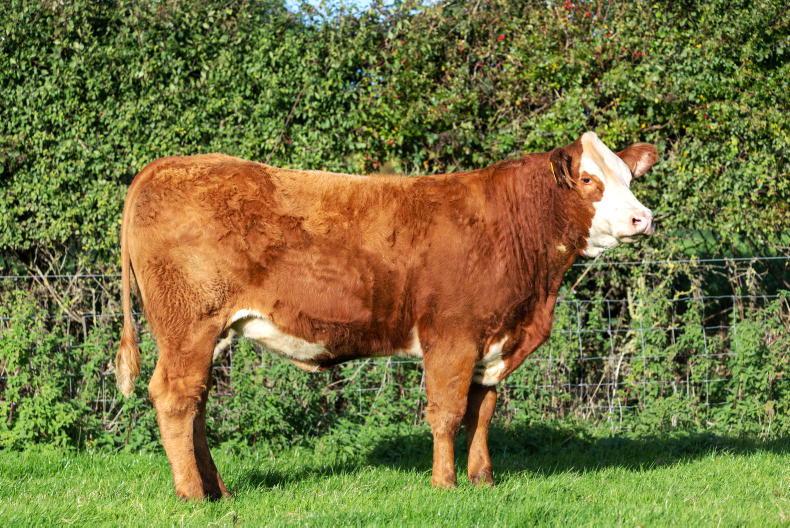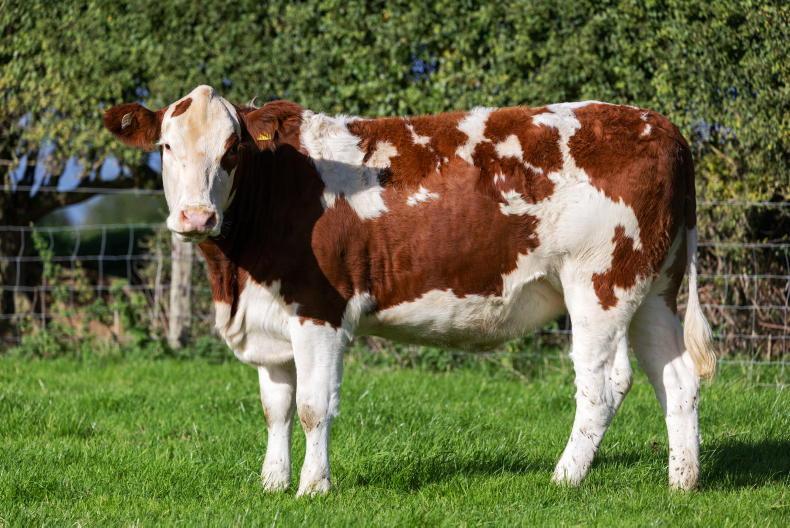
There was an obvious nervousness among farmers bringing stock to marts this week following the news of an outbreak of bluetongue (BTV-3) in Wexford, but they needn’t have feared.
Even as the news broke on Saturday morning and sales got under way without any full knowledge of what exports to EU and third countries would be like, prices remained on par with the week prior for the most part.
Probably the biggest fear had been for the store trade, with live exports to NI, which is seen as a third country as the UK is not a part of the EU, banned for the moment.
Only exports direct for slaughter are permitted, meaning factory agents sourcing finished cattle for northern plants can continue buying, once the animals come from establishments in which there has been no reported bluetongue virus in the 30 days prior to movement.
Export worry
The other big worry had been the export trade for weanlings and calves, with the upcoming influx of calves hitting the ground a worry for dairy farmers.
As it currently stands, our main export countries of Spain, France and the Netherlands do not have any conditions listed for BTV-3.
Mart managers have reported no waning in demand from exporters for weanlings in particular, while the store trade appears largely unaffected. For what could have been a rocky week for cattle prices, the omens are relatively good.
Cow numbers jumped by roughly 300 head this week on the Martbids database. The top third of cows are back slightly by 4c/kg, trading at €3.66/kg of an average, but average cow price has increased by 4c/kg to €3.08/kg, while the bottom third of cows lifted by 10c/kg, trading at €2.55/kg.
Numbers this week of the 30 marts recording with Martbids rose by roughly 10%.
Heifers this week have proven a sharper trade than their male comrades, with green arrows across the board for the top third and average heifers, with prices rising by as much as 14c/kg.
Plainer-quality stock were a slightly tougher trade, seeing a slippage in price of 13c/kg in the 600kg-plus category, meaning a gulf of over €1/kg is now present between the top and bottom third of stock quality-wise or over €600/head.
Bullocks have been largely unchanged, with the bottom end of stock quality-wise dragging down average prices if anything.
Average prices of 400kg to 500kg stores are unchanged, while 500kg to 600kg bullocks are 9c/kg behind last week, with these cattle having been in the most danger of a dramatic slippage in price.
Weanling bulls are besting heifers in numbers big time, with twice as many bulls having passed through the ring.
Lighter bulls from 200kg to 300kg rose by 17c/kg of an average, while the shippers’ favourite weight band of 300kg to 400kg remains above the €5/kg mark again this week, with a 7c/kg rise, while the top third of bulls traded just below the €6/kg mark at €5.97/kg.
Some 90% of heifers fell in between the 200kg to 300kg and 300kg to 400kg brackets, with both of these weights seeing a slight dip in price of 5c/kg on average heifers.