Around 400,000 acres of Californian arable land lay fallow as a result of persisting drought and an estimated 17,000 farm workers have lost their jobs. While US milk production increased by 1.7% in February compared to the same time last year, figures compiled by the US department of agriculture show that it was down 3.8% in California.
In an executive order on 1 April, California Governor Jerry Brown imposed the first restrictions on water usage in the history of the Golden State, which has been under a formal drought state of emergency since last year. Cities and town must cut water consumption by 25%, with specific measures targeting flower and lawn watering at campuses, golf courses and cemeteries. Penalties could be imposed on local authorities that fail to meet the target after official figures released on Tuesday showed that Californian urban areas fell well short in February, reducing their water usage by just 2.8% since last year.
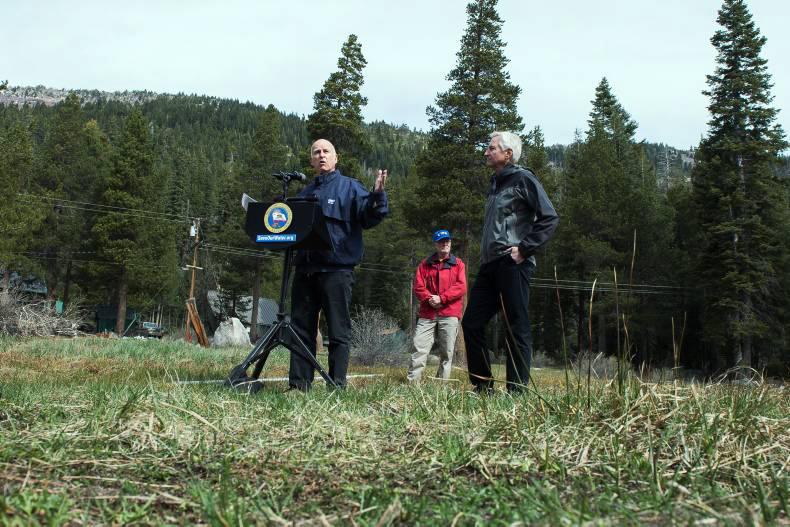
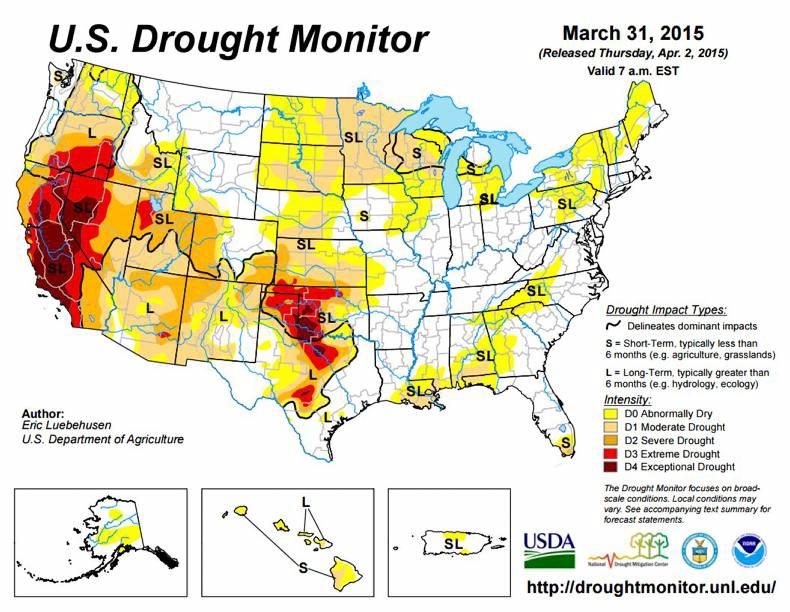
“Today we are standing on dry grass where there should be five feet of snow. This historic drought demands unprecedented action,” said Governor Brown. An interactive map published by National Geographic to explain the Californian water crisis shows that snowpack at key monitoring points is 69% below usual levels. Another map published by the US Drought Monitor now shows nearly all of California to be suffering "extreme" or "exceptional" drought, the two highest grades on a scale of five.
ADVERTISEMENT
The latest restrictions do not directly target farmers, who have already seen the volumes available for irrigation reduced and compulsory set-aside requirements increased in recent months. However, the state authorities said farms "will be required to report more water use information to state regulators, increasing the state's ability to enforce against illegal diversions and waste and unreasonable use of water".
Rain was finally reported in several areas this week - though it often came in heavy downpours and hailstorms, damaging fruit crops locally.
Register for free to read this story and our free stories.
This content is available to digital subscribers and loyalty code users only. Sign in to your account, use the code or subscribe to get unlimited access.
The reader loyalty code gives you full access to the site from when you enter it until the following Wednesday at 9pm. Find your unique code on the back page of Irish Country Living every week.
CODE ACCEPTED
You have full access to the site until next Wednesday at 9pm.
CODE NOT VALID
Please try again or contact support.
Around 400,000 acres of Californian arable land lay fallow as a result of persisting drought and an estimated 17,000 farm workers have lost their jobs. While US milk production increased by 1.7% in February compared to the same time last year, figures compiled by the US department of agriculture show that it was down 3.8% in California.
In an executive order on 1 April, California Governor Jerry Brown imposed the first restrictions on water usage in the history of the Golden State, which has been under a formal drought state of emergency since last year. Cities and town must cut water consumption by 25%, with specific measures targeting flower and lawn watering at campuses, golf courses and cemeteries. Penalties could be imposed on local authorities that fail to meet the target after official figures released on Tuesday showed that Californian urban areas fell well short in February, reducing their water usage by just 2.8% since last year.
“Today we are standing on dry grass where there should be five feet of snow. This historic drought demands unprecedented action,” said Governor Brown. An interactive map published by National Geographic to explain the Californian water crisis shows that snowpack at key monitoring points is 69% below usual levels. Another map published by the US Drought Monitor now shows nearly all of California to be suffering "extreme" or "exceptional" drought, the two highest grades on a scale of five.
The latest restrictions do not directly target farmers, who have already seen the volumes available for irrigation reduced and compulsory set-aside requirements increased in recent months. However, the state authorities said farms "will be required to report more water use information to state regulators, increasing the state's ability to enforce against illegal diversions and waste and unreasonable use of water".
Rain was finally reported in several areas this week - though it often came in heavy downpours and hailstorms, damaging fruit crops locally.
If you would like to speak to a member of our team, please call us on 01-4199525.
Link sent to your email address
We have sent an email to your address. Please click on the link in this email to reset your password. If you can't find it in your inbox, please check your spam folder. If you can't find the email, please call us on 01-4199525.
ENTER YOUR LOYALTY CODE:
The reader loyalty code gives you full access to the site from when you enter it until the following Wednesday at 9pm. Find your unique code on the back page of Irish Country Living every week.








SHARING OPTIONS