


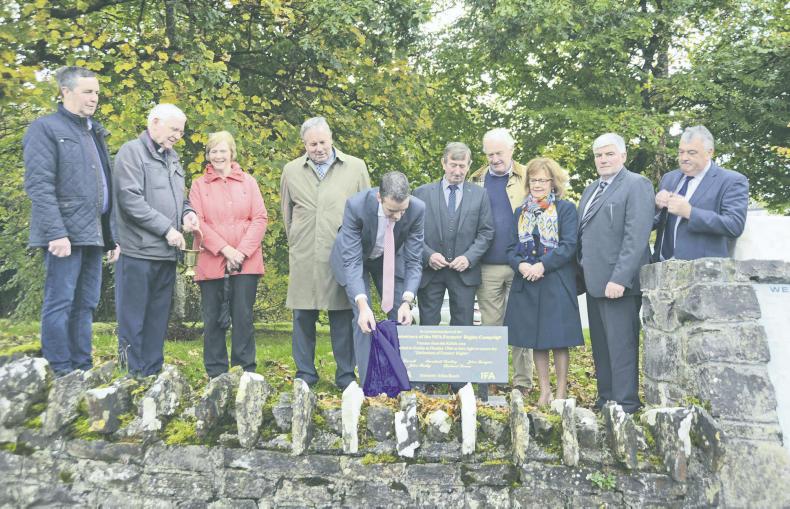
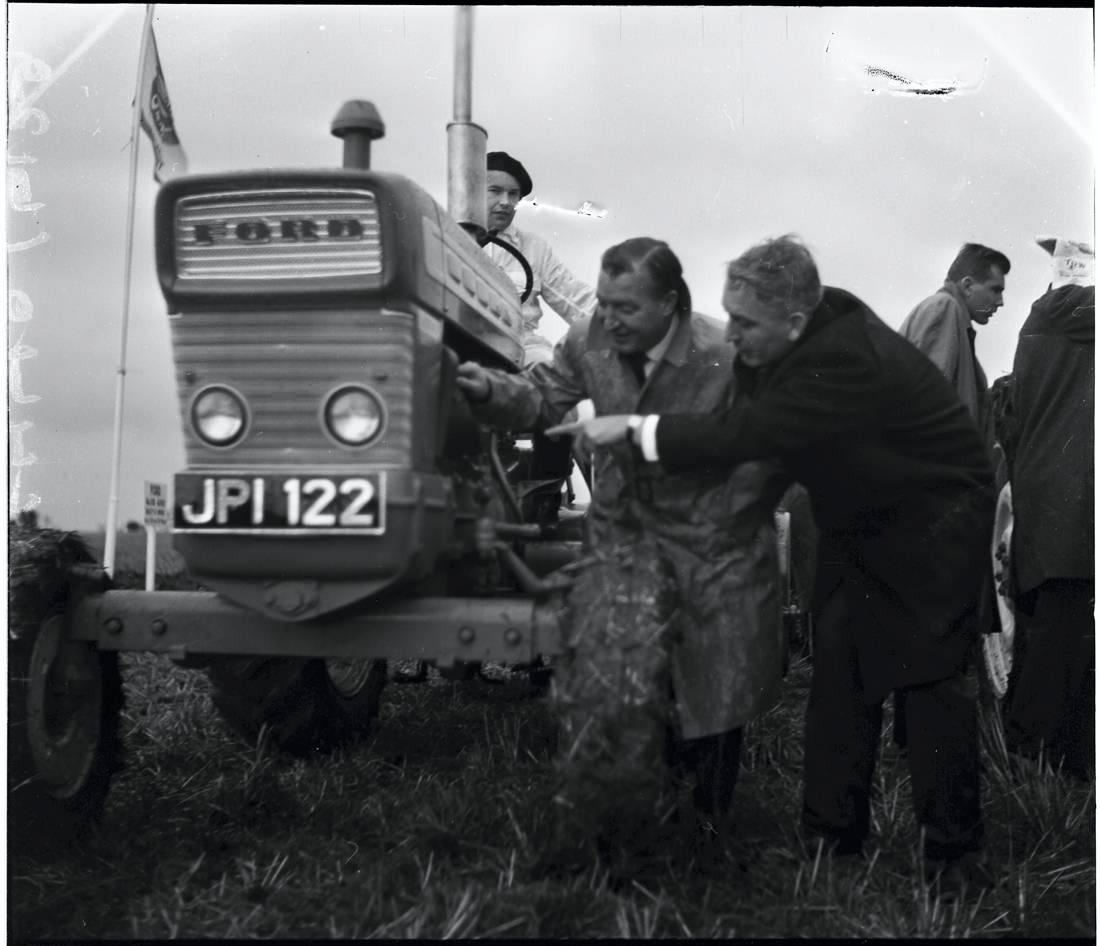
Sixty-one years after north Tipperary farmer and NFA president Rickard Deasy led farmers on a 220-mile march from Cork to the Dáil in protest against failing farm incomes, Mayo IFA members commemorated the historic event.
The march in 1966 became the largest farming march in the history of the state and eventually led to a sit-in on the steps of the Department of Agriculture.
Commemoration
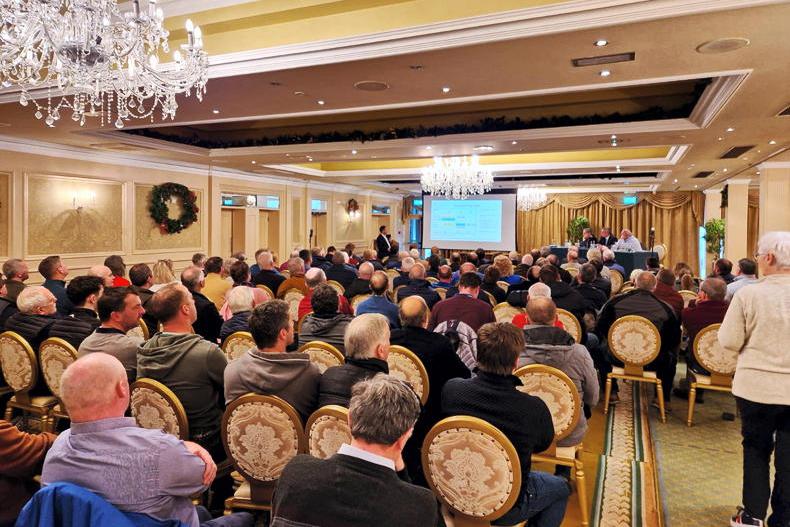
On Sunday last, in the Michael Davitt Museum in Straide, Co Mayo, a crowd of over 120 gathered to recognise the achievements of Deasy and his associates.
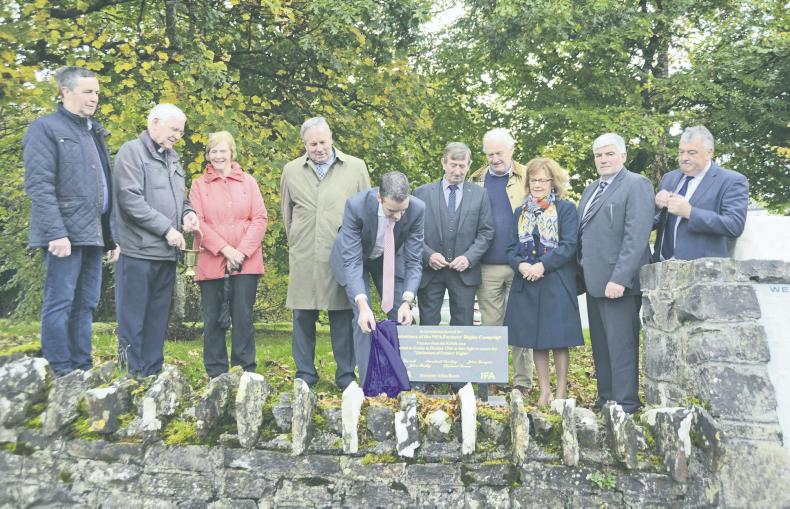
Present at the event was Ruaidhrí Deasy, son of the former NFA president, who addressed the local representatives and politicians present. The event was also attended by IFA chief Joe Healy, who unveiled a plaque at the proceedings.
Earlier that day, a plaque was unveiled in the grounds of Killala Community Centre to also commemorate the 1966 march and to recognise the five men who marched from Killala and the surrounding areas to Dublin as part of the nationwide protest.
Speaking with Irish Country Living, event organiser and Mayo IFA chair Martin Gilvarry was both delighted that the weather held and with the large crowd, which totalled 250 between both locations.
Gilvarry, along with Mayo IFA officials, had been organising the event over recent months.
Why Straide as the venue?
The village of Straide was chosen as the venue to erect this memorial, as it was the birthplace of Michael Davitt, founder of the Land League. Davitt’s family were evicted from their tenant farm in 1850, prompting the Straide native to eventually found the Land League in 1879. The struggle experienced by farmers back then remains an inspiration point for the IFA and other farming organisations today.
The Michael Davitt Museum
For those interested in the exploits of Michael Davitt and the Land League, the Michael Davitt museum is a place of note. The award-winning museum contains an extensive collection of documents, photos, Land Acts, letters, postcards, posters and other items connected with Davitt’s life. There is also the excellent audio-visual aspect, which enhances the exhibition and one’s knowledge of the era. CL


SHARING OPTIONS