




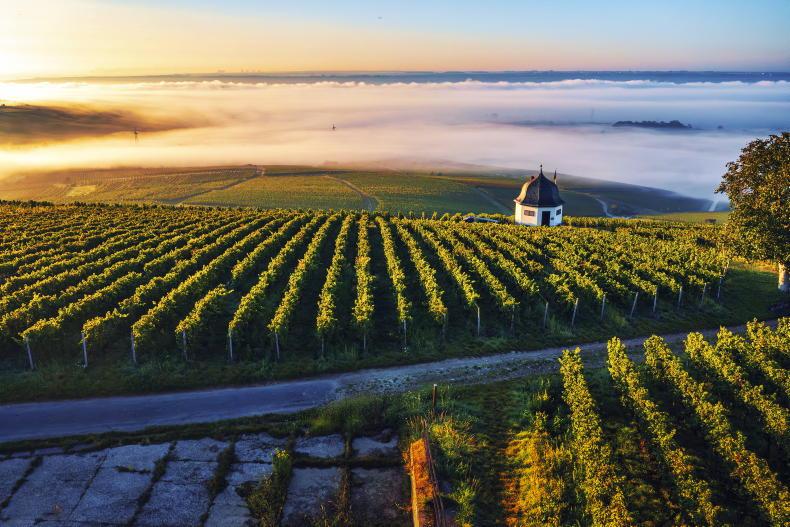
On the first day of September, I stood in the vineyards of Epernay in the heart of Champagne, France.
Visiting Champagne has always been on my bucket list but especially in early September, to witness the vines heaving with grapes – the golden tones of chardonnay and the piercing blue-black tinges of pinot noir and meunier.
But last week, the vineyards were a sea of green, not a grape in sight. This year, the first grapes were picked on 14 August with harvest completed before the end of the month – the earliest harvest recorded in Champagne.
Over lunch I was in good company beside Benoît Gouez, Moët & Chandon’s cellar master. He explained that from the first blossom in spring, they make projections for their harvest.
It’s usually an average of 85 days, depending on conditions and the shortest he has experienced was 81 days, in 2003. This year, it was 69 days. Extraordinary and unprecedented, this is a direct result of the intense heatwaves in France this summer.
There isn’t a farmer in Ireland that hasn’t been affected by the drought conditions this summer – these challenges are being felt in different ways across Europe.
One of the first challenges of the early harvest in Epernay was a logistical one.
Approximately 3,500 seasonal workers are employed by Moët & Chandon’s every year, not only to harvest the grapes across its 1,150ha of estate vineyards, but also in the wineries to press the grapes. Across the region as a whole, there are 120,000 seasonal workers employed over an intense four-week period. That’s a very large workforce to mobilise early.
Nature 'not controllable'
Logistics can be sorted. The effect of nature however, is not quite as controllable. The chalky soil that absorbs and stores water on those rainy days in Epernay is key to the success of the wine.
During the hot summers, the roots of the vines travel deep for water but not this year, high temperatures meant less rain and very little water in the soil.
As well as heatwaves, there were three bad frosts in spring. Temperatures plunged to -6°C, impacting up to 40% of the crops; one of the worst frosts on record in the region. The result of such extreme weather conditions could literally be seen on the vines as the grapes were harvested. While the average cluster of grapes weighs between 130g-140g, this year they were between 90g-100g.
Will this result in fewer bottles of Champagne on our shelves? Thankfully not. As Benoît explained, most of the production of Moët & Chandon is a blend of wines from different years. They can rely on reserves to balance this year’s smaller crop, in the hope that it is a one-off.
The real challenge will be if summers like 2026 become the norm, forcing winemakers to adapt and innovate to ensure the continued success of the world’s most famous sparkling wine.
Despite these challenges, the good news story of the season is something that will be appreciated in years to come.
Usual headaches
The quality of the crop this year has been excellent because there was no disease. Winemakers didn’t have to deal with the headaches of mildew, fungus or gray rot.
The cellar master could confirm the grapes were crystalline and super clean with bright flavours and an unprecedented balance of maturity, pointing to great ageing potential.
Certainly there seemed good optimism around the table in Epernay that 2026 could be a vintage year for Moët & Chandon with a distinctive character.
Only time will tell.



SHARING OPTIONS