



When I turn the calendar to May, I think of the words of Seamus Heaney, “Now is the time to make the best of it…the sky is bright, the breeze is light”.
I’ve always loved the change of the seasons, each one announcing itself in its own way – their sounds marking time more surely than any calendar. There’s comfort in their familiar rhythm, particularly at a time when so much else feels uncertain.
Autumn rustles with children’s chatter as they kick through leaves on their way back to school. Winter shivers with cold as Christmas carols tinkle in the background, and spring carries the call of lambs across the fields and the distant whirr of lawnmowers starting up again.
Summer begins quietly, with the low buzz of bees returning to their work and birds rehearsing their chorus – as though the whole world has decided, collectively, that it might be time to try again: to pick up where it left off, to mend what the previous seasons have broken, and carry on.
As I walk the dogs through the village, I hear the children before I see them – their laughter carrying ahead of them as they race past on scooters, wheels rattling on the road. There’s the faint scratch of chalk on the pavement as hopscotch squares are marked out for sandalled feet. The babble of water as hoses fill paddling pools for shrieking swimmers who splash their way through small rainbows, the pot of gold right there at their toes.
They’re the same sounds I remember from my own childhood, inherited by the next generation who have made them their own, reshaped but unmistakably familiar – summer handing them down, one generation to the next, like an heirloom.
The babble of water as hoses fill paddling pools for shrieking swimmers who splash their way through small rainbows, the pot of gold right there at their toes
Cars pass, windows rolled down in deference to the season if not the weather, leaving the nostalgia of the Summer of ’69 hanging in the air. The voice of Bryan Adams – a soundtrack that refuses to age, no matter how much the rest of us do, each chorus a bridge between then and now.
Ice cream vans idle on corners, their tinny tunes cutting through the air, while the sizzle of sausages, the clink of ice in glasses and the low murmur of conversation drift over garden hedges.
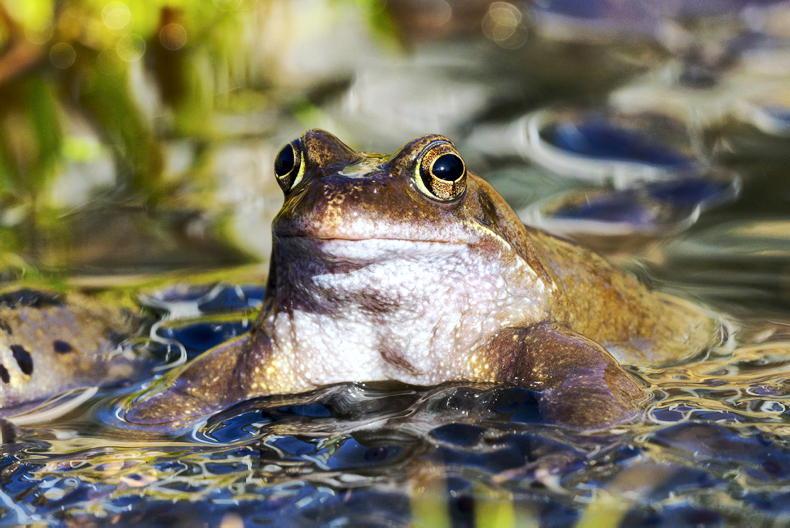
Bees buzz, crickets chirp and frogs croak in protest as diesel-belching lawnmowers make pathways through their playgrounds, their merciless blades beheading the flowers that poke bravely through the grass, a reminder that even the gentlest seasons carry their own small acts of violence.
Elsewhere, the sounds of summer are very different – a contrast as sharp as it is sobering.
In regions of sub-Saharan Africa, it is the hush of dust carried on dry winds across fields where nothing grows, and the thin, hollow quiet of hunger, leaving children without the strength to cry.
On the far side of Europe, it is the wail of air-raid sirens and the urgent thud of running feet in search of shelter.
And in the Middle East, it is the constant, circling hum of drones overhead – the backdrop to daily life, a sound no one should ever have to grow used to.
And from across the world, we listen – with little power to do anything but bear witness.
When my walk is over, I sit on a bench in the village square, the dogs panting as they rest at my feet, while young people call across the green to one another. Their voices bounce back and forth like tennis balls, full of possibility, untouched, for now, by the weight of the wider world.
A man sits down beside me and pets the dogs, scratching behind their ears as though he’s known them all their lives.
“Not a bad day, is it,” he says, offering his face up to the sun, his eyes closed.
I pause for a moment before answering, taking in the children laughing, the hum of life around me, and the birds calling from the treetops overhead.
“No,” I say, listening to the sound of peace. “It’s not a bad day at all.”




SHARING OPTIONS