



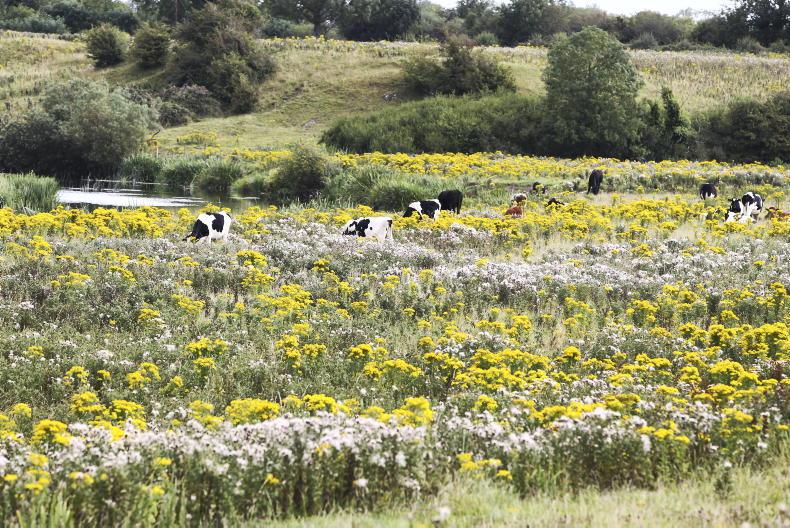
A total of 23 farmers have been ordered to destroy ragwort and thistles on their farms so far in 2026, the Department of Agriculture has said.
The ‘Notices to Destroy’ letters were issued under the Noxious Weeds Act, 1936, which is overseen by the Department of Agriculture and aims to control and prevent of the spread of certain weeds.
Under this law, it is an offence for landowners and occupiers of land not to prevent the spread of certain weeds.
Since 2020, 161 notices have been issued, but no prosecutions or fines have been taken under the Act since then, according to the Department of Agriculture.
In 2025, 23 notices were issued to farmers concerning the presence of ragwort, thistles, docks, wild oats and blackgrass.
The noxious weeds specified in the legislation are blackgrass, broad-leaved dock, curled dock, common ragwort, creeping thistle, spear thistle, spring wild oat and winter wild oat.
Department data shows that ragwort, thistles and docks are the most common weeds addressed under the Act.
GAEC 8
‘Notice to Destroy’ letters are issued by the Department to landowners and occupiers of land in instances where it becomes aware of the presence of noxious weeds, either arising from inspections, or as a result of reports made by the public.
However, cases, where applicable, are cross-reported for further assessment under cross-compliance measure GAEC 8 (Good Agricultural and Environmental Conditions).
GAEC 8 requires farmers and other landowners to keep their lands free from noxious weeds and failure to do so can result in the application of a reduction of payment entitlements.





SHARING OPTIONS