



Corporate-owned vets exist solely to make money and will cherry pick the most profitable areas of veterinary medicine to work around, Allen Dunne, vice president of Veterinary Ireland told an Oireachtas committee on agriculture last month.
“The problem we are facing is that the corporates may cherry-pick,” Dunne warned.
“They are not going to be obliged to have a vet available at 2am to go calve a cow.
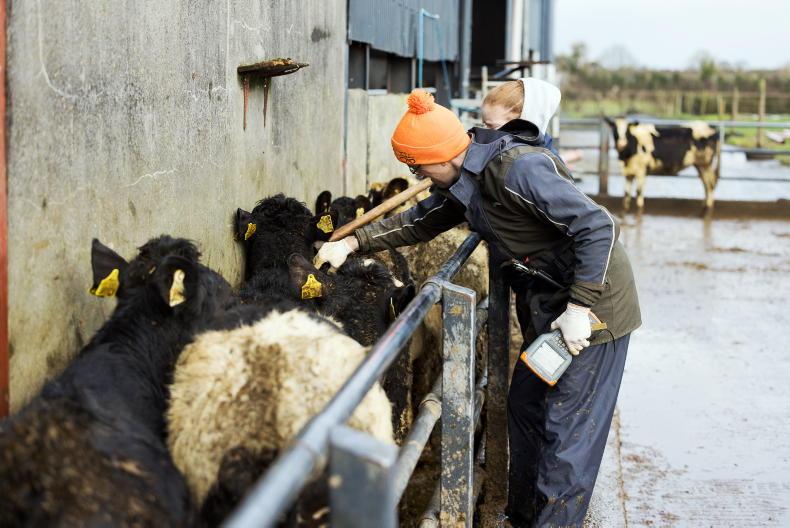
“The most vulnerable practices in the country are the smaller rural practices that currently provide an on-call service to everything with four legs when a call comes in the middle of the night.
“Corporates may not be there unless it is sustainable."
Funding
Out-of-hours services in remote rural areas, is a “wider issue”, Finbarr Murphy, chief executive of Veterinary Ireland told the committee.
He said that a 24-hour emergency service is the most expensive part of a practice and called for additional funding to help meet the cost.
“There is no funding. GPs, through the HSE, get approximately €150 million in annual funding to support the out-of-hours service. We certainly think there could be funding there.”
He acknowledged the work of the Department of Agriculture and said that the recently launched biosecurity targeted advisory service on animal health, TASAH, will benefit all mixed practices.
However, he said that this is not enough.
“There are approximately 110,000 livestock farmers in Ireland, so funding for 26,000 TASAHs will not meet the demand that is there for the service.
“This is consistent with EU animal health law, which talks about having vets deal with biosecurity issues on farms. It comes under the principle that prevention is better than waiting for the disease to happen.
“That is an example of an area where there could be greater funding. The out-of-hours service is very expensive in all practices.”
Lack of rural services
Concerns around the lack of services for rural areas was echoed by Niamh Hogan, former chair of the veterinary nursing committee.
She informed the committee of a workforce report which revealed that between 2016 and 2022, there was a 21% decline in the availability of farm animal services while companion animal services increased by 18% over the same period.
“We know that there is an issue, particularly around the availability of rural farm and equine services. We agree that funding should be targeted more towards those vulnerable areas.”
She said that this is not an issue only faced by Ireland and highlighted supports that other countries receive to combat the concern.
“France has funded internships to try to encourage people to work in rural areas. The UK has the highlands and islands scheme, which funds visits to remote areas.
“In the USA, there is federal funding available to provide loan forgiveness for vets who work in rural areas. We do not need to reinvent the wheel here.”
Increasing practitioners
Despite reduced services for rural areas, the number of both veterinary nurses and veterinary practitioners has increased in recent years.
Murphy told the committee that there has been a 329% increase in the number of veterinary nurses registered since 2008 when the profession became formally recognised by the Veterinary Council of Ireland (VCI).
At that time, there were 324 registered veterinary nurses, and this figure has since increased to 1,391.
The number of registered veterinary practitioners on the VCI register has also grown significantly over the past decade, from 2,473 registered veterinary practitioners on 31 December 2015 to 3,813 on 31 December 2025, a 54% increase in registrants.




SHARING OPTIONS