If four bales/acre of silage are harvested, with each bale weighing 200kg DM, then eight units of P and 40 units of K are required to replace the offtake. This would be supplied in 1,500 gallons/acre of cattle slurry.
ADVERTISEMENT
Grass:
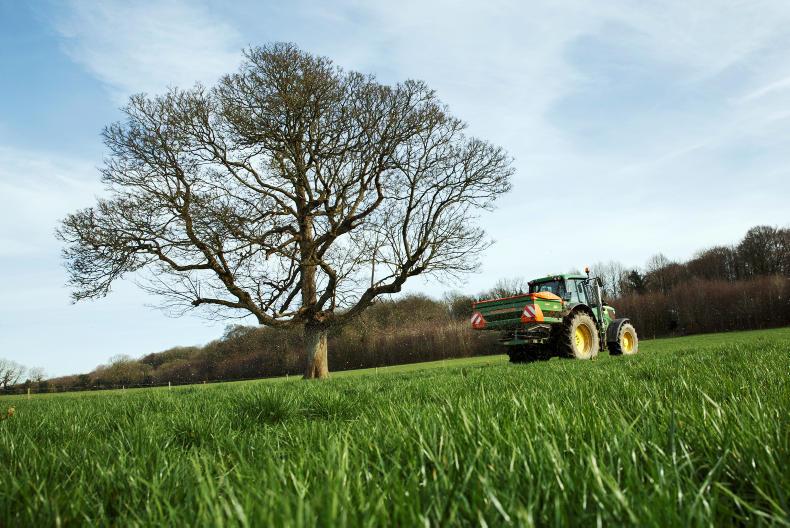
Rain last weekend and much milder weather this week with high temperatures has meant grass growth has really taken off over the last few days. Farmers who were tight for grass are now catching up, but others who were OK for grass before the weather changed are now in grass surplus and they must take action – or else grass covers will get too strong. Options include reducing meal, keeping heifers on the milking platform for longer, adding extra fields to the first cut or cutting out paddocks for bale silage over the next few days. Lower-stocked farms that don’t need high growth rates should reduce the amount of fertiliser being spread now and throughout the summer. It doesn’t make sense to be driving on grass, only to convert it to silage that isn’t needed. Higher-stocked farms should be spreading around 30 units of nitrogen for the month of May, but-lower stocked farms could get away with half of this, and farms with high clover content and low stocking rates should get away with spreading even less. If cutting out surplus paddocks for silage, remember that you must replace the nutrients being removed. Failure to do this is probably the single-biggest cause of soil fertility being run down on intensive dairy farms. For every tonne dry matter of silage removed, four units of P and 20 units of K are removed. If four bales/acre of silage are harvested, with each bale weighing 200kg DM, then eight units of P and 40 units of K are required to replace the offtake. This would be supplied in 1,500 gallons/acre of cattle slurry.
Profit monitor:
ADVERTISEMENT
More details on the results from the 1,500 farmers who completed Teagasc profit monitors for 2016 here. The stand-out figure is that after €15/hour is deducted for own or family labour contributions, only €116/ha was earned on spring-calving farms in 2016. Another surprise is that total costs didn’t change much from 2015 to 2016, at €2,427/ha or 20.3c/l. The question is, will the cost base change now milk prices have improved? Invest in areas that give a financial return or that make the farm easier to operate. There is a tendency to let variable costs slip when milk prices are higher. Don’t let this happen.
Register for free to read this story and our free stories.
This content is available to digital subscribers and loyalty code users only. Sign in to your account, use the code or subscribe to get unlimited access.
The reader loyalty code gives you full access to the site from when you enter it until the following Wednesday at 9pm. Find your unique code on the back page of Irish Country Living every week.
CODE ACCEPTED
You have full access to the site until next Wednesday at 9pm.
CODE NOT VALID
Please try again or contact support.
Grass:
Rain last weekend and much milder weather this week with high temperatures has meant grass growth has really taken off over the last few days. Farmers who were tight for grass are now catching up, but others who were OK for grass before the weather changed are now in grass surplus and they must take action – or else grass covers will get too strong. Options include reducing meal, keeping heifers on the milking platform for longer, adding extra fields to the first cut or cutting out paddocks for bale silage over the next few days. Lower-stocked farms that don’t need high growth rates should reduce the amount of fertiliser being spread now and throughout the summer. It doesn’t make sense to be driving on grass, only to convert it to silage that isn’t needed. Higher-stocked farms should be spreading around 30 units of nitrogen for the month of May, but-lower stocked farms could get away with half of this, and farms with high clover content and low stocking rates should get away with spreading even less. If cutting out surplus paddocks for silage, remember that you must replace the nutrients being removed. Failure to do this is probably the single-biggest cause of soil fertility being run down on intensive dairy farms. For every tonne dry matter of silage removed, four units of P and 20 units of K are removed. If four bales/acre of silage are harvested, with each bale weighing 200kg DM, then eight units of P and 40 units of K are required to replace the offtake. This would be supplied in 1,500 gallons/acre of cattle slurry.
Profit monitor:
More details on the results from the 1,500 farmers who completed Teagasc profit monitors for 2016 here. The stand-out figure is that after €15/hour is deducted for own or family labour contributions, only €116/ha was earned on spring-calving farms in 2016. Another surprise is that total costs didn’t change much from 2015 to 2016, at €2,427/ha or 20.3c/l. The question is, will the cost base change now milk prices have improved? Invest in areas that give a financial return or that make the farm easier to operate. There is a tendency to let variable costs slip when milk prices are higher. Don’t let this happen.
If you would like to speak to a member of our team, please call us on 01-4199525.
Link sent to your email address
We have sent an email to your address. Please click on the link in this email to reset your password. If you can't find it in your inbox, please check your spam folder. If you can't find the email, please call us on 01-4199525.
ENTER YOUR LOYALTY CODE:
The reader loyalty code gives you full access to the site from when you enter it until the following Wednesday at 9pm. Find your unique code on the back page of Irish Country Living every week.





SHARING OPTIONS