
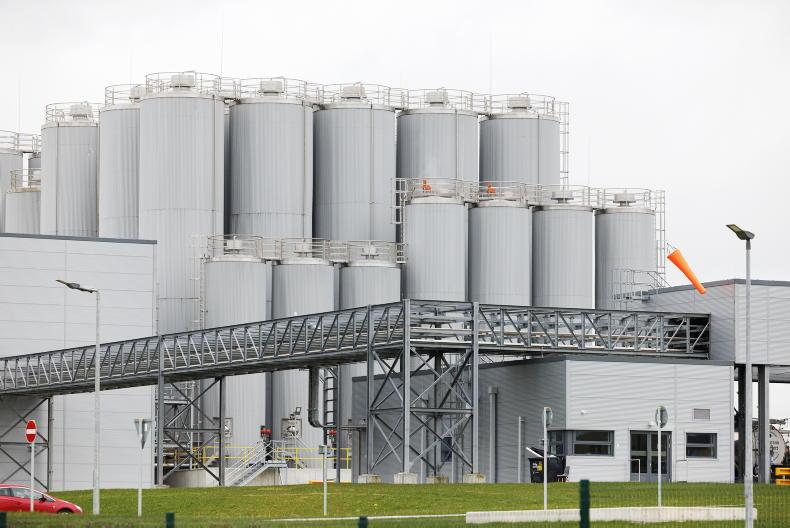
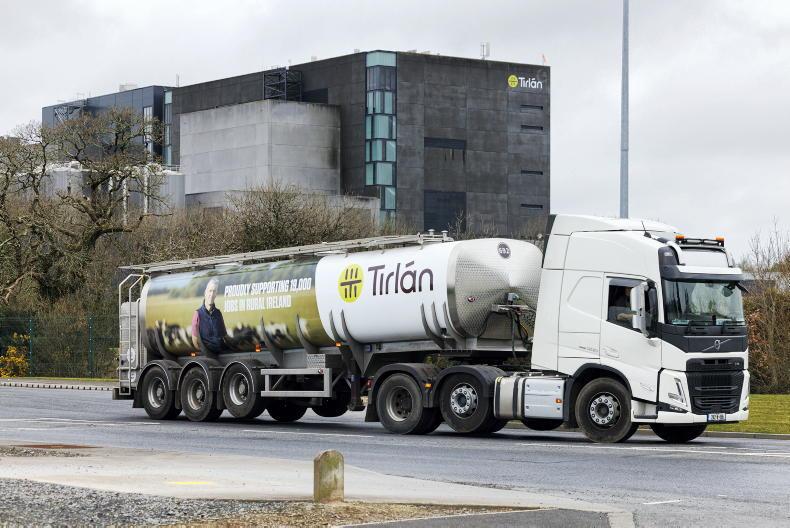
If one wanted to see a symbol of Ireland’s dairy expansion post quota abolition, a visit to Belview Port will paint a picture quicker than anything else. Located at the confluence of the Suir and the Barrow in Waterford Harbour, Belview has been the hub of Tirlán’s expansionary milk processing facilities.
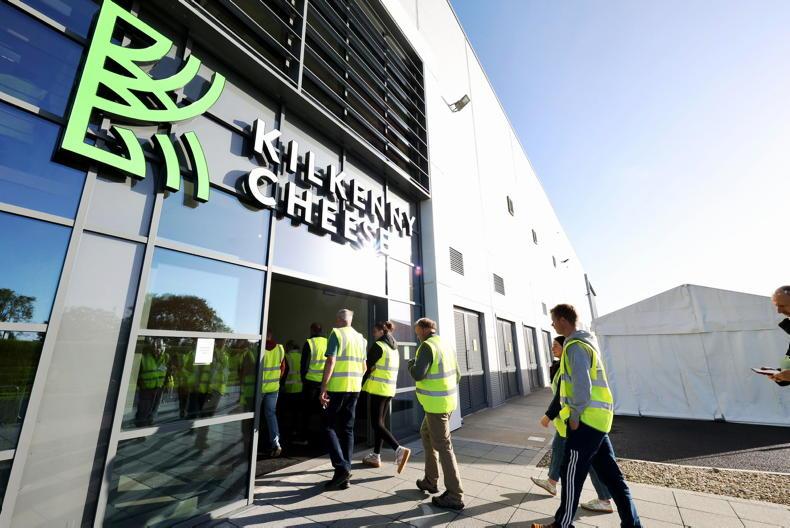
The latest development at Belview has been the Kilkenny Cheese Ltd (KCL) European cheese plant. This is a joint venture between Tirlán and Royal A-Ware, a Dutch- based cheese manufacturer and trader. The facility was completed in 2024 and is now completing its third year of operation.
Alongside KCL stands the original Tirlán Belview facility – a high spec milk powder plant which was built in 2013 and 2014 and was fully operational in 2015 – the year quotas went. While both plants are sited next to each other, they are very different in terms of operation, with different milk intakes, personnel and product mix.
Kilkenny Cheese
By far and away the traditional approach to cheese making in Ireland at scale has been to make cheddar cheese. This is a hard product with a long shelf-life making it ideal for a seasonal calving milk production system.
Over the last decade, there has been a trend towards softer cheese production, particularly mozzarella with Carbery and Glanbia plc investing in new production facilities in counties Cork and Laois. The Kilkenny Cheese plant has taken this a step further, investing in soft European cheese production with Gouda and Edam being the two main cheeses produced at KCL. In contrast to cheddar, these are early maturing and short shelf-life cheeses which are more popular among European consumers, but not very popular in Britain or Ireland.
The cheese produced by Tirlán at KCL is typically consumed at around 12 to 14 weeks after being made, whereas cheddar cheese is typically consumed at six to 12 months after being made.
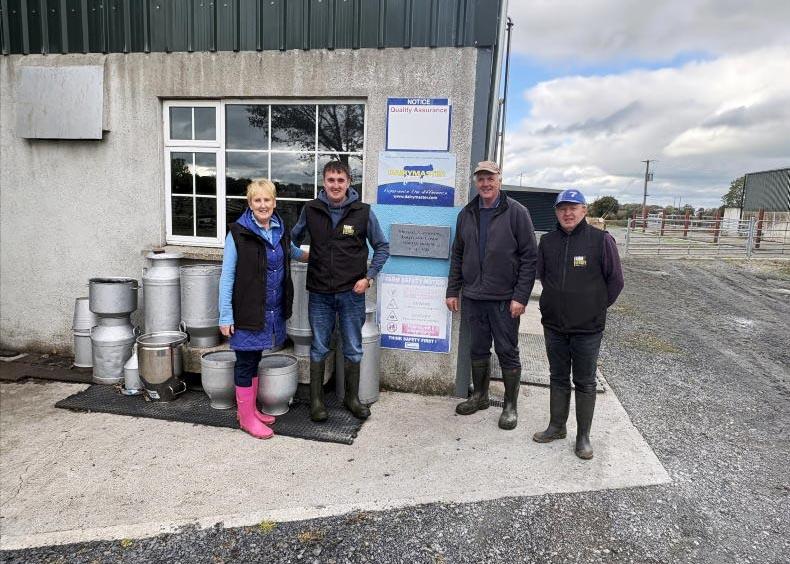
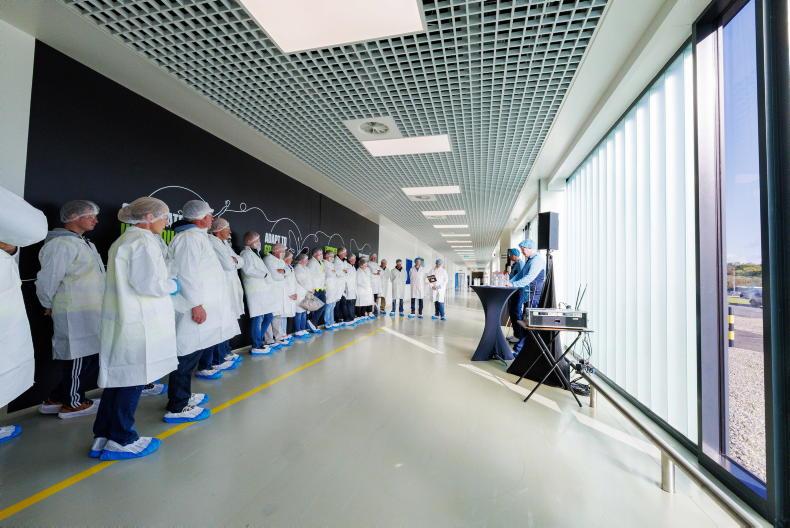
Last October, Tirlán held an open day at both KCL and Belview milk processing plants for its milk supplier members. The first stop on the tour of KCL was to meet head of operations Eoin O’Neill. He outlined the scale of the plant, with plans to produce 55,000t of cheese in 2026, from the equivalent of 467m litres of milk.
There are two sizes of cheese being made, a Euro block weighing 15.5kg and a smaller loaf weighing 3kg. To put the scale of the output in context, in a typical day the plant will make between 17,000 and 18,000 Euro blocks of cheese.
Across the course of a week, 90 container loads of cheese are transported to the nearby port at Belview where they are shipped to the Netherlands to be sold by Royal A-Ware. Eoin explained that the plant runs from February to November with 100 people employed operating across five cycle shifts across production, maintenance, logistics, administration and human resources.
Steps
The first step involved in the process of making cheese from the 75 tankers of milk that arrive at KCL each day is to pasteurise and standardise the milk. The pasteurisation process kills the bad bacteria in the milk, while standardisation ensures that the milk is of standard fat and protein constituents. Excess fat is skimmed off as cream and used in other Tirlán plants for butter making.
After pasteurisation, the cheese making process begins. The milk is transferred to one of nine large vats capable of holding 30,000l of milk and culture, rennet and calcium chloride is added. After just 20 minutes, the milk starts to congeal and turns into a gel form. When the operator is satisfied with the gel, the next stage is to cut the cheese.
This cutting phase involves the use of a large agitator to break up the lumps. It is at this stage that the milk starts to change into three distinct forms – curd, whey and water. The whey is separated and removed for further processing in other Tirlán plants, the water element is re-purposed and used for washing the plant while the curd is what makes the cheese.
The next step is to press and form the curd into distinct blocks of cheese. It does this by pressing the curd in moulds through one of 10 pressing stations with up to 144 moulds being pressed at any one time. Each mould is pressed for 80 minutes which removes more of the whey and increases the hardness of the cheese.
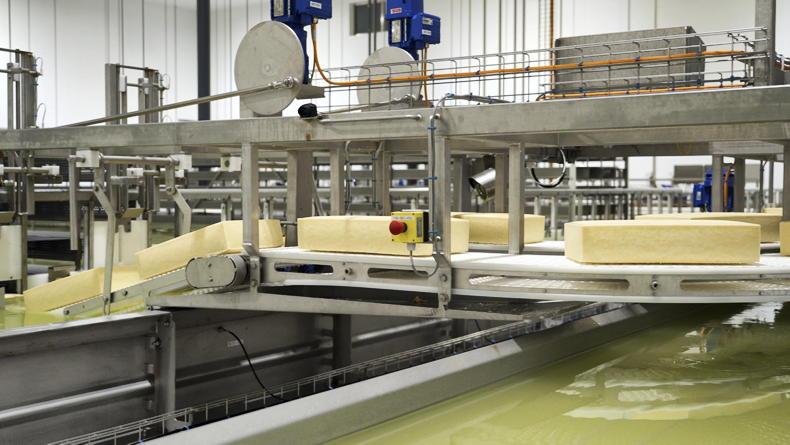
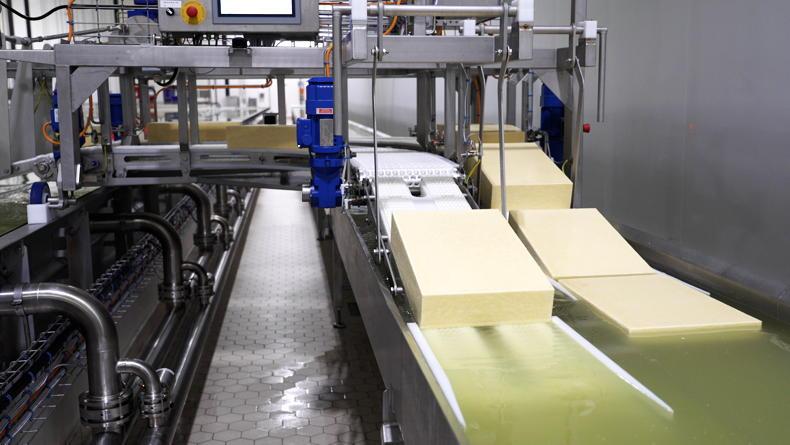
The next step is to demould the cheese, which essentially means popping it out of the mould. All of this process is automated with the conveyor belts flipping the moulds over and lifting the moulds. What’s left on the conveyor belt is the 16kg block of cheese.
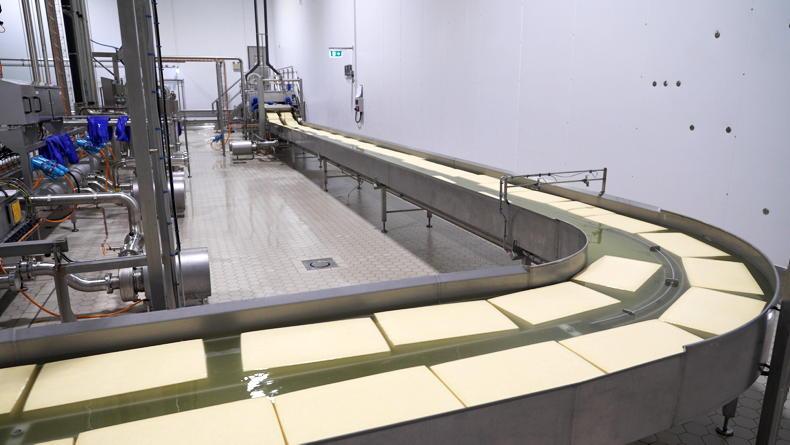
The next step for the cheese is to enter the brine bath which is probably the most visually impressive element of the entire factory. Essentially the blocks of cheese are transferred from the conveyor belt onto a liquid channel of brine which flows like a stream through the plant.
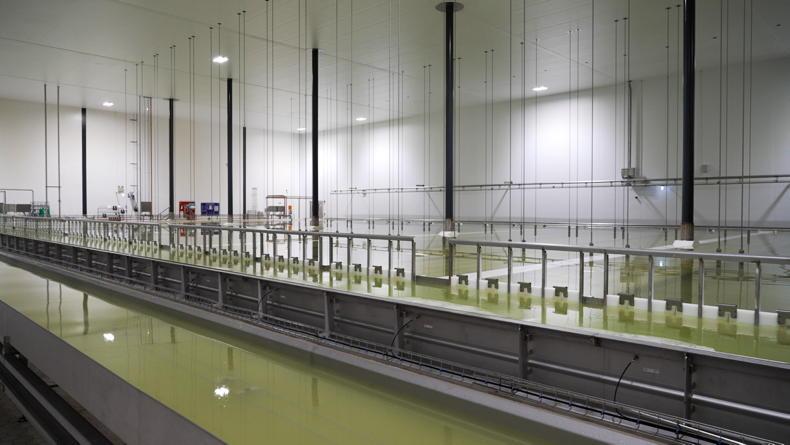
Brine is a mix of salt and water at 9% salt composition. The blocks of cheese flow down to the stream to the big brine bath. This is a huge tank of brine holding four million litres in a massive warehouse with a high ceiling.
John Coogan, supply chain manager at the plant informed attendees on the tour that the depth of the tank is as tall as the ceiling. This is intentional as the cheese blocks are loaded into cages which are then lowered into the bath.
There are 25 cages in the bath, with each cage holding 3,000 blocks of cheese. The cheese remains in the bath for between two to four days and typically takes in 2% salt content during that time. The whole process of loading and unloading the cages is fully automated with no human intervention.
There is a continuous process of cheese being loaded and unloaded on to and off of the cages. At any one time, there is up to 900t of cheese in the brine bath. One of the most interesting aspects from the tour was the declaration that the brine water bath is never replaced, but up to 10t of salt is added to the brine bath daily, to replace the salt that is soaked up by the cheese.
After leaving the brine bath, the cheese is vacuum packed, boxed and loaded into folding crates specifically manufactured for KCL. These crates are loaded into refrigerated containers, known as reefers.
Between 90 and 95 reefers leave the plant each week, with each reefer packed with 22 crates of cheese. The reefers make the short trip by road to Belview Port and are loaded onto a ship for Rotterdam where the majority join the Royal A-Ware distribution channels.
Because the crates can be folded down, the transportation of empty crates can be densified, meaning for every four reefers of full crates there is one reefer of empty crates returning to the plant, thereby cutting down on transport costs and improving sustainability metrics.
On sustainability, the plant has a staggering 3,500 solar panels on the roof which provides half of the electrical usage requirements of the plant. The plant also has its own combined heat and power (CHP) plant on site utilising natural gas.
For every 1t of cheese made, the plant requires about 8,500l of raw milk. From a 30,000 litre vat of milk, there is 3.5t of cheese produced and 18t to 22t of liquid whey produced.
Belview powder plant
Located next door to the Kilkenny Cheese plant is the original Tirlán Belview milk processing plant. Construction of the site began in 2013, with the plant officially opening for production in 2015. The total investment in the facility was approximately €180m.
Today, the fully Tirlán-owned site employs 90 people working across a flexible shift schedule. The plant has eight milk intake bays, 10 raw milk silos with a combined capacity of approximately 2.8m litres and a further 12 pasteurised milk silos with capacity for another 3.6m litres.
Milk powders are the only products manufactured at Belview, with the plant capable of producing five different types: whole milk powder, skim milk powder, fat-filled milk powder, whey milk powder and buttermilk powder.
The plant previously produced liquid skim for use in infant formula manufacturing, although this product has not been manufactured at the site for some time.
Milk powders are used extensively in the food ingredients industry across the world. With shelf lives of up to two or three years, they can be transported long distances and stored for extended periods before being reconstituted by adding water.
Fat-filled powder
At present, the majority of milk entering the Belview plant is being used to produce fat-filled milk powder. Fat-filled powder is a lower-cost alternative to traditional milk powders, with palm oil used to replace the more expensive milk fat.
To manufacture the product, the cream is first separated from the milk, leaving skimmed milk. This is then concentrated and dried, with vegetable oils added during processing. Sugar can also be included depending on the specification of the finished product.
The majority of fat-filled milk powder produced at Belview is exported to African markets, where its affordability makes it an attractive alternative to traditional milk powders.
It is used in the manufacture of products such as yoghurt, ice cream and milk drinks. In some African countries, the powder is also sold by the scoop through street vendors and local shops.
Processing
Once the milk has been unloaded from the milk tanker, it is transferred into one of the raw milk storage silos.
From there, the milk is pasteurised by heating it to over 72°C to kill off potentially harmful bacteria.
Following pasteurisation, the milk is standardised to ensure a consistent composition across batches.
This is important for powder manufacturing, where the fat, protein and lactose content must meet the specifications of the finished product.
During the separation process, most of the fat or cream is removed from the milk, leaving skimmed milk for further processing.
The cream is then transported to another Tirlán processing site, mainly Ballyragget, where it is used in butter manufacturing.
Evaporation
Following pasteurisation and separation, the milk contains approximately 10% solids and 90% water.
The next stage involves removing much of this water through evaporation before the milk can enter the spray dryers.
There are five evaporators at the Belview plant, which use heat to evaporate water from the milk and produce a much more concentrated product.
By the time the milk has passed through the evaporators, its solids content has increased from approximately 10% to 50%.
Removing water at this stage reduces the amount of moisture that must be removed during spray drying, making the overall process more efficient as evaporation is more energy efficient than drying. Water recovered during processing can also be reused for cleaning equipment. Following cleaning, the wastewater is transferred to the on-site treatment plant before undergoing further treatment through the public wastewater system.
Spray drying
Spray drying is one of the final stages in turning the concentrated milk into powder. Once the milk has reached approximately 50% solids, it is pumped into large spray dryers under high pressure.
The concentrated milk enters the drying chamber at the top of the dryer through an atomiser, which breaks it into millions of tiny droplets.
These droplets are exposed to a stream of hot air, causing the remaining water content to evaporate rapidly.
The process takes just a matter of seconds, with the small size of the droplets creating a large surface area. This allows moisture to be removed quickly without exposing the milk solids to prolonged periods of high temperatures.
As the water evaporates, the droplets turn into fine particles of milk powder, which are collected and passed through a further drying and cooling stage.
By the end of the process, the moisture content has been reduced to approximately 3%, leaving a finished powder containing 97% solids. The powder is then packaged into either 25kg bags or larger 1,000kg bulk bags before being stored ahead of export. At peak production, the plant can manufacture approximately 500t of milk powder per day, with weekly production reaching 3,000t.
Automation
Like the neighbouring Kilkenny Cheese plant, the Belview facility is highly automated, with very little manual intervention required throughout the production process.
Much of the equipment is monitored and controlled through computerised systems, allowing staff to oversee the different stages of production.
The 90 employees working at the site are primarily involved in quality control, engineering, equipment maintenance and overseeing the processing operation. With large volumes of milk being processed every day, keeping the equipment operating efficiently is an important part of the plant’s day-to-day operation.
Comment
Visitors to the Belview cheese and powder plants couldn’t but be impressed by the facilities on show.
By its nature, the cheese plant is more impressive with more moving parts and certainly more wow moments for those on the tour. The scale of the powder plant is enormous, but the processes involved are more mundane. Tirlán deserve great credit for what they have achieved at Belview – it is world class. There is no guarantee of success when it comes to building new dairy processing plants, particularly for the likes of softer cheeses like Gouda and Edam which have never been done in Ireland before.
This is where the value for Tirlán was in bringing in partners like Royal A-Ware, who not only know how to make these cheeses but also how to sell them.
Even then there is no guarantee of success and I’m reminded of that every time I pass Portlaoise and see the mothballed Leprino mozzarella plant. This plant was part of a joint venture between Leprino and Glanbia plc – two of the biggest cheese makers in the world. It opened in 2021 at a cost of €130m. Glanbia subsequently sold their 50% share of the business to Leprino, but the Portlaoise plant was dogged with difficulties and closed last year. It is understood the plant is still for sale for a knock-down sum of just €10m. So, there is no guarantee of success when it comes to building new milk processing plants.
Finally, it’s remarkable to see how few people are employed in both the cheese and powder plants at Belview. New facilities have the advantage of being labour efficient which should reduce running costs. Tirlán suppliers will be hoping for the KCL/Belview premium to be returned in milk price.