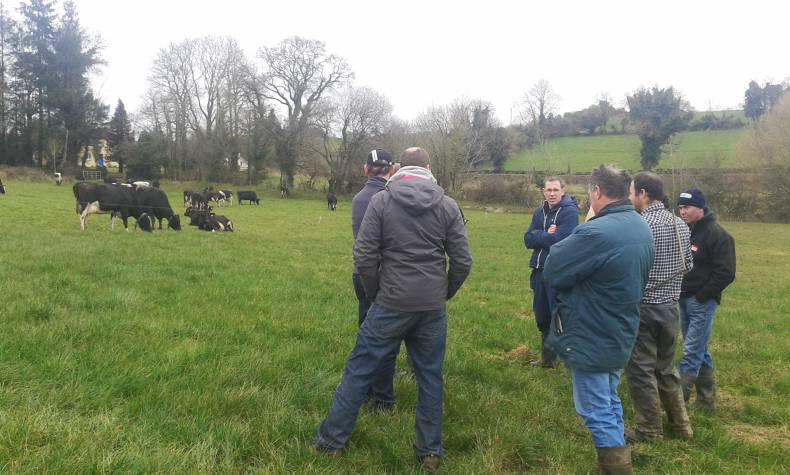
The Dairylink group visited Ballyhaise, Co Cavan, this week to brush up on grazing management skills. With a big emphasis on grazing this year within the group, it was decided a refresher course on grass budgeting and learning how to accurately allocate grass to cows on a daily basis would be beneficial for the group.
Teagasc’s Donal Patton spent the afternoon with us outlining how the college herd is managed and the pivotal role grass management plays in the overall herd performance. The 120-cow herd is spring-calving, with calving started on 10 February this year.
On the day of our visit, 85% of the herd had calved, with the remaining 15% due in the next two weeks.
Grazing started on 10 February, with wet conditions forcing Donal to use on/off grazing for the first few weeks.
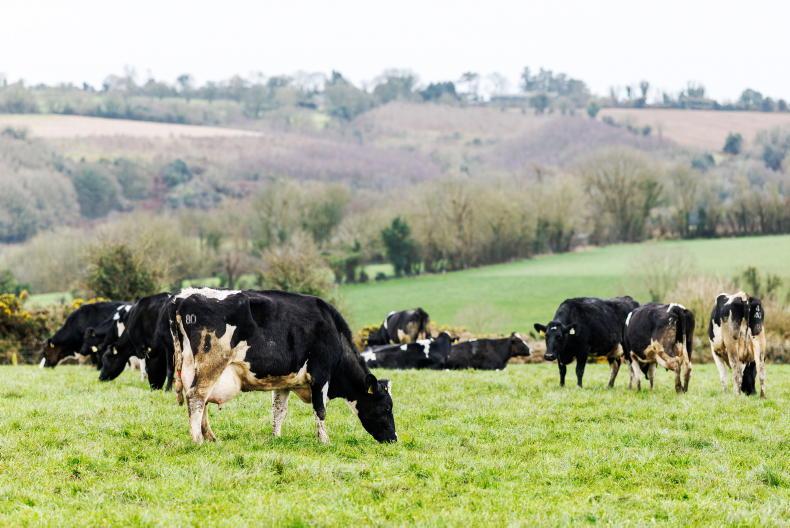
Despite the wet weather and difficult ground conditions, from a potential 41 days of grazing, the cows have been out 31 of those, with a significant proportion of their diet coming from grazed grass.
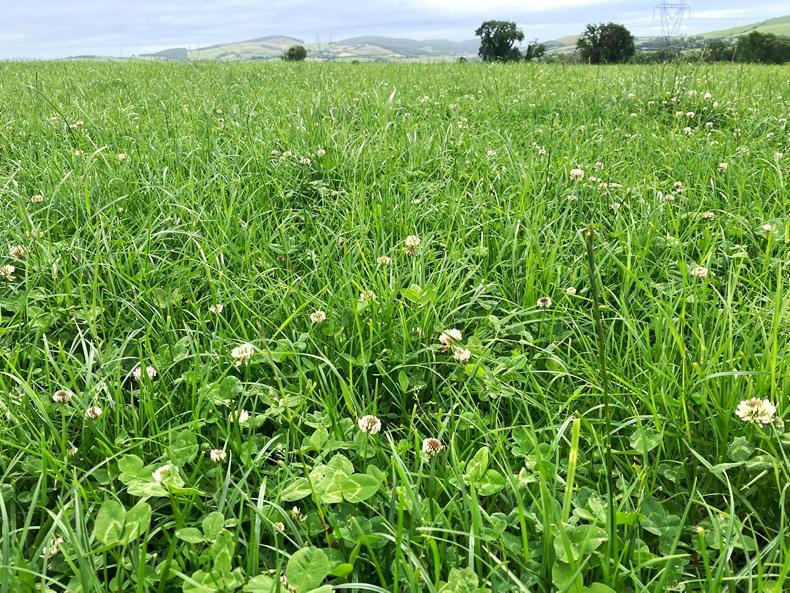
Two grass samples from the grazing platform analysed at the end of February showed grass to be 16%DM, 82% DMD and 22% protein, which is much better than silage.
Donal explained to the group the importance of achieving target closing grass covers last autumn at Ballyhaise. With paddocks closed from the end of September 2015 on the farm, the average opening farm cover was 880kg DM/ha. Donal is also selective at closing and attempts to ensure dry paddocks have a heavy cover, allowing for early spring grazing in these areas.
The farm is difficult to manage, with a variation in soil types, some of which is prone to flooding.
An extensive network of farm roadways allows Donal to pick and choose paddocks for grazing on a daily basis.
There is no set grazing order for paddocks, especially in the first round, with the paddock selected each morning. Currently the herd is switching between high and low grass cover paddocks for morning and evening grazing, which is increasing the percentage of the farm grazed, while at the same time getting those heavier covers removed.
Soil fertility on the grazing block is viewed as a primary objective to ensure pH, and P and K indices are optimal for grass growth.
The farm is routinely soil-sampled each year, with a nutrient management plan implemented to correct any imbalances in soil fertility.
Slurry had been spread using a shallow injector to minimise contamination of grass and fully utilise the nutrients. The grazing platform had received 30 units of urea with the first application and 40 units had just been applied over the weekend to the platform.
With grazing conditions very good on the farm, Donal has concerns the target date of 10 April to start the second rotation will stretch grass supply.
At the moment, cows are eating 3kg of concentrate and 13kg DM grass daily. If demand holds steady, the target date for the second rotation will be met. However, Donal is aware herd demand may well increase, so he will introduce additional feed in the form of silage to stretch out the first rotation if it is required.
The first rotation is also restricted with a higher stocking density as a result of annual flood damage to approximately 5ha of the grazing platform. The grazing platform is 41ha, with only 35.5ha available for the first rotation. The flood area dries out relatively quickly and will be available for the second rotation.
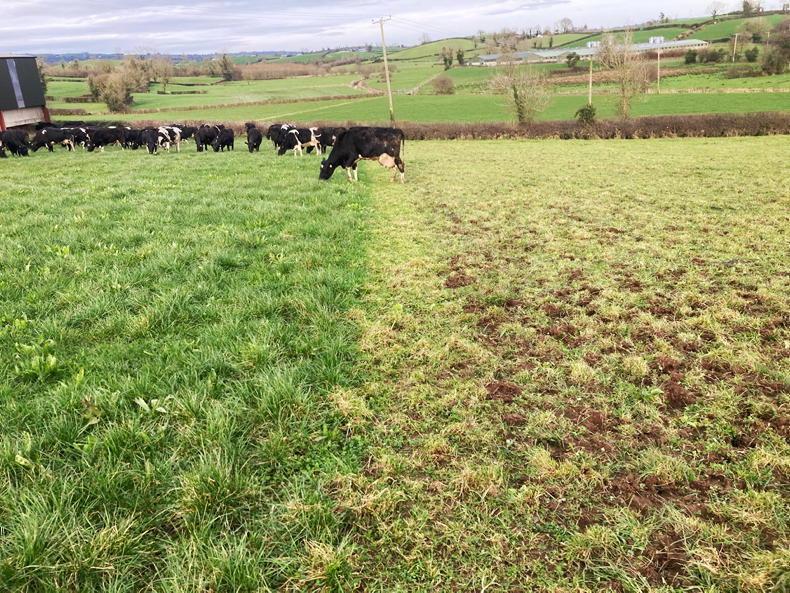
The general consensus from the Dairylink group was grass quality and ground conditions were excellent, with very minimal damage to paddocks during the wet period. Some paddocks had been poached, but not to the extent where growth potential will be reduced, and only on a small percentage of the total grazing area.
On grass quality, project farmers were impressed how heavy covers on the farm had been grazed down.
Also, while regrowth has been slow this spring, the paddocks grazed first on the Ballyhaise farm now have grass covers from 450kg to 500kg. Quality is also high in these paddocks as a result of good grazing the first time round.
Another take-home message for the group was the level of nitrogen applied at this stage on the grazing platform. Donal has the second application of urea on the grazing block, bringing the total nitrogen applied to date on the farm to 70 units/acre.
Farm walks
Dairylink is holding a series of spring grass walks in April on three of the programme farms. The walks will focus on cows, grass and business plans/cashflow. They will start at 11am and finish at 1pm. The walks will be an opportunity to visit the farms, meet with the host farmers and discuss their plans for the next three years.
6 April: Kevin McGrade, Dromore, Co Tyrone.12 April: Bill Brown, Millisle, Co Down.15 April: Charles Clarke, Bailieborogh, Co Cavan.
The Dairylink group visited Ballyhaise, Co Cavan, this week to brush up on grazing management skills. With a big emphasis on grazing this year within the group, it was decided a refresher course on grass budgeting and learning how to accurately allocate grass to cows on a daily basis would be beneficial for the group.
Teagasc’s Donal Patton spent the afternoon with us outlining how the college herd is managed and the pivotal role grass management plays in the overall herd performance. The 120-cow herd is spring-calving, with calving started on 10 February this year.
On the day of our visit, 85% of the herd had calved, with the remaining 15% due in the next two weeks.
Grazing started on 10 February, with wet conditions forcing Donal to use on/off grazing for the first few weeks.
Despite the wet weather and difficult ground conditions, from a potential 41 days of grazing, the cows have been out 31 of those, with a significant proportion of their diet coming from grazed grass.
Two grass samples from the grazing platform analysed at the end of February showed grass to be 16%DM, 82% DMD and 22% protein, which is much better than silage.
Donal explained to the group the importance of achieving target closing grass covers last autumn at Ballyhaise. With paddocks closed from the end of September 2015 on the farm, the average opening farm cover was 880kg DM/ha. Donal is also selective at closing and attempts to ensure dry paddocks have a heavy cover, allowing for early spring grazing in these areas.
The farm is difficult to manage, with a variation in soil types, some of which is prone to flooding.
An extensive network of farm roadways allows Donal to pick and choose paddocks for grazing on a daily basis.
There is no set grazing order for paddocks, especially in the first round, with the paddock selected each morning. Currently the herd is switching between high and low grass cover paddocks for morning and evening grazing, which is increasing the percentage of the farm grazed, while at the same time getting those heavier covers removed.
Soil fertility on the grazing block is viewed as a primary objective to ensure pH, and P and K indices are optimal for grass growth.
The farm is routinely soil-sampled each year, with a nutrient management plan implemented to correct any imbalances in soil fertility.
Slurry had been spread using a shallow injector to minimise contamination of grass and fully utilise the nutrients. The grazing platform had received 30 units of urea with the first application and 40 units had just been applied over the weekend to the platform.
With grazing conditions very good on the farm, Donal has concerns the target date of 10 April to start the second rotation will stretch grass supply.
At the moment, cows are eating 3kg of concentrate and 13kg DM grass daily. If demand holds steady, the target date for the second rotation will be met. However, Donal is aware herd demand may well increase, so he will introduce additional feed in the form of silage to stretch out the first rotation if it is required.
The first rotation is also restricted with a higher stocking density as a result of annual flood damage to approximately 5ha of the grazing platform. The grazing platform is 41ha, with only 35.5ha available for the first rotation. The flood area dries out relatively quickly and will be available for the second rotation.
The general consensus from the Dairylink group was grass quality and ground conditions were excellent, with very minimal damage to paddocks during the wet period. Some paddocks had been poached, but not to the extent where growth potential will be reduced, and only on a small percentage of the total grazing area.
On grass quality, project farmers were impressed how heavy covers on the farm had been grazed down.
Also, while regrowth has been slow this spring, the paddocks grazed first on the Ballyhaise farm now have grass covers from 450kg to 500kg. Quality is also high in these paddocks as a result of good grazing the first time round.
Another take-home message for the group was the level of nitrogen applied at this stage on the grazing platform. Donal has the second application of urea on the grazing block, bringing the total nitrogen applied to date on the farm to 70 units/acre.
Farm walks
Dairylink is holding a series of spring grass walks in April on three of the programme farms. The walks will focus on cows, grass and business plans/cashflow. They will start at 11am and finish at 1pm. The walks will be an opportunity to visit the farms, meet with the host farmers and discuss their plans for the next three years.
6 April: Kevin McGrade, Dromore, Co Tyrone.12 April: Bill Brown, Millisle, Co Down.15 April: Charles Clarke, Bailieborogh, Co Cavan. 





SHARING OPTIONS