



Grassland management: Grass growth on drystock farms looks poised to take off with the recent increase in soil temperatures and applications of fertiliser. While growth had been below average for much of March and early April, it will now exceed demand (if it hasn’t already done so) on farms in the next two weeks, so a management plan needs to be in place.
Sticking to the rotation (grazing each paddock in the same order as they were last grazed) will not work from a grassland management point of view, as each paddock will grow at different rates. If we were to stick to the rotation, then we would end up grazing some paddocks at 800kg DM/ha (too low, energy intake compromised) while others would be at 2,000kg DM/ha (reduced utilisation and energy content).
Target covers no higher than 1,500kg DM/ha, and ideally closer to 1,350-1,400kg DM/ha.
Covers above this should be taken out as surplus silage either at light covers (below 2,500kg DM/ha or five bales/acre) or can be cut for first-cut silage at a later date. The only reason for grazing these heavier covers is to fill a gap in the grass wedge, ie where you have sufficient grass if you graze the heavy covers but will run tight if you skip them.
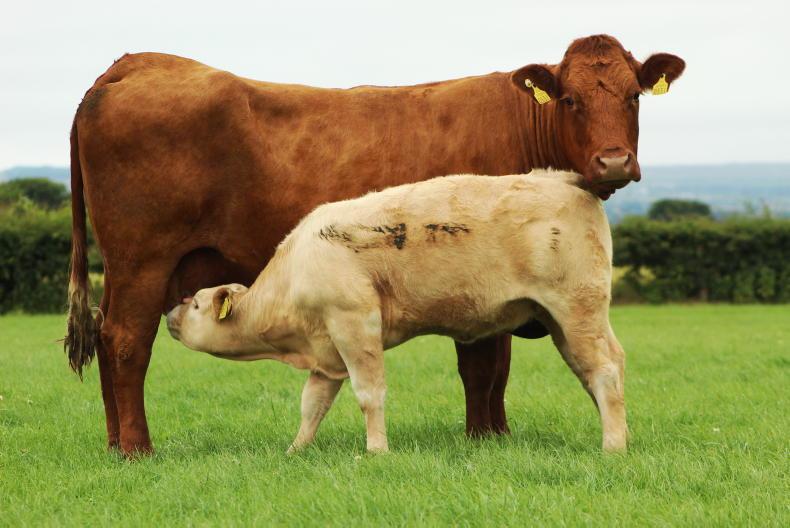
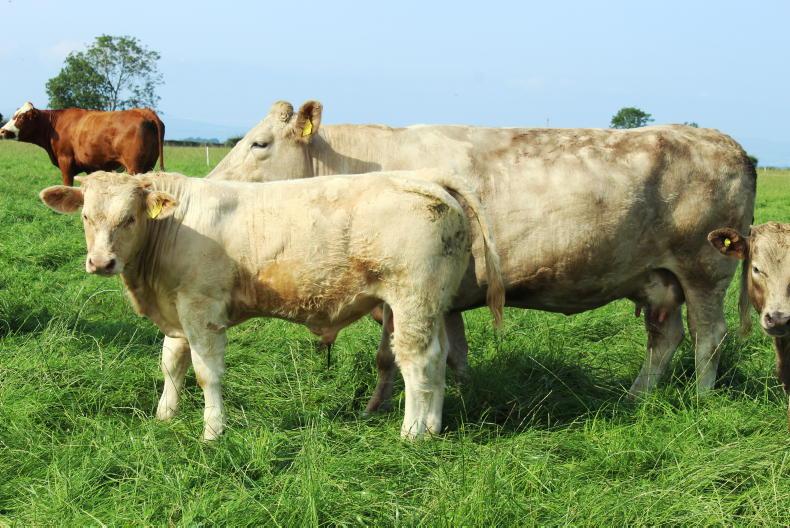
Worming: Different stock types will require different levels of worm control for the grazing season. Suckler calves should be less susceptible to worm burden as their dams will hoover up a lot of the worms in pastures, with these cows hopefully having developed immunity over their lifetime. Creep grazing calves ahead of cows will also aid in reducing worm burden. Dosing should be done where the faecal egg count is 200 eggs/g or over. Retesting after dosing is important to test the efficacy of anthelmintics used. With a delayed turn out and recent dry weather, worm burden on paddocks should be low so do not dose according to a calendar date but rather base it off faecal egg count and visual assessment of calves.
Weaning dairy beef calves: The earliest-born dairy beef calves will be approaching weaning time. Weaning can generally take place at 10 weeks of age, but two more important parameters are liveweight and concentrate intake, with the latter arguably more critical. Calves should be at 100kg liveweight ideally and eating 1.5kg of concentrates/head/day prior to weaning. It is important that this level of concentrate is being consumed to replace the energy intake loss from once milk is pulled from the diet.
Once weaned, do not be tempted to move calves outdoors immediately. This should be done on a phased basis, or a better option is where calves have free access to a paddock as well as their accommodation. Ample roughage, in the form of good-quality straw, needs to be maintained in the diet for fibre as calves will generally be turned out in to low covers of lush grass.
The key consideration is to reduce upset to the calf’s diet and approach change on a phased basis.



SHARING OPTIONS