



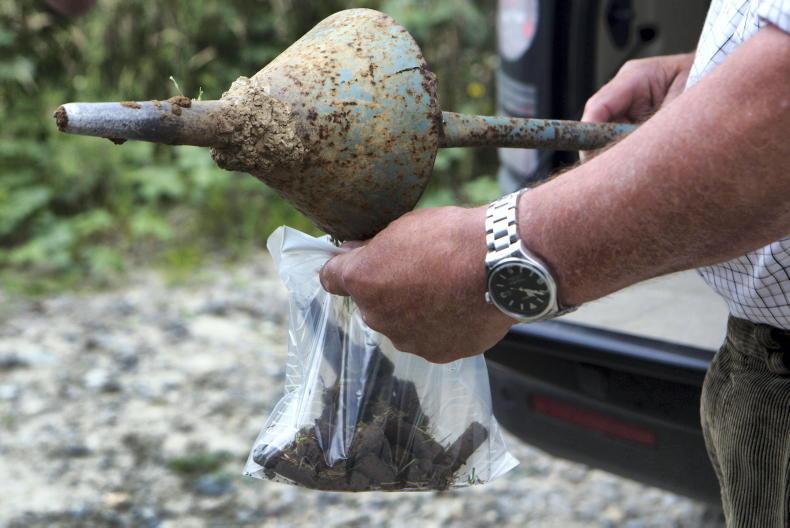
Soil sampling: As we head into October, thoughts will be turning towards soil sampling.
Many farmers don’t have an allowance for chemical phosphorus, either because they don’t have soil samples taken (in which case the Department uses a default figure of index four), they have soil samples taken but they are all high, or they have used their allowance in the amount of meal being used.
Not having a P allowance is very frustrating for farmers that want to spread P but can’t, as many feel they would get a grass growth response and help to get clover established. The only way around the rules is to sample more regularly to ensure that if there is a change in soil P levels, that this will be captured early and nutrient management plans updated. For example, the rules state that soil samples should be taken every four years. However, if someone doesn’t have a P allowance in 2025, it would be foolish to wait until 2029 to sample again as soil P levels could drop a couple of indexes during that period, depending on off-takes.
The other rule change in place from this autumn is that all samples submitted to labs must have the Land Parcel Identification System (LPIS) number or geo-reference clearly identified on the sample. The LPIS number is available on the maps used when submitting BISS.
Hedge-cutting: While the season is officially open since the start of September, the next few weeks will be peak time for hedge-cutting. Farmers availing of a nitrates derogation are reminded that they must either cut hedges on a three-year cycle or leave a whitethorn grow up every 300m. Those that have been doing this for the last few years are now seeing these plants develop into trees.
For those new into derogation, or who want to start this practice, best policy is to put a mark on the part of the hedge that isn’t to be cut. The hedge-cutter operator can then skip two or three metres of this section. This will only have to be done once as it will be easy to see in future years.
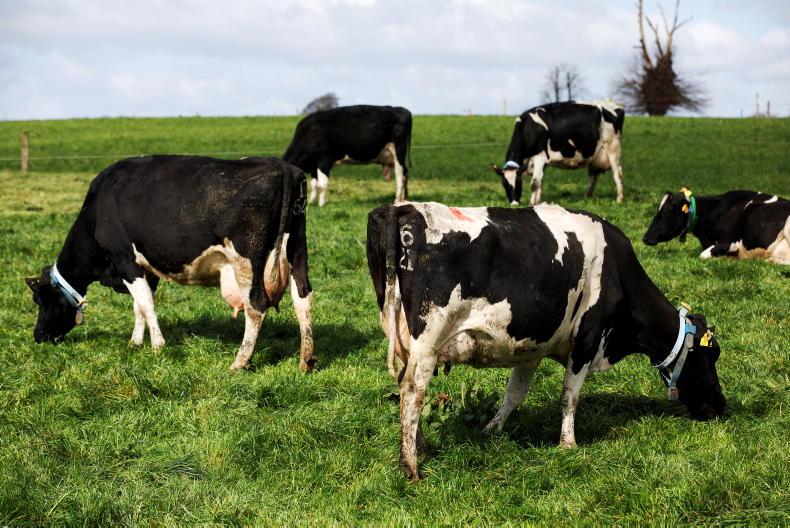
Lameness: From now on is the highest risk time for lameness, as cows are walking long distances on wet roads. The sole on cows’ feet wears from walking so it’s thinnest in the autumn and widest in early spring. Thin soles are more prone to being penetrated by stones and other sharp objects, which is a major cause of lameness.
The fact that cows are walking longer distances on wet roads compounds the problem and makes it more likely that they will get lame. Milk production and body condition score will all suffer if a cow is lame. Early intervention is key to reduce pain for the cow and keep BCS up. Problems are usually small in nature and can be rectified by paring the affected hoof and putting a shoe on the good hoof to take the weight off the bad one.
Keeping roadways clean, dry and smooth is an important preventative measure. Keep track of lame cows and get them checked out. On some larger herds the hoofparer comes as routine every week or two and any lame cows are checked.



SHARING OPTIONS