



The Irish Grassland Association’s (IGA’s) annual conference returns to the Charleville Park Hotel in 2026. An action-packed day with three main sessions and several excellent speakers, the conference promises to be a good day for all.
David Fogarty and Katie O’Toole – who are milking 500 crossbred cows in a partnership – on a fully leased farm on the outskirts of Kilkenny city will be a part of the ‘Preparing for Investment’ session at this year’s event.
As part of the panel, David and Katie will offer their insight into how they are making a collaborative arrangement work for them in a large-scale dairy business.

The journey
From non-farming backgrounds, the couple have made significant progress so far in their short careers.
Developing excellent technical and management skills, with a strong understanding of financial planning has been the cornerstone of their progression.
David, who hails from north Kilkenny, completed a degree in ag science from University College Dublin in 2014. After a year spent working in Ireland, he travelled to New Zealand where he worked with three different farm businesses, developing his skills in low-cost grass-based systems.
In 2016, David returned home and began managing the Greenfield Farm in Kilkenny. He spent three years in charge of the demonstration farm until the programme finished up.
After another four years of managing farms and saving hard, the opportunity to buy into a partnership on the 184ha Cantwellscourt farm near Kilkenny city presented itself in 2024.
The timing was as good as it was ever going to be for David, with Katie also ready to take the plunge into running a dairy business at that stage.
Katie from Athenry, Co Galway, completed her degree in agriculture at Waterford Institute of Technology. She had always been drawn towards farming and the agricultural sector in general she says.
Upon completion of her degree, Katie was offered a two-year Walsh scholarship with Teagasc. The first year was based in Newcastle West with second year in Tuam. At the end of the two-year programme, Katie continued working as a dairy adviser before travelling to Australia for a year.
From there, she returned home and began working with two local dairy farmers in the area, both were excellent operators and acted as mentors for her, Katie says.
In August 2024, the couple were approached to manage the Kilkenny farm in partnership with Páidí Kelly and James Murphy, who are also running a large-scale dairy business of their own elsewhere.
The proposal was that David and Katie would take full control of the day-to-day running of the farm and they would buy into a share in the ownership of the business.
At present, the couple own a 24% share and each year they have the option to grow their share by an extra 5%. In return for running the farm, they are paid a salary before the profits are calculated and split.
The big advantage of this farm for David and Katie is the scale of the business.
A smaller farm with a bigger share in the ownership, would not allow them to grow at the same rate.

The farm
The farm, which is leased by the partnership from a number of different landowners, consists of 184ha in one block.
With 500 cows milked in 2025, the stocking rate on the platform is 2.7 cows/ha. This year, the cows have produced 510kg of milk solids on average, at 5.1% fat and 3.95% protein.
The herd has an EBI of €156 based on the updated figures. The couple say they are not specifically breeding for a high EBI but instead, they are using LIC genetics with a greater focus on milk constituents, fertility and capacity of the animal for grazing.
At the start of the year, 170 cows were selected for breeding with sexed semen. The cows were first- to fifth-lactation animals, with good fat and protein, low cell count, a good fertility record and good BCS. Previous conceptions to first service is also a factor.
Sexed semen is only used in the first three weeks and those animals are only inseminated if they present in the right window of opportunity in terms of hours post standing heat.
Of the 170 cows picked out for sexed semen this year, 137 received a sexed straw. Of the 137 animals, 102 of these went in-calf to the first service or 74.5%. Every other animal was bred to a conventional, short gestation, easy-calving beef bull. In total after 10 weeks’ breeding, there was a 4% empty rate, with 93% of the herd on track to calve in the first six weeks.
Phenomenal performance under any metric, breeding is something the couple pay close attention to.
“We do three weeks pre-breeding with tail paint and then observe cows five or six times a day in those first three weeks, which is so important” they said.
“The cows are then scanned nine days into breeding, identifying any non-cycling animals. They are scanned again 50 days after the start of breeding. This shows what’s in-calf to first service and any other cows with potential issues.”
Grass
A dry farm by nature with free-draining soils, the dry weather throughout the summer months this year brought plenty of challenges.
Overall grass production for 2025 was 13t DM/ha however, the farm is capable of growing 14-15t DM/ha, according to David.
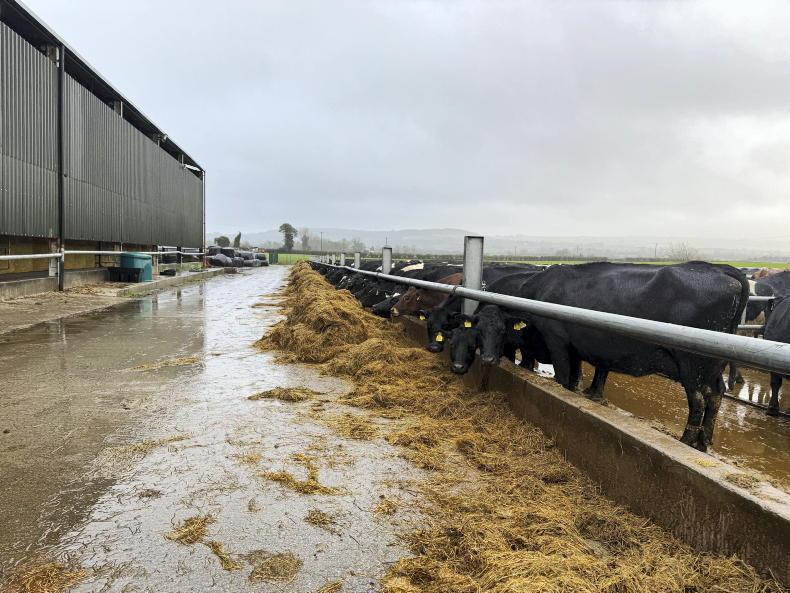
Total supplement fed was 1.24t/cow for the year. This was made up of one tonne of meal and 240kg of palm kernel which was fed instead of silage in the dry spells.
The target is to reduce the supplement fed to 700kg/cow, but this would require over 14t grown at current stocking rate. The alternative is to reduce stocking rate.
Heifers are already contract reared off the farm, with two-thirds of the silage for the winter months having to be made on the milking platform.
In total this year, 13.5% of the platform was reseeded, with 15% already selected for reseeding next year.
“The reseeded paddocks saved us in the dry spell. They grew on when other paddocks struggled and it’s something we’ll be looking to make the most of in future years,” Katie said.
When grass growth is good and cover per cow is on target, the couple will only feed 1kg of meal per day in the parlour.
In periods when grass growth is below demand and supplement is required, a 12-hour strip wire is set up.
This way they know exactly what the cows are eating and they can manage paddocks so that no feed is wasted.
People
David and Katie work full-time on the farm alongside Jarvey Man-Asil – who is also full-time – and Podge Hogan who is there part time.
The farm takes students in the busy spring period and all machinery work except for silage feeding is contracted out to reduce the workload.
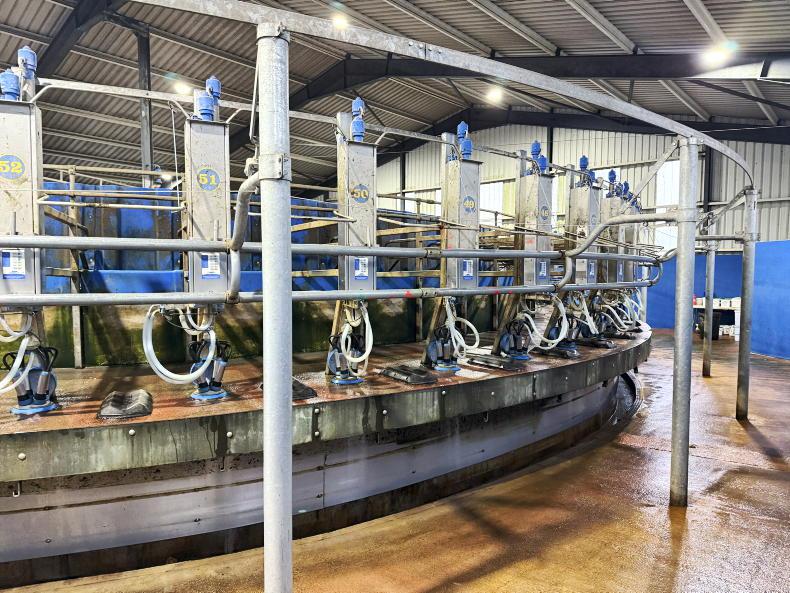
Cows are milked at 6am and 2.30pm through a 60-unit rotary parlour. One person can milk the herd alone.
The couple have just completed year one in the business and their goal for the next number of years is to continue to grow their share in the partnership.
As far as long-term goals go, future farm ownership is an option but not the only target. A recent study trip to New Zealand allowed the couple to see what is possible if they continue to surround themselves with the right people and maintain a positive approach.
Challenges
Finance is the biggest challenge that the couple face coming from non-farming backgrounds, with no capacity to access secured money. This was a big obstacle initially and something that caused a lot of frustration.
“Luckily, we had a lot of savings built up over the years and this was vital for us. That was one of the biggest differences we saw in New Zealand,” they said.
“The challenge of getting finance for young people here is such a big hurdle compared to over there.
That’s a big part of the reason there are not more young people getting into arrangements here.”
Joining David and Katie in the ‘Preparing for Investment’ session at the conference is Chris Cahill.
Chris is another young farmer who made the jump into running his own farming business recently.
In 2021 he began farming in partnership with Tony McCormack in Co Westmeath, where they are now milking over 200 cows.
Chris will also share his story on the day, with the panel highlighting the opportunities that exist for both young people hoping to get into the industry and those looking to step back.
The event will take place in the Charleville Park Hotel in Cork, on Friday 9 January. Tickets are available for purchase on the Irish Grassland Association website, irishgrassland.ie


SHARING OPTIONS