



It’s conference season for dairy farmers, and last week it was the turn of the Positive Farmers.
The event experienced a shakeup this year, with a jam packed one-day event preferred to the usual two days.
While much of the early discussion centred on tightening costs for the year ahead, the fundamental issue of replacement heifer shortages was scrutinised in the afternoon session.
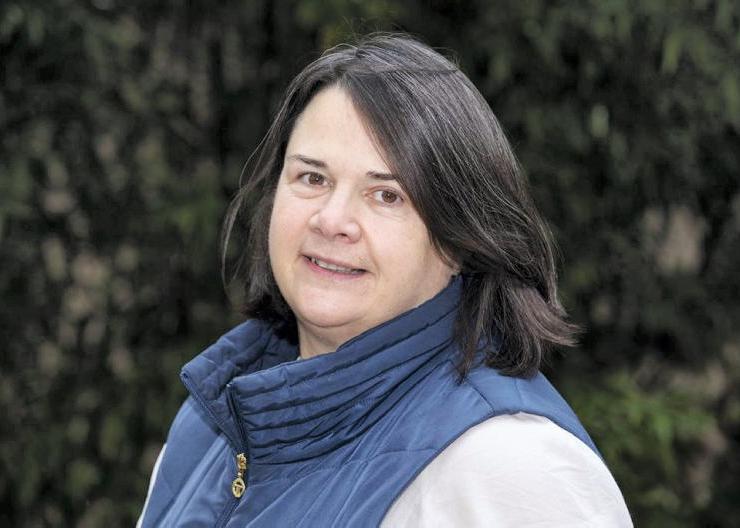
Addressing the conference, Dr Doreen Corridan, CEO of the National Cattle Breeding Centre (NCBC), warned that the national supply of replacement heifers is coming under sustained pressure.
Factors
There are a number of factors now affecting the supply of replacement heifers into the system, with sexed semen being just one part of the bigger jigsaw according to Doreen.
“In 2023 the number of beef births from the dairy herd exceeded the number of dairy calves born for the first time, and that difference has continued to increase over the last two years.
“Sexed semen was part of this, but a bigger part of it was the plateauing of the national dairy herd’s growth in 2022 and farmers’ fears around the difficulty of selling surplus heifers at that time,” Doreen said.
With herds no longer growing from 2022 on and less demand for surplus heifers, more farms were breeding only the number of replacements they required.
A breeding programme using sexed semen in combination with beef semen has allowed farms to achieve this.
They can now produce enough replacements with more higher value dairy beef animals.
For context, in 2019, just 2% of dairy serves were in the form of sexed semen. By 2025, this number had risen to 29%.
The number of beef straws used has more than doubled in that same time period.
The end result is a far more concentrated supply of dairy replacement animals.
This issue is compounded by the fact that only around 70% of these replacement heifers born are actually making it to calving, between 22 and 26 months of age according to ICBF data presented by Doreen on the day.
Heifers
“Nearly one in five replacement heifers born in Ireland never reach calving, and only 72% of them calve down at the right time.
It’s costing around €1,700 to get these heifers to calve down at the right time and even more if they’re calving later.
The question is, how do we tackle this 28% of animals that aren’t calving at the right time, because it’s a huge cost to dairy herd owners,” Doreen said.
Based on ICBF data from the years of 2018 to 2024, this is a pattern that seems to be continuing.
Of the heifers that never calve, over 9% are dying, another 8-9% are slaughtered and around 2% are exported.
“This figure of 9% dead is a big number and it’s the first area to target. Of course, there’s always going to be misfortunes around calving but the big number of concern, is that at least 4% of these deaths are occurring between 42 days and one years old. The time when we think the job is done” Doreen said.
“And that’s just the tip of the iceberg. If we’re losing that number of calves, all of the other calves that survive aren’t going to be superstars.
"So, there must be something subclinical going on beneath all of this and it’s likely affecting the animals that do survive in later lactations.
"There’s a big difference between these animals surviving and them thriving.
"That window from 42 days to the first lactation is the most important least measured phase in our system” she continued.
Solutions
A lot of the problems in later life can be traced back to the pre-weaning nutrition for a calf according to Doreen.
“It’s at that stage of life that a lot of the metabolic pathways are developed for gene expression in later life.
"If these animals are not managed properly in that time, don’t expect them to survive and perform into their fifth lactation” she said.
While Doreen accepts that calf-rearing is a cost that farms are trying to manage tightly, she is adamant that calves need to be well looked after in those first 12 weeks.
Poor feed quality, underfeeding and hygiene are the biggest factors affecting calves in that period according to the UCD vet schools’ calf research programmes Doreen said.
Colostrum is the first fundamental; the advice was not to assume colostrum quality is good enough, test it to make sure.
Secondly, Doreen believes feeding calves once-a-day too early can have disastrous consequences.
“Based on a lot of research that’s out there I’d be very slow to put calves on once-a-day feeding until at least six weeks of age.
"On top of this, calves should be fed 20% of their birthweight as a minimum. As that calf grows the percentage of feed to bodyweight will naturally reduce, and the calf will be encouraged to eat more concentrate.”
“Until a calf is eating at least 1.5kg of a good ration for at least three days, I wouldn’t be weaning that animal. Ideally, delay weaning in those replacement heifers until 12 to 14 weeks of age,” she said.
Finally, Doreen believes weighing calves once a month is an easy way of monitoring performance to ensure everything is working as it should.
“Don’t look at the average, look at each calf individually. If they’re gaining less than 0.6kg per day, there’s something wrong and it needs action.”




SHARING OPTIONS