


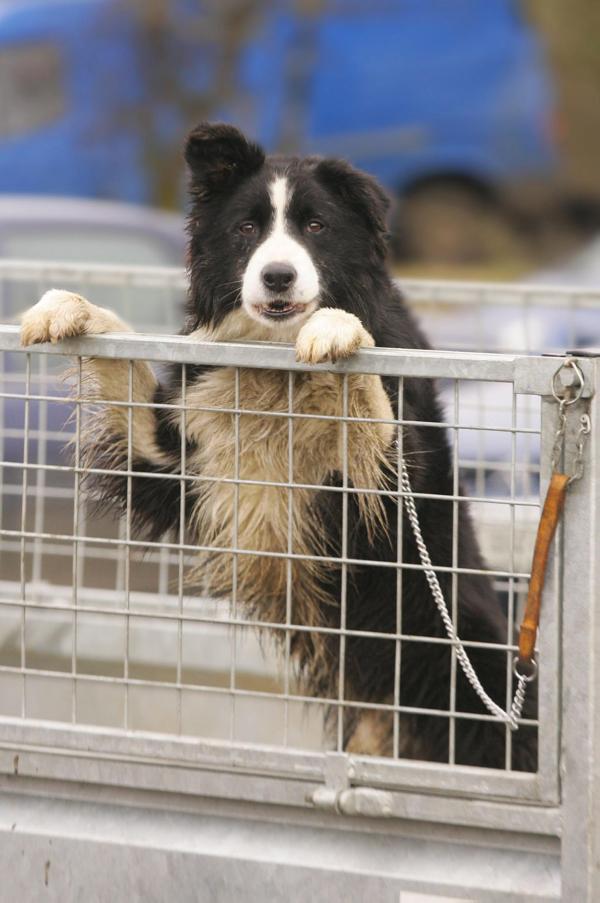
Last Sunday evening, I was settling down to a cup of tea and a digestive biscuit when I received a phonecall from Joe, a distressed farmer. His four-year-old Border Collie, Jess, was having severe seizures and was drifting in and out of consciousness.
Jess was his prize-winning sheepdog that accompanied him everywhere. I abandoned my biscuit and told him to meet me at the clinic.
When he arrived, Jess was in his arms, wrapped in a blanket. She was drooling profusely and was disorientated. He carried her inside and I proceeded to examine her. She was unable to stand, had dilated pupils and appeared to be blind. Joe was very worried and recounted that he had recently lost a bullock to meningitis, with very similar symptoms.
During the examination, Jess had another seizure. I quickly administered anti-seizure medication and started IV fluid therapy.
Once Jess was comfortable, I began to question Joe to get a clearer picture of what had happened.
He told me that Jess had been fine that morning. She ate her breakfast and helped Joe on his rounds. There was no history of trauma and she did not have access to any poisons.
Joe recalled that at around 11 o’clock he had wormed both Jess and the other family dog, a 10-year-old Jack Russell terrier. Both dogs were up to date with their vaccinations, making distemper an unlikely cause.
When I questioned Joe further about the worming, it transpired that he had used an Ivermectin injection. He was adamant that he had given Jess a very small dose and told me that his Jack Russell was showing no symptoms.
On hearing that Jess had received Ivermectin that morning, I was now forced to break the bad news to Joe that he had inadvertently poisoned his own dog. He did not realise the dangers of using cattle Ivermectins in dogs.
Ivermectin is a medication used to kill many different parasites. Unfortunately, some dogs, including Collies, are genetically hypersensitive. In these dogs, Ivermectin can pass directly to the brain and be toxic, even lethal.
There is no antidote and all I could do was to treat Jess’s symptoms and maintain her on IV fluids. As I write this article, she has improved slightly, but unfortunately it may take several weeks of care before she fully recovers. Hopefully, Jess will be one of the lucky ones, but this case highlights the dangers of using large animal wormers in dogs.
*Mairead Berkery works at Avondale Vet Clinic in Arklow, Co Wicklow, part of XLVets. XLVets is a group of progressive practices who are working together to achieve a better future for agriculture and veterinary in Ireland. For more information go to www.xlvets.ie


SHARING OPTIONS