




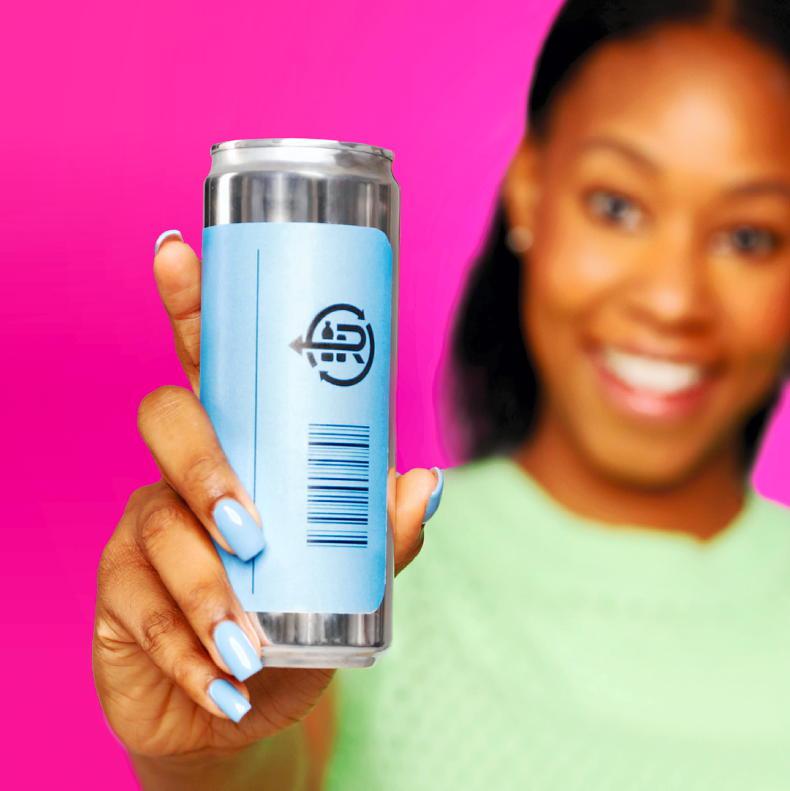
Two weeks ago, on Saturday 27 June, 5.8 million bottles and cans were returned to Re-turn outlets across the country. That’s, give or take, one per person in the country, which isn’t a bad recycling rate by anyone’s standard. The most successful day of recycling since the Deposit Return Scheme (DRS) was launched in 2024, it is a considerable step-up on the daily average last year, which was five million.
Whether we like the return scheme or not, most of us have just adapted and got on with it. It’s like the way the levy on plastic bags changed consumer behaviour when it was launched in 2002. We now all have a stock of reusable bags in the boot of the car – God forbid you get caught out picking up some bread and milk on the way home and have to pay the 22c. Likewise, the DRS has become a habit for many. We’re well used to queues outside the local shop or supermarket on a Saturday morning as people return their stock of bottles and cans and redeem it against the weekly shop.
It’s a relatively new scheme that’s not without its flaws; one of the biggest being scavenging. At present, about 78% of bottles and cans make their way into the Re-turn machines, a further 14% go into dried recycling bins at home and the remaining 8% is left in bins, a lot of which are public bins.
Each bottle is worth either 15c or 25c, depending on its size. It can add up quickly and is valuable to those who are struggling financially... so people scavage for this unclaimed money. While they are not doing anything illegal, the issue is often the mess left behind. While it affects more highly populated areas such as cities, it is also an issue in rural towns and villages, especially tourist areas in the summer. And while the mess can be cleaned up, questions are being asked – is the 15c enough of an incentive to get people to travel to a Re-turn machine? Should it be worth more?
The more bottles are left in public bins, the more scavenging that takes place and the more likely we will have to pay an increased deposit in future.
It’s a relatively new scheme that’s not without its flaws; one of the biggest being scavenging. At present, about 78% of bottles and cans make their way into the Re-turn machines, a further 14% go into dried recycling bins at home and the remaining 8% is left in bins, a lot of which are public bins
If that comes into play, I think the scheme has to allow our money to go back into our bank account. How many times have you lost the small scrap of paper that is your Re-turn receipt or walked away from the till realising you forgot to claim for it? All the money that goes unclaimed benefits the scheme and not the consumer. Some supermarkets have been able to set it up that when you return your bottles at one of their machines, the money can be added to your loyalty card. It seems bonkers that in this digital age the same thing can’t happen where the money goes directly onto your bank card. But given that Re-turn recorded €66.7m in unredeemed deposits in 2024, it’s probably not going to be something that will happen any time soon.
Although I did hear on a piece on RTÉ Radio One about one woman who kept her receipts all year, and it covered the cost of her Christmas food shop. Now that’s a saving scheme I’m willing to give a go.



SHARING OPTIONS