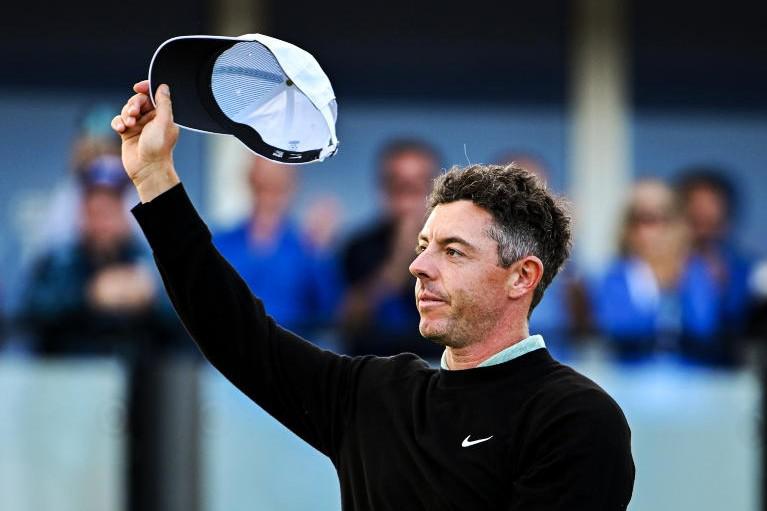
The Amgen Irish Open takes place this weekend at The K Club in Straffan, Co Kildare. Naturally, the opportunity to see some of the top players tune up for the Ryder Cup is one that many golf fans will avail of.
However, beyond the week-long attraction that events like this, or the Open Championship at Portrush or the recent Women’s Irish Open at Carton House provide, there is an underlying hope that they can act as a driver for future growth.
Mark Kennelly is the CEO of Golf Ireland and is keen to ensure that such shop windows for the sport can be harnessed.
“We want to build a kind of a lasting legacy from these big events,” he says.
“We’re doing a lot of work now with Government around getting golf into schools, that’s been a huge success in a very short space of time and it’s feeding into growing junior membership.
“Definitely, the opportunity for people to see the top golfers in person is a huge advantage, to grow an interest in the game. In Ireland, golf fans really take their golf seriously and it’s more or less a sell-out, I think, at the weekend and kids are free. We’re very lucky to have these role models, both male and female, for children to aspire to emulate.”
Golf Ireland came into being after a merger between the Golfing Union of Ireland, which administrated the men’s game, and its female counterpart, the Irish Ladies’ Golf Union. While the 2019-2021 transition timetable had to deal with the unforeseen impact of COVID-19, everything went to schedule and Kennelly feels that the new entity has thrived so far.
“We integrated at both national and regional level,” he says.
“The national board and committees have minimum gender requirements and we’re then supported by four regional executives, corresponding with the provinces. It’s working very well.
“The old bodies did great work but the new organisation has been a great enabler to have that focus on future development, across the sport rather than women and girls or men and boys.
“We have a strategy now that covers golf in its entirety and we wouldn’t have been able to have that if we didn’t have the new organisation in place.
“It has freed us up to do a lot of new things; you’re promoting golf for people with disabilities, there’s the sustainability agenda, inclusion.”
In the total membership of Golf Ireland, there is a gender disparity, but it is an area where balancing efforts are strong.
“We have probably a little over 20 percent of our membership who are women and girls,” Kennelly says, “and that’s a lot higher than neighbouring countries – in Britain, they’re down at around 11 or 12 percent.
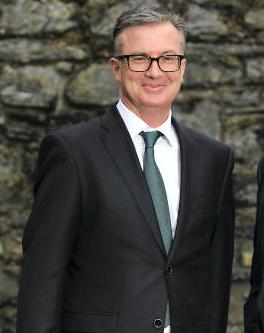
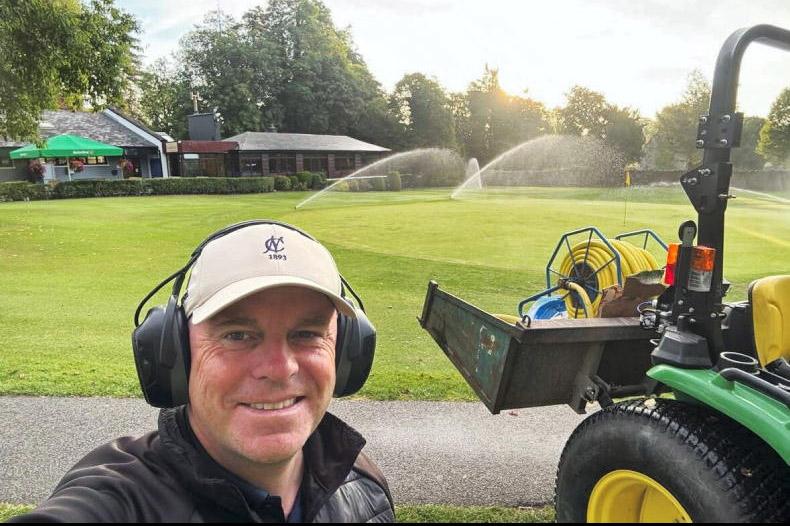
Mark Kennelly, CEO, Golf Ireland.
“We obviously still want to grow our figure and we have a number of initiatives; the most well-known one is called Get Into Golf, where over 150 clubs run a programme every spring where in a group setting, new women are introduced to golf and, if they like it, there’s a pathway into club membership for them.
“We do realise we have a good bit to go to get to the kind of levels that they have in northern Europe and Scandinavia, but things are going in the right direction.”
To that end, offering players – male and female – different options and format is key to drawing as much participation as possible. And, while golf may sometimes have a reputation of being expensive, Kennelly makes the point that there is actually a more vital resource for those wishing to play.
“In research, and this is definitely not unique to Ireland, the time commitment is actually the biggest barrier to entry,” he says.
In terms of cost, he adds: “Obviously, there are variations, as there are in other activities in the big urban areas, but for the bulk of the country, golfing is actually quite affordable and accessible and that is improving all the time.
“There have been changes in the global rules. Nine-hole golf now counts for handicap purposes and we’re seeing a growth right across the world, including in Ireland, of people playing nine-hole golf.
“It’s really that kind of flexibility and accessibility that we want to promote. The vast majority of golfers still like to play the traditional 18-hole format but more and more people have the opportunity to play shorter formats.
“One of the things we measure is how many people play golf and our membership is growing and growing. We have over 230,000 club members now but, in addition to that, there are another at least 350,000 people who play golf casually on full-length formats.
“Then, if you include what they term golf-engagement – the people who play par-3 golf, play nine-hole golf, go to driving ranges, you’re up at over 800,000 people, which is well over 10 percent of the population.”
Attractive options
A recent initiative to entice players has been the iGolf scheme, allowing independent players to receive handicaps without joining clubs.
“In a very short space of time, we’re already seeing people leave the iGolf scheme, even though they paid for a full year subscription, and joining clubs,” Kennelly says.
“When people join a scheme like this and obtain a handicap, they end up playing a lot more golf. Up to now, the iGolfers have to pay a green fee, obviously, every time they play and there’s been at least an extra million generated in green-fee income for our clubs in the last few months.
“But it does get to the point where, if you’re playing even 12 or 15 times a year, people have to consider that your club membership is a very attractive option and they also join a community and have a chance to represent clubs in competitions, so it’s working very well.”
The Amgen Irish Open takes place this weekend at The K Club in Straffan, Co Kildare. Naturally, the opportunity to see some of the top players tune up for the Ryder Cup is one that many golf fans will avail of.
However, beyond the week-long attraction that events like this, or the Open Championship at Portrush or the recent Women’s Irish Open at Carton House provide, there is an underlying hope that they can act as a driver for future growth.
Mark Kennelly is the CEO of Golf Ireland and is keen to ensure that such shop windows for the sport can be harnessed.
“We want to build a kind of a lasting legacy from these big events,” he says.
“We’re doing a lot of work now with Government around getting golf into schools, that’s been a huge success in a very short space of time and it’s feeding into growing junior membership.
“Definitely, the opportunity for people to see the top golfers in person is a huge advantage, to grow an interest in the game. In Ireland, golf fans really take their golf seriously and it’s more or less a sell-out, I think, at the weekend and kids are free. We’re very lucky to have these role models, both male and female, for children to aspire to emulate.”
Golf Ireland came into being after a merger between the Golfing Union of Ireland, which administrated the men’s game, and its female counterpart, the Irish Ladies’ Golf Union. While the 2019-2021 transition timetable had to deal with the unforeseen impact of COVID-19, everything went to schedule and Kennelly feels that the new entity has thrived so far.
“We integrated at both national and regional level,” he says.
“The national board and committees have minimum gender requirements and we’re then supported by four regional executives, corresponding with the provinces. It’s working very well.
“The old bodies did great work but the new organisation has been a great enabler to have that focus on future development, across the sport rather than women and girls or men and boys.
“We have a strategy now that covers golf in its entirety and we wouldn’t have been able to have that if we didn’t have the new organisation in place.
“It has freed us up to do a lot of new things; you’re promoting golf for people with disabilities, there’s the sustainability agenda, inclusion.”
In the total membership of Golf Ireland, there is a gender disparity, but it is an area where balancing efforts are strong.
“We have probably a little over 20 percent of our membership who are women and girls,” Kennelly says, “and that’s a lot higher than neighbouring countries – in Britain, they’re down at around 11 or 12 percent.

Mark Kennelly, CEO, Golf Ireland.
“We obviously still want to grow our figure and we have a number of initiatives; the most well-known one is called Get Into Golf, where over 150 clubs run a programme every spring where in a group setting, new women are introduced to golf and, if they like it, there’s a pathway into club membership for them.
“We do realise we have a good bit to go to get to the kind of levels that they have in northern Europe and Scandinavia, but things are going in the right direction.”
To that end, offering players – male and female – different options and format is key to drawing as much participation as possible. And, while golf may sometimes have a reputation of being expensive, Kennelly makes the point that there is actually a more vital resource for those wishing to play.
“In research, and this is definitely not unique to Ireland, the time commitment is actually the biggest barrier to entry,” he says.
In terms of cost, he adds: “Obviously, there are variations, as there are in other activities in the big urban areas, but for the bulk of the country, golfing is actually quite affordable and accessible and that is improving all the time.
“There have been changes in the global rules. Nine-hole golf now counts for handicap purposes and we’re seeing a growth right across the world, including in Ireland, of people playing nine-hole golf.
“It’s really that kind of flexibility and accessibility that we want to promote. The vast majority of golfers still like to play the traditional 18-hole format but more and more people have the opportunity to play shorter formats.
“One of the things we measure is how many people play golf and our membership is growing and growing. We have over 230,000 club members now but, in addition to that, there are another at least 350,000 people who play golf casually on full-length formats.
“Then, if you include what they term golf-engagement – the people who play par-3 golf, play nine-hole golf, go to driving ranges, you’re up at over 800,000 people, which is well over 10 percent of the population.”
Attractive options
A recent initiative to entice players has been the iGolf scheme, allowing independent players to receive handicaps without joining clubs.
“In a very short space of time, we’re already seeing people leave the iGolf scheme, even though they paid for a full year subscription, and joining clubs,” Kennelly says.
“When people join a scheme like this and obtain a handicap, they end up playing a lot more golf. Up to now, the iGolfers have to pay a green fee, obviously, every time they play and there’s been at least an extra million generated in green-fee income for our clubs in the last few months.
“But it does get to the point where, if you’re playing even 12 or 15 times a year, people have to consider that your club membership is a very attractive option and they also join a community and have a chance to represent clubs in competitions, so it’s working very well.”
SHARING OPTIONS